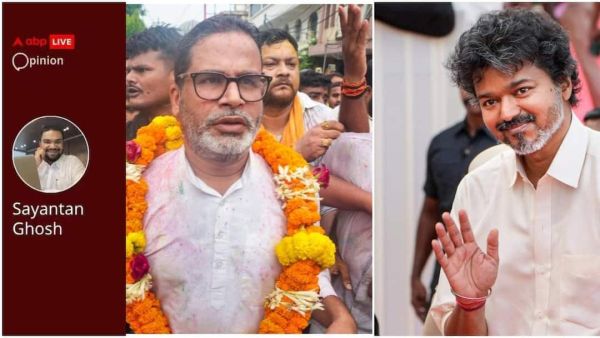
In a democracy, political regime change remains inevitable, yet under the Bharatiya Janata Party-led NDA it has grown unusually difficult. The BJP stands as one of the world’s largest political organisations, controlling a majority of states and expanding further after first-time victories in Odisha and West Bengal. Its organisational depth, resources and electoral machinery have made challenges appear almost insurmountable. Against this backdrop, a by-election in Bankipur, an assembly seat near Patna long considered a BJP fortress, delivered an unexpected result.
The vacancy arose after sitting MLA Nitin Nabin, whose father had earlier held the seat, became the party’s national president. From the constituency’s early years the BJP had never lost it. Former political strategist Prashant Kishor, leading his Jan Suraaj Party, contested and won. In the previous Bihar assembly elections his party had secured only around 3.4 per cent of the vote and no seats. This single victory carries weight beyond Bihar’s borders. Days earlier, youth protests over the NEET paper leak, organised by the Cockroach Janata Party along with left groups, forced Education Minister Dharmendra Pradhan to resign. Months before that, actor Vijay’s Tamilaga Vettri Kazhagam ended decades of DMK-AIADMK dominance in Tamil Nadu by winning 108 seats and forming the government.
Together these developments raise a larger question: whether India is witnessing the early formation of alternative politics that operates outside traditional party structures and appeals especially to younger voters seeking accountability over identity.
Symbolic Breakthrough
Prashant Kishor’s victory in Bankipur, secured by a margin of more than 19,000 votes against the BJP candidate, ends a three-decade hold on a prestige seat. The BJP mounted a full campaign with senior leaders, yet the result exposed vulnerabilities. The party’s growth in Bihar had depended heavily on Nitish Kumar’s personal appeal and the social coalition he built. Voters had repeatedly backed the NDA largely for Nitish Kumar ather than the BJP alone. When Samrat Choudhary took over as Chief Minister, sections of the upper castes and others expressed unease.
Anti-incumbency on governance issues combined with this leadership transition created an opening. Kishor deliberately chose a BJP stronghold to demonstrate that Bihar’s politics could move past entrenched equations. His campaign emphasised local outreach, door-to-door contact and a message of change rather than organisational muscle. The low turnout of around 34 per cent did not prevent a decisive verdict.
For a party that had drawn a blank statewide only months earlier, capturing a high-profile urban seat near the capital marks a clear symbolic rupture. It signals that voters, even in a BJP bastion, remain open to outsiders who present themselves as free from the old networks of patronage and caste brokerage.
Beyond Identity
Bihar’s politics for decades revolved around the equations crafted by Lalu Prasad Yadav, Nitish Kumar and the BJP. Lalu built a durable Muslim-Yadav base that delivered power through the 1990s. Nitish countered it by consolidating Kurmis, Koeris and Extremely Backward Classes, later allying with upper castes through the BJP. The BJP itself relied on upper-caste support while expanding among non-Yadav OBCs.
These arithmetic arrangements long determined outcomes more than pure performance. Rising aspirations, particularly among the young and urban sections, now place greater weight on governance, jobs, education and accountability. Kishor’s campaign avoided an overtly caste-centric appeal. While caste and community factors never disappear entirely, his support cut across traditional lines. Muslims and youth formed significant parts of the winning coalition, groups that in earlier contests often stayed within familiar party folds.
The RJD’s dependence on its core base did not translate into competitive numbers in Bankipur. This shift does not erase identity politics overnight, yet it shows that voters increasingly judge candidates on their ability to address everyday failures rather than solely on community belonging.
Kishor’s earlier statewide performance of under 4 per cent vote share had already indicated residual discontent; the Bankipur result converts that residual into tangible electoral success in a high-stakes contest.
Parallel Shifts
In Tamil Nadu the pattern appears even more dramatic. Actor Vijay’s Tamilaga Vettri Kazhagam, contesting its first assembly election, won 108 seats and formed the government with post-poll support, ending nearly six decades of alternation between the DMK and AIADMK. The two Dravidian majors, long defined by language, social justice rhetoric and family-centred leadership, found their urban and younger bases eroding.
Vijay positioned his party as a clean, modern alternative focused on aspirations rather than the old binaries. The mandate reflected a generational preference for change after years of incumbency fatigue.
Simultaneously, the Gen Z protests over the NEET paper leak revealed another dimension of discontent. The movement, organised under the Cockroach Janata Party banner and drawing support from left organisations, remained issue-driven rather than party-coloured. Many participants included young people who had earlier backed the BJP. The sustained pressure forced the resignation of the Union Education Minister, an uncommon outcome under the current regime.
The protests highlighted unemployment, examination integrity and the sense that traditional parties, whether in power or opposition, had failed to address the core anxieties of a demographic that forms more than half the population.
These parallel developments in Bihar, Tamil Nadu and the national protest space suggest that alternative politics is not confined to one region or one personality. It emerges where established parties appear locked into identity management and organisational dominance at the expense of delivery.
Cautious Momentum
One by-election victory or a debut assembly success does not rewrite the national political map overnight. The BJP’s organisational strength, resources and control over a majority of states remain formidable. Yet political change frequently begins with symbolic openings that expose cracks in what once seemed impregnable. Kishor’s win demonstrates that even a party with negligible prior vote share can breach a fortress when anti-incumbency and the demand for alternatives converge.
Vijay’s government formation shows that star power combined with organisational preparation and a message of generational renewal can upend long-standing regional monopolies. The youth protests prove that issue-based mobilisation, independent of established party colours, can compel accountability at the highest levels.
Whether these forces can sustain themselves, expand beyond individual seats or states, and convert discontent into durable structures remains an open question. Ignoring them, however, would mean missing the early signals of how new alternatives take root in a democracy where the dominant party appears all-powerful.
The old political order still holds most of the ground, but the cracks have become visible.
Sayantan Ghosh teaches journalism at St. Xavier’s College (Autonomous), Kolkata. He is on X as @sayantan_gh.
-
Aston Villa set to move for Barcelona youngster Marc Bernal, Collyer informed he can leave

-
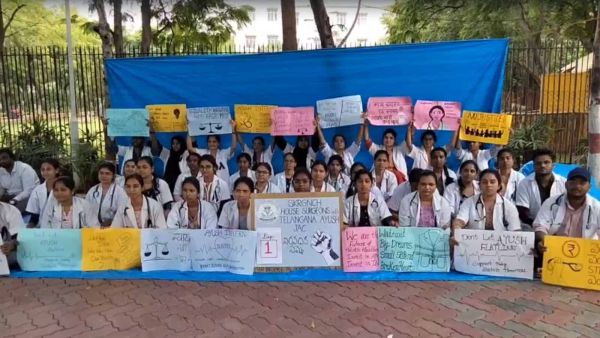
Telangana AYUSH doctors start indefinite strike for stipend hike
-
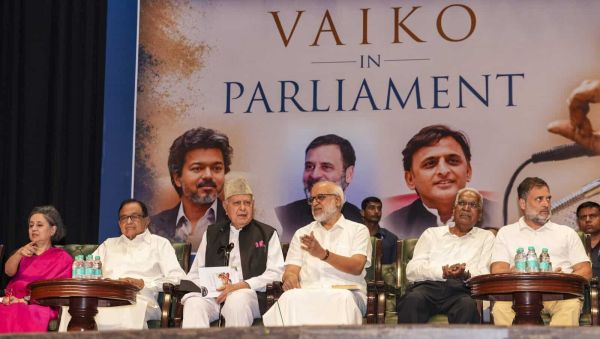
BJP can repeat Kashmir like reconstitution in India: Farooq
-
US Cancels 28,000 Commercial Trucker Licences; Indian Drivers Could Be Affected

-
Bengaluru: BMTC conductor suspended for kicking beggar