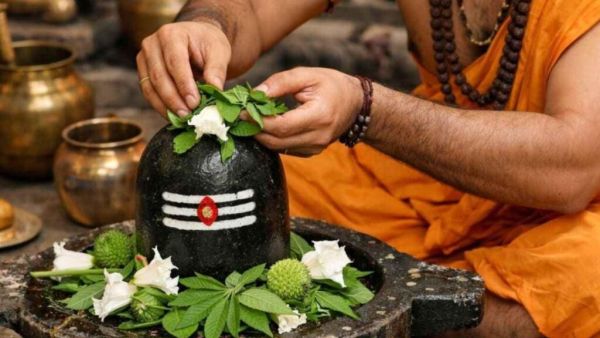
The month of Sawan is considered the most auspicious for worshipping Lord Shiva. Throughout this month, devotees worship Lord Shiva by performing Jalabhishek, Rudrabhishek, and offering Belpatra in Shiva temples across the country. But have you ever wondered why Belpatra is offered to the Shivalinga? This is not only based on religious beliefs, but also on mythological beliefs, spiritual symbolism, and Ayurvedic significance.
It is believed that Lord Shiva is very simple in nature, so he doesn’t need expensive offerings to please him. Even a single Belpatra offered with a true heart is considered sufficient to gain his blessings.
Why is Belpatra dear to Lord Shiva?
According to religious texts, Belpatra is considered Lord Shiva’s favorite leaf. Several mythological reasons have been cited for this. Legend has it that Lord Shiva held the Halahal poison, which emerged during the churning of the ocean, in his throat to protect the world. The effect of the poison generated extreme heat in his body. The gods then offered him cool-natured items, including the bael leaf. It is believed that the tradition of offering bael leaves to Lord Shiva began then.
What is the significance of the three leaves of the bael leaf?
The bael leaf is not like ordinary leaves. It usually has three leaves joined together, called the tridal.
These three leaves are associated with several symbols:
Brahma, Vishnu, and Mahesh (Tridev)
Lord Shiva’s three eyes
The three qualities of sattva, rajas, and tamas
Will, knowledge, and action power
It is believed that by offering bael leaves, the devotee surrenders all his or her virtues, vices, and ego to Lord Shiva.
The bael tree is also associated with Goddess Parvati
The Skanda Purana mentions that the bael tree originated from the sacred energy or sweat drops emanating from the body of Goddess Parvati. For this reason, the bael tree is considered extremely sacred, and every part of it is believed to be inhabited by the Goddess. For this reason, offering bael leaves is considered a means to receive the blessings of both Lord Shiva and Goddess Parvati.
Religious Benefits of Offering Belpatra
According to religious beliefs, offering Belpatra to the Shivalinga:
Lord Shiva is quickly pleased.
Wishes are believed to be fulfilled.
It is believed to liberate one from sins.
Happiness, prosperity, and positive energy enter the home.
The path to mental peace and spiritual progress is paved.
Correct Rules for Offering Belpatra
When offering Belpatra during Shiva worship, certain things should be kept in mind.
Always offer a three-petalled Belpatra.
The leaf should not be torn, cut, or insect-eaten.
Wash the Belpatra thoroughly with clean water.
Keep the smooth side of the Belpatra facing the Shivalinga.
Sandalwood or turmeric should not be applied to the Belpatra.
Chanting the mantra “Om Namah Shivaya” or “Tridalam Trigunaakaram…” during worship is considered auspicious.
The Bael leaf also has Ayurvedic significance. Bael is considered extremely beneficial not only from a religious perspective but also for health.
According to Ayurveda, Bael contains many nutrients, such as:
Vitamins A and C
Calcium
Potassium
Fiber
Antioxidants
Is it auspicious to plant a Bael tree at home?
Bael fruit and leaves are considered beneficial for strengthening the digestive system, providing relief from heat, boosting immunity, and treating many lifestyle- diseases. According to Vastu and religious beliefs, planting a Bael tree at home is considered auspicious. It is said to ward off negative energy and maintain happiness, prosperity, and a positive atmosphere in the home. Planting a Bael tree during the month of Sawan is considered especially auspicious.
-
Hyderabad advocate murder: Police granted custody of Mahboob Alam

-
Fatal accident by Hyderabad teen puts underage driving in focus

-
Does Iran still need nuclear weapon after Hormuz leverage?

-
Exclusive: How Malavika Mohanan bagged Iran’s Majid Majidi film

-
Bigg Boss 20 first promo: Salman Khan hints at SRK’s entry