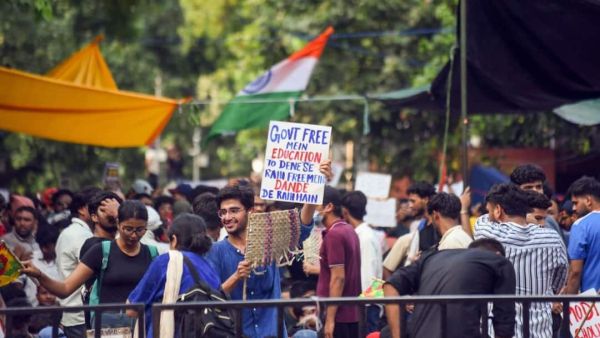
The Supreme Court has clarified that state governments are free to withdraw or close FIRs filed against students who took part in the NEET protests, provided they follow the due legal process. The court said its interim order of July 28 had been misunderstood and stressed that allowing investigations to continue did not prevent states from withdrawing appropriate cases. At the same time, it made clear that those accused of serious criminal offences would not be entitled to any relief.
Court Clears Confusion
A Bench comprising Chief Justice Surya Kant, Justice Joymalya Bagchi and Justice V Mohan issued the clarification after petitioners informed the court that the Centre had assured them that cases against students would be withdrawn. However, officials in several states were reportedly citing the Supreme Court's earlier order to justify continuing investigations.
The Bench said its previous order had never barred state governments from withdrawing cases. It emphasised that states remain fully empowered to close or withdraw FIRs in accordance with the law.
During the hearing, Solicitor General Tushar Mehta, appearing for the Centre, said the government was in favour of granting relief to genuine students. However, he argued that individuals with criminal backgrounds who had allegedly joined the protests to incite violence should not receive the same benefit.
According to the Centre, authorities in Delhi have identified 2,738 people allegedly linked to serious offences, including murder, rape and dacoity, who were present during the protests.
No Relief For Serious Offenders
Senior advocates Abhishek Manu Singhvi, Gopal Sankaranarayanan and Vrinda Grover, appearing for the petitioners, said they were not seeking protection for criminal elements. They argued that students facing minor cases or those booked for participating in political protests should not be treated in the same manner as those accused of grave crimes.
The Supreme Court agreed that those accused of serious offences could not claim protection merely because they participated in the protests. It clarified that references to a "criminal background" would apply only to those facing allegations of grave and heinous crimes, and not to students booked for minor offences.
Senior advocate Gopal Sankaranarayanan also questioned the use of force during the protests, asking why individuals in plain clothes were allegedly seen wielding batons. Responding to the concern, the Chief Justice said any police officer found to have acted unlawfully would not be protected.
Prashant Kishor Surges Ahead In Bankipur, Jan Suraaj Eyes Breakthrough Victory
Committee To Cxamine All Issues
A lawyer representing the families of injured police personnel argued that the matter should not be viewed from only one perspective, claiming that police officers, including women personnel, were assaulted during the protests.
The court assured all parties that the independent committee it intends to constitute will examine every aspect of the case. The matter has been listed for hearing on August 18, when the Bench will consider the committee's composition, mandate and the broader protocol for handling action against protesters in future demonstrations.
'Will Emperor Show His Degree?': Abhijeet Dipke's Fresh Swipe At BJP Over RTI Row