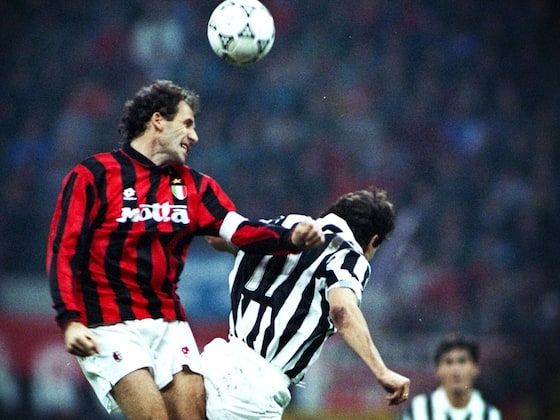
Franco Baresi’s arrival changed the debate over AC Milan’s greatest-ever player. Before him, Gianni Rivera could reasonably be considered the finest footballer in the club’s history. Their careers overlapped briefly, with Rivera the veteran and Baresi still a teenager. A few decades later, when Milan chose their player of the 20th century, it was Baresi rather than Rivera, a measure of the level he had attained. Another tribute, following Baresi’s death at the age of just 66, came from Rivera himself. “The greatest defender Italy has ever produced,” he said. In a country where defending has always carried immense value, that was the highest praise.
Another tribute came from a man who is often spoken of in similarly lofty terms. “The greatest player I ever had the honour of playing with,” said Paolo Maldini. Maldini later took over the Milan captaincy from Baresi and eventually surpassed his club appearance tally, reaching an extraordinary 902 matches against Baresi’s remarkable 719. Yet he always regarded with admiration the man he called “our Captain”.
That same word surfaced elsewhere. “CAPITANO,” Fabio Cannavaro wrote, in capital letters. He never played alongside Baresi and even bettered him in one sense by lifting the World Cup as captain. Even so, Baresi’s influence was such that Cannavaro saw him as a model. “We young defenders all emulated you,” said the 2006 Ballon d’Or winner. Baresi, who finished runner-up in 1989, came closer than almost anyone in his position to claiming an individual prize that usually escapes defenders.
There was always reverence for him at San Siro, and not only because there was a four-year period when Inter were captained by Giuseppe Baresi and Milan by his younger brother. “6 forever captain,” read the headline on the Rossoneri tribute. Franco was captain from the moment he was appointed at 22 until his retirement 15 years later, and his No 6 shirt was retired along with him.
He won six Serie A titles and three European Cups, though his early years also included two relegations, one of them the result of a betting scandal. Baresi’s loyalty was evident in the fact that he stayed. That was one reason why Jamie Carragher described him as “the ultimate one-club man”.
Yet the man Rivera regarded as Italy’s greatest defender also became, in some ways, a very un-Italian defender, or at least one who helped redefine Italian defending under the revolutionary management of Arrigo Sacchi. Baresi started out as a libero, a role Sacchi effectively made obsolete. He evolved into a centre-back who perfected the offside trap in a system designed as an antidote to catenaccio.
Baresi was arguably the greatest player in Milan’s history and led them as captain through their golden era.
Though he was initially doubtful about the ideas of the former shoe salesman who had been brought in from Serie B, Baresi went on to embody a completely different footballing philosophy. “We played a new football for Italy: fast, aggressive, and organised,” Baresi recalled in 2019. It was a flat back four that pushed up to press and formed a compact 4-4-2 shape.
Baresi was the organiser on the pitch, often without needing many words. The unit moved as one. “We could find each other with our eyes closed,” he said in 2021. Nearly three decades after they last played together, they remain perhaps the most famous back four of all: Mauro Tassotti, Alessandro Costacurta, Baresi and Maldini. Between them, the quartet made more than 2800 appearances for Milan.
One of Milan’s greatest nights of that era, the crushing of Barcelona in the 1994 Champions League final, came when both Baresi and Costacurta were suspended. But when Milan won the European Cup in 1989 and again in 1990 — the first of those campaigns featuring a 5-0 thrashing of Real Madrid in the semi-final and a 4-0 victory over Steaua Bucharest in the final — they became the last team to retain the trophy for 26 years.
That achievement gives that Milan side a strong claim to being the greatest team ever. It was founded on a formidable defence. At a time when Serie A was unquestionably the strongest league in the world, Milan let in only 14 goals in Serie A in 1987-88, 19 in 1990-91 and 15 in 1993-94.
Baresi became the first player in Italian football history to have a shirt number retired in his honour.
At the centre of it all was Baresi, who had the rare ability to make everything appear simple. He showed that some of the finest defenders do not necessarily need great height — he stood only 5ft 9in — or blistering pace. They make up for it through reading the game, and in that respect he was better than almost anyone.
One of his most extraordinary displays came when he was 34 and carrying an injury, though it ended in cruel fashion. Baresi had already won the World Cup in 1982, albeit in a tournament in which he did not play. By 1994, he was Sacchi’s captain for Italy, but he suffered an injury in the group-stage match against Norway. He came back 25 days later, and only 22 days after knee surgery, to keep Romario, Bebeto and Brazil quiet in the final. But in the penalty shootout, Baresi’s spot-kick, like Roberto Baggio’s, flew over.
It was an uncommon error from a player who was so often immaculate. Admired even by men who built greatness of their own, he can now seem to belong to another age: a time when Italy reached World Cup finals instead of failing to qualify, and when Milan were the best team in the world rather than a side finishing fifth in Serie A. Milan may also grieve for what they once were, but Baresi’s death is above all a reminder of just how exceptional he was.
Six years ago, on his 60th birthday, another contender for the title of Milan’s player of the 20th century — and the man who kept him from winning the Ballon d’Or — Marco van Basten said: “He led the Rossoneri backline in a great and elegant way. He was calm and shy, but on the pitch he was a warrior and a winner.” Van Basten described his former captain as “the Johan Cruyff of defenders”. And if Cruyff changed football, then Baresi did too.
-
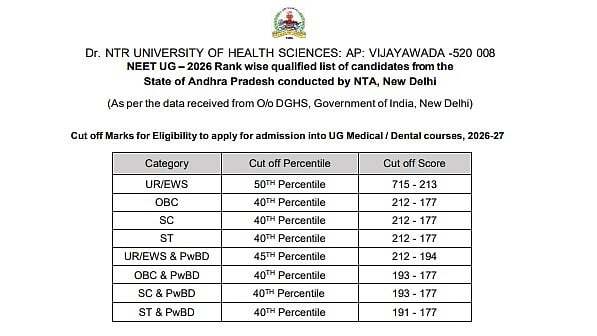
Andhra Pradesh NEET Rank List 2026 Out At drntr.uhsap.in; What's Next For 33,220 Qualified Candidates?
-
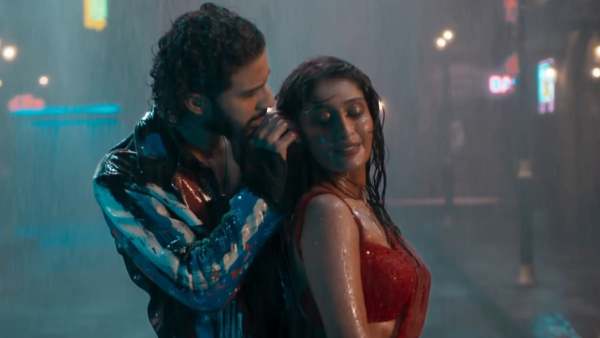
Bhai Tera Star Hai Box Office Collection Day 2: Raghav Juyal Starrer Stays Steady, Collects ₹25 Lakh On Friday
-
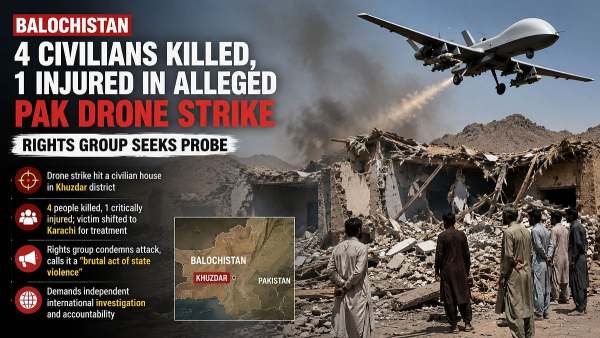
Pakistani Drone Strike: 4 Civilians Killed, 1 Injured In Alleged Attack On Balochistan's Khuzdar; Rights Group Seeks Probe
-
Football has made its view clear: Gianni Infantino must step down
-
Warangal Sub-Inspector arrested for harassing women online