Hyderabad: The Supreme Court‘s 2026 judgment in Prajwala v. Union of India, which introduced safeguards to protect the rights and agency of adult voluntary sex workers, remains poorly understood by many magistrates, lawyers and Protection Home administrators, resulting in the continued detention of adult women despite the Court’s directions, human rights lawyer Vasudha Nagaraj said during an online discussion organised by the Human Rights Forum (HRF) on Friday, July 31.
The online discussion, titled “Dignity, Not Detention,” was organised by HRF to mark the fifth anniversary of the passing of human rights activist Jayasree.
Nagaraj discussed the Supreme Court’s 2026 judgment in Prajwala v. Union of India and called for greater awareness within the justice system. She urged civil society to engage with the Department of Women and Child Development (WCD) and the judiciary to ensure that the Court’s directions are effectively implemented.

Law and reality
The Immoral Traffic (Prevention) Act (ITPA) is India’s primary law addressing trafficking for commercial sexual exploitation. While prostitution itself is not illegal under the Act, it criminalises several activities associated with sex work, including brothel keeping, procuring persons for prostitution, living on the earnings of prostitution in certain circumstances, and soliciting in public places.
Speaking on the law’s implementation, Nagaraj said its enforcement has often resulted in police raids in which adult women engaged in voluntary sex work are treated as victims of trafficking. During these operations, women are frequently subjected to verbal abuse, public humiliation, and the confiscation of identity documents and personal belongings. Such actions, she said, leave many women without proof of identity or access to essential documents, making it difficult to secure legal protections and government services.
Referring to the Supreme Court’s decisions in Budhadev Karmaskar v. State of West Bengal and Prajwala v. Union of India, Nagaraj said the rulings strengthen protections for adult sex workers while continuing efforts to combat trafficking. She noted that the 2022 Budhadev Karmaskar judgment directed police to treat sex workers with dignity and asked states to identify adult women being held in Protection Homes against their will and take appropriate action in accordance with the Court’s directions.
New safeguards under Prajwala
Building on these protections, Nagaraj said the Supreme Court’s 2026 judgment in Prajwala v. Union of India recognises that not every person engaged in sex work is a victim of trafficking and acknowledges that adults may voluntarily engage in sex work.
According to Nagaraj, the ruling lays down safeguards for rescue operations under the ITPA. Rescue teams must endeavour to determine whether the persons being rescued are voluntary sex workers instead of presuming trafficking. Women must be allowed to retain their identity documents and personal belongings, while photography and videography of rescue operations must exclude rescued persons to protect their identity and privacy. Adults cannot be detained overnight in police stations and must be produced before the appropriate authority without unnecessary delay.
She also lamented the sensationalisation of the verdict on social media, where it was portrayed as “now you are allowed to do sex work.” Nagaraj said the ruling instead seeks to protect the rights of adult voluntary sex workers while ensuring continued protection for victims of trafficking.
During the discussion, Nagaraj cited an article by Anjana Ramanathan and K Sudha published in The Wire, which describes the Prajwala judgment as a “DK Basu moment” for sex workers. The article argues that, much like the landmark DK Basu judgment introduced procedural safeguards against custodial abuse, Prajwala establishes safeguards governing rescue and rehabilitation under the ITPA.
Protection Homes under scrutiny
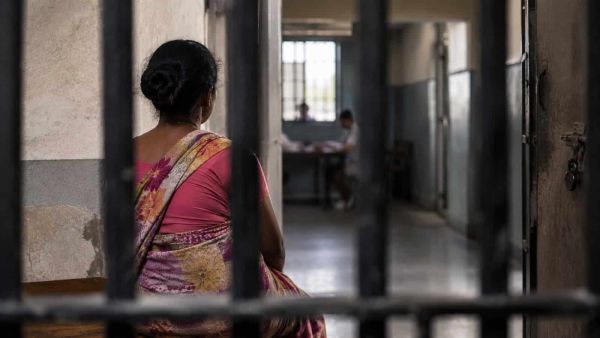
Nagaraj said many Protection Homes function more like prisons than rehabilitation centres. Adult women, she said, are often confined for months or even years despite stating that they entered sex work voluntarily.
She also said women in these institutions often have fewer practical rights than prisoners, as they may struggle to access lawyers and receive visitors, undermining the stated objective of rehabilitation.
Highlighting the Threshold Enquiry introduced in Prajwala, Nagaraj said that before ordering the institutionalisation of an adult woman rescued under the ITPA, a magistrate must first determine whether she is engaged in sex work voluntarily. The ruling gives primary importance to the woman’s own statement, except where there is evidence of coercion or serious concerns about her safety.
Nagaraj said this marks a shift from treating sex workers as passive subjects of rescue to recognising them as individuals capable of making decisions about their own lives.
Implementation remains the challenge
While welcoming the Supreme Court’s directions, Nagaraj said the biggest challenge now lies in implementation. Many magistrates, lawyers and Protection Home administrators, she said, remain unaware of the new legal standards, resulting in the continued institutionalisation of adult women despite the safeguards laid down by the Court.
She called for sustained advocacy through formal representations to the Department of Women and Child Development and greater engagement with the judiciary to ensure effective implementation. She also stressed the need to sensitise magistrates, lawyers and Protection Home authorities so that the protections recognised by the Supreme Court translate into meaningful change on the ground.
-
Jude Bellingham Returns Home To Cheer On Birmingham City Against Barcelona | Video

-
'Strongly urged' Iran to avoid attacks on seafarers, cargo ships: S Jaishankar
-
"It Brings Back Memories Of The Asian Games": Neeraj Chopra Praises Yashvir Singh As India Scripts Historic Javelin Medal Double At CWG 2026 | Video

-
Odisha Parents' Federation Launches Hunger Strike Over Education Issues
-
JAC Compartment Exam 2026: Jharkhand Board Class 10 and 12 compartment exam datesheet released; view the full schedule here..