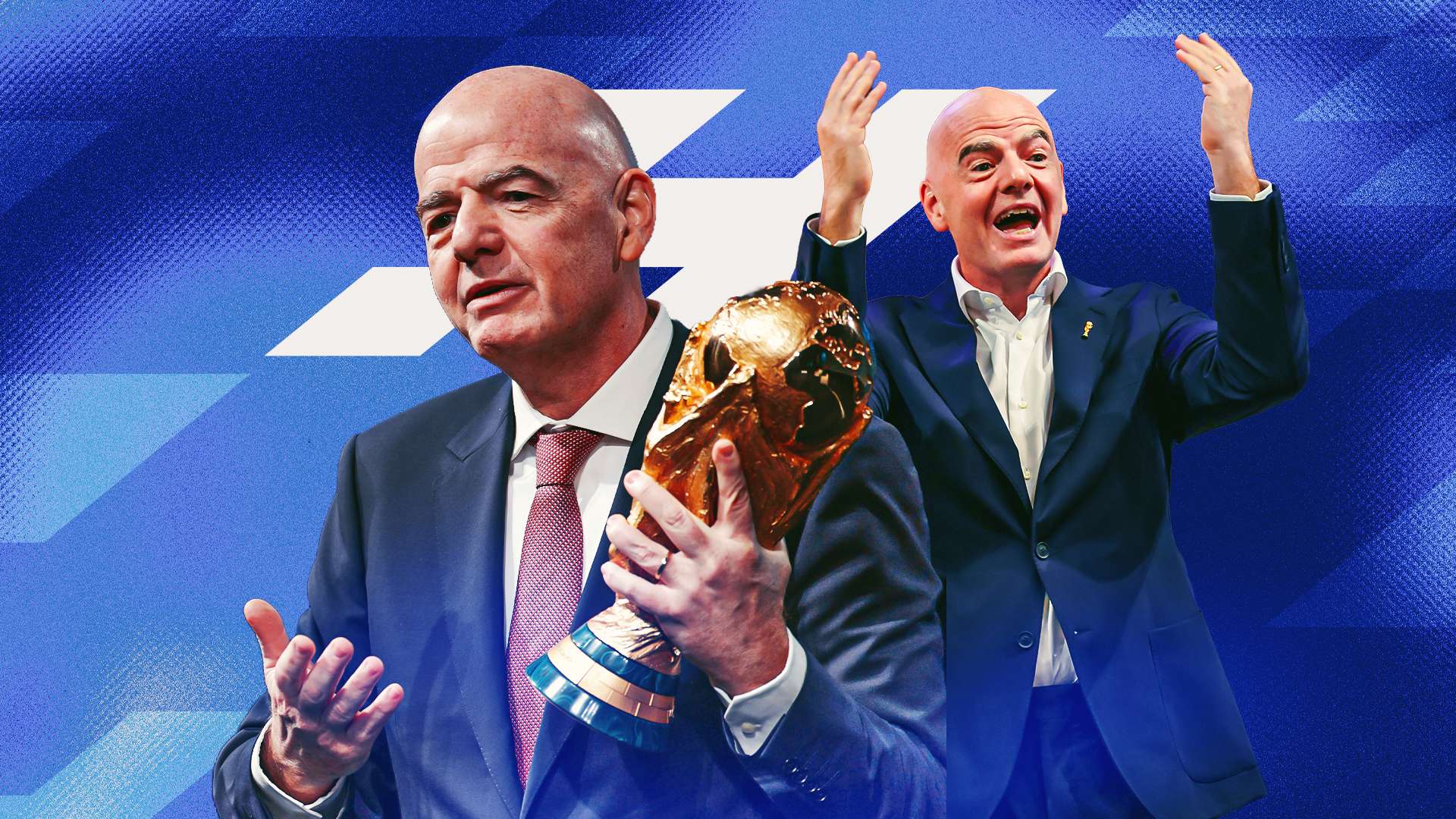
Is Gianni Infantino's hold over FIFA beginning to weaken? Europe has mounted a direct challenge to world football's governing body in a confrontation that could alter the sport's future.
A boycott of the World Cup and other FIFA events would place Infantino in the gravest crisis of his career.
World football is facing one of the most dangerous stand-offs of the modern era. UEFA have stunned the game by rejecting FIFA's proposal to bring private investors into the ownership structure of its competitions, with the World Cup at the centre of the dispute.
That rejection may be only the beginning. UEFA have warned they could take the extraordinary step of boycotting all FIFA competitions if Gianni Infantino pushes ahead with the proposal. Such a move would trigger a historic clash capable of reshaping the future of the world's most popular sport and would present the FIFA president with his toughest challenge since taking office.
UEFA could scarcely have adopted a stronger position. European football's governing body declared: "Neither UEFA nor its national associations will take part in any of FIFA's competitions."
Those words represent an unprecedented escalation against Infantino's plan to sell a 20% stake in a new company that would be created to manage FIFA tournaments, with the World Cup the most important of them.
What is the "FIFA Forward Enterprise" project?
FIFA's proposal revolves around a new commercial entity called "FIFA Forward Enterprise" (FFE), which would oversee the commercial rights to the major competitions organised by the global federation, most notably the World Cup.
Under the plan, FIFA would retain control of the company. Private investors would be allowed to purchase minority stakes, but those holdings would not give them authority over management.
FIFA say the project is designed to unlock new investment opportunities that would benefit national federations by increasing commercial returns and broadening funding streams.
The organisation insists that governance principles and the identity of the game would remain untouched, and that every member association would share in the economic opportunities generated by the project.
Huge financial promises to build support
Gianni Infantino, eager to secure backing, has told national associations that approving the project would generate unprecedented financial returns. Each association would receive 40 million dollars if the plan is passed, with an initial instalment of 20 million dollars to be paid once an association signs off on the proposal before the deadline of 19 September.
According to estimates, the leading investor group seeking a stake in the new company will be venture capital firm Thrive Capital.
The company was founded by American businessman Joshua Kushner, brother of Jared Kushner, the son-in-law of US President Donald Trump.
What happens next?
No side appears to have a clear picture of how the crisis will develop. A senior figure in European football told the British Broadcasting Corporation, the BBC, that no one has fully assessed the practical consequences, especially for tournaments due to be held in the coming months.
The most immediate of those is the Women's Under-20 World Cup, scheduled to begin in Poland on 5 September and involving a significant number of European teams. UEFA's boycott warning would take effect the moment Infantino's proposed funding deal is formally approved.
National associations have until 19 September to approve the agreement in exchange for the first 20 million dollars. In theory, that could force European teams into withdrawing from the tournament even at the quarter-final stage, before the semi-finals begin.
After that would come the Women's World Cup play-offs in October, featuring England, Scotland, Wales and Northern Ireland along with other European teams.
Laura McAllister, UEFA vice-president and former Wales international, addressed the crisis directly: "Wales are taking part in the play-offs qualifying for the Women's World Cup this autumn, and it would be our first qualification to the World Cup. No one can even think about not taking part in those competitions."
She insisted UEFA were not responsible for the crisis: "This is not UEFA's problem, but a crisis made by FIFA. No one wants the players or the teams to be harmed because of this dispute."
She concluded by saying UEFA had been forced into this position and that full responsibility rests with the Fédération Internationale de Football Association.
Has Infantino's era reached its limit?
Gianni Infantino became FIFA president in 2016 after defeating Sheikh Salman bin Ibrahim Al Khalifa, then president of the Asian Football Confederation, by 115 votes to 88.
The Swiss administrator is expected to stand in the FIFA presidential election next March and seek a fourth term, according to the BBC.
Before this latest crisis emerged, he had widely been expected to win re-election unopposed, with support from several national associations across different continents.
That picture has changed sharply in recent days. Sources with knowledge of the matter indicate that a majority of CONCACAF members have rejected the proposal and have begun to lose faith in Infantino's ability to lead world football. Others, it is said, have lost that faith completely.
As a result, discussion has begun behind the scenes about the need for a candidate capable of challenging Infantino in the election.
Will Nasser Al-Khelaifi run for FIFA president?
Nasser Al-Khelaifi has emerged as one of the names being mentioned as a possible challenger in the FIFA presidential election, and many consider that understandable given his influence within the game.
His authority goes far beyond his role as president of Paris Saint-Germain. Al-Khelaifi also occupies a key position in the European Club Association, now one of the most influential bodies in football decision-making.
He assumed leadership of the association after the collapse of the European Super League project in 2021, then supervised its restructuring and the expansion of its membership to more than 800 clubs across Europe, with Real Madrid the only major club still outside it.
Many see him as the leading figure capable of taking on Infantino. However, sources close to him told the BBC that he has no desire to enter the race.
When asked about the possibility, one person close to the Qatari official said: "He does not want this position. Really. Really. Really."
Will Infantino step down?
FIFA presidential elections have rarely featured genuine competition. The last president to lose through the ballot box was England's Sir Stanley Rous, who was defeated by Brazil's Joao Havelange in 1974.
Asked whether Infantino would stay in office, Laura McAllister replied: "Quite frankly, I don't know."
David Bernstein, former chairman of the English Football Association, said that events of this kind would have led to dismissal in an ordinary institution. But, he noted, FIFA operates differently.
"If Infantino secures the support of a sufficient number of national associations, he will continue to remain in his position," he said.
Lars-Christer Olsson, former chief executive of UEFA, believes Infantino overestimated his own influence and that his position is already under pressure.
Olsson suggested reforms inside FIFA based on rotating the presidency among the continents, rather than allowing one president to hold sweeping powers for long periods.
He added: "Relieving Infantino of his position could represent a new beginning for football."
UEFA announces the boycott: "The World Cup is not for sale"
In an extraordinary escalation that could reshape global football, UEFA have taken a firm stand against FIFA's proposal. European national teams, they say, will not participate in any tournament organised by FIFA if the plan is implemented.
UEFA released an official statement on behalf of the confederation and all 55 member national associations, rejecting the proposal outright and arguing that football cannot be turned into an investment vehicle subject to shareholder interests. The statement said: "The Union of European Football Associations (UEFA) and its national associations will not take part in any competitions organised by the International Federation of Association Football (FIFA)."
All 55 members, UEFA said, are united in opposing the project. They unanimously reject the transfer of any ownership stake in the World Cup or any other FIFA competition to private-sector investors.
The statement added that the World Cup is not simply a commercial asset or an investment opportunity. It is a global sporting legacy built by generations of players, national teams and supporters across the continents, and no part of it should be handed to investors seeking profits.
"The World Cup is not for sale"
UEFA stated the point plainly: "The World Cup is not for sale." The European body's objection extends beyond the substance of the project to the way FIFA handled the entire matter.
According to the statement, a proposal of such seriousness was prepared in total secrecy and then put forward for adoption without genuine consultation with the bodies responsible for protecting and governing the game. UEFA described this not merely as an administrative mistake but as a major failure of leadership and an abandonment by FIFA of its duty as the authority responsible for football worldwide.
National associations, UEFA argued, were effectively confronted with two harsh choices: accept the transfer of part of the control over FIFA tournaments to private investors, or deal with the consequences of rejecting the project. The European body said this reflected no democratic practice and instead amounted to pressure unworthy of an institution of FIFA's scale.
Fears over changing football's identity
UEFA said the danger in the project does not lie only in tournament ownership, but in what would follow. Once outside investors become part of the ownership structure of FIFA tournaments, profit generation and commercial returns would become a permanent priority, directly influencing decisions on the international calendar, competition formats and the future direction of the game.
The statement said such decisions would then be made not in football's interests, but in line with investor demands and financial expectations. It stressed that this model has no place in world football, because the future of the sport cannot be subjected to the logic of maximising profits or shareholder returns at the expense of national associations, leagues, clubs, players and supporters. Football, UEFA argued, must not mortgage its future for temporary financial gains.
Europe stands firm
UEFA made clear that its position is not open to reinterpretation and that it will not grant legitimacy to this model. No one, it added, has the moral right to dispose of a global legacy that belongs to future generations.
No team affiliated with UEFA will take part in any FIFA-organised tournament as long as this project continues, the statement concluded, unless it is abandoned in full and accompanied by binding legal guarantees preventing the ownership or governance of FIFA tournaments from being opened to private-sector investors in future.
UEFA ended with a strongly worded message: "There are moments when institutions are measured by what they refuse to give up, not by what they accept. This is one of those moments. There are things too important to be sold. The World Cup belongs to football, and it will always remain so, and as long as Europe has a say, the World Cup will not be up for sale."
Growing calls for Infantino to go
UEFA's decision sent tremors well beyond Europe. National associations, sporting institutions and political figures quickly voiced support for the European position, while directing sharp criticism at FIFA and president Gianni Infantino.
One statement after another rejected the plan to sell stakes in FIFA tournaments to private investors. The judgment was blunt: the move threatens football's future.
The English association: we stand with Europe
The Football Association of England fully backed the European position, insisting that the World Cup belongs to football and not to investors.
Its statement said: "We stand shoulder to shoulder with our European colleagues, and we fully support the collective position. We oppose FIFA's plans, for the World Cup belongs to football and always will."
Scotland condemns the lack of governance
The Scottish Football Association followed by backing UEFA completely and expressing concern about the way the project had been presented.
Its statement said: "We fully agree with the concerns expressed by all members regarding the manner in which these proposals were put forward, and the setting of a final deadline for their adoption without conducting a comprehensive consultation process or adhering to the principles of good governance."
Denmark: we will not let investors in
Jesper Moller, president of the Danish Football Association, was direct. Denmark rejects the project outright, he said, and allowing investors into FIFA's structure is unacceptable.
"It is entirely out of the question to approve an agreement of this kind, which allows private-sector investors to enter the heart of FIFA's system," he said. "That is why we will support all the necessary measures to stop this project."
Germany: Infantino has crossed the red line
Alexander Wehrle, chairman of the supervisory board of the German Football Association's economic and digital company, went even further. In his view, what is happening crosses every red line.
He said: "A red line has once again been crossed. Gianni Infantino wants to sell football. Has Infantino ever played football at a professional level? Has he stood among the fans in the stands? Does he really understand what football represents as a game that unites peoples? I have grave doubts about that."
Wehrle said FIFA's role is to run the game and frame its rules, not to pursue profit. He added: "I do not believe that the principle that should govern any sporting association is achieving the largest possible amount of profit, but it seems that things have veered off course, and that must be stopped."
Sweden and Norway: the project threatens the future of the game
The Swedish Football Association also lined up behind UEFA. It argued that a project of this magnitude cannot proceed without transparent debate and the involvement of all stakeholders.
Lise Klaveness, president of the Norwegian Football Association, criticised the secrecy surrounding the plan. She said: "We cannot accept a project that changes the essence of the model of world football, and is then prepared in secret away from elected bodies, before being presented as a fait accompli."
Her warning was stark: "There was no transparency, participation or genuine debate. And the message of Norway and UEFA is clear: if this project continues, we will withdraw from FIFA tournaments."
Political backing for Europe's position
It was not only football institutions that spoke out. Politicians also intervened. British Culture Secretary Lisa Nandy said UEFA's decision was rooted in principles worth defending.
She said: "Football belongs to the fans, not to billionaire investors. It has gone far enough, and the time has come to take a stand that protects our game."
Nigel Farage took direct aim at the FIFA president, saying: "Football belongs to the people, and UEFA is right in its position, and Gianni Infantino should resign."
A surprise from the Czech Republic: FIFA hold their line
The Czech Republic then produced a surprise twist. FIFA maintained their position, and the first visible crack emerged when the Football Association of the Czech Republic announced initial support for FIFA's proposal, breaking with the consensus reached at UEFA's emergency meeting.
That position conflicted with the stance announced at the meeting chaired by Aleksander Ceferin, which was attended by representatives of all 55 national associations. David Trunda, president of the Football Association of the Czech Republic, expressed optimism about the new project, saying it could bring substantial financial resources for infrastructure development and support football in his country.
Trunda said: "I see a genuine possibility for the development of Czech football through close work and cooperation with President Gianni Infantino and his team. We still need more details, but I see very positive indicators regarding FIFA's intentions in this project."
He added: "Since my election more than a year ago, all the projects we have carried out in cooperation with FIFA have been very positive and have contributed to the development of Czech football." That made the Czech Republic the first European association to publicly support Infantino's plan, a stance that could open the way for fresh divisions across Europe if the crisis continues to deepen.
"No one is selling football"
FIFA responded forcefully to the European backlash. World football's governing body defended the project and insisted that claims of "selling football" were untrue, arguing that the aim is to strengthen the financial resources of national associations rather than give up ownership of its tournaments.
FIFA stressed that the proposal remains under consultation and said it respects all the views and concerns raised by national and continental associations.
The federation's statement said: "No one is selling football, this is something FIFA would never consider." It added that "inaccurate media reports" had disrupted the consultation process and said it would continue dialogue with all member associations to ensure that any decision is based on clear and accurate information.
Can UEFA break away from FIFA?
UEFA may account for only 55 of FIFA's 211 member associations, but it remains the strongest force in world football, both on the pitch and commercially.
A look at the recent World Cup, Women's World Cup and Club World Cup underlines that reality. European national teams and clubs dominated and took the majority of places in the latter stages.
According to the BBC, many believe Europe's absence from FIFA tournaments would deal a devastating blow to the global federation, not just in sporting terms but economically as well.
The commercial value of FIFA competitions depends heavily on European national teams. Any boycott would cause huge financial losses and could make Infantino's investment targets impossible to achieve.
Despite the sharp escalation, several former officials believe a split between FIFA and UEFA would benefit neither side. David Bernstein, former chairman of the Football Association, warned that allowing the crisis to run to the point of a complete separation would be disastrous for all concerned.
He said: "I cannot imagine a long-term split happening, because everyone will lose. FIFA cannot bear the absence of Europe from its tournaments, and in return Europe cannot bear staying away from FIFA competitions either."
Bernstein argued that the only solution is for Infantino to retreat from the project. In his view, the deal in its present form is unacceptable. He added: "If the aim is to provide new sources of funding, then there are other means that are more transparent and fairer to achieve that."
World football now stands at a historic crossroads, locked in an unprecedented struggle between the two biggest institutions governing the game.
FIFA continue to present the project as a way to develop financial resources and increase investment in football. UEFA, along with a growing number of national associations, view it as a direct threat to the sport's independence that could allow decisions to be shaped by investor interests.
With the deadline for voting on the project drawing near, attention is fixed on the coming weeks. They may bring either a historic settlement that contains the crisis, or an unprecedented escalation that redraws the map of world football and determines Gianni Infantino's future as FIFA president.
-
Top 10 | ABP LIVE Morning Bulletin: Top News Headlines from 1 August 2026 to Start Your Day - Morning
-
Pink Tie-Dye Saree Styling Guide: Trendy Summer Saree Looks for Women in 2026

-
Neeraj Chopra and Yashvir Singh Shine at Commonwealth Games 2026
-
Newcastle United to appoint Matthias Jaissle as new head coach
-
The kitchen fan is oily. Follow these simple steps to clean it and it will shine like new.