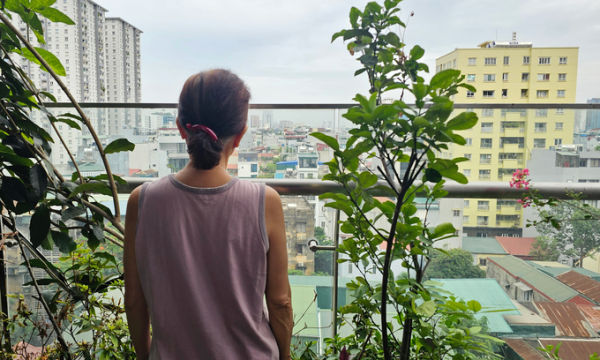
At 71, Tran Thi Van Anh never imagined she would leave the house she had lived in since 1990 on Thai Ha Street in Hanoi despite its poor natural lighting and constant traffic noise. She occupied one floor and her son Nam Trung, 44, lived with his wife and two children on another.
Despite three generations living under one roof, their daily lives did not intersect. “We rarely talked to each other, and I was always worried about leaving my mother home alone,” Trung says.
He decided to move the whole family into an apartment, a plan Van Anh initially opposed due to fears of crowded communal spaces and long elevator queues. But within two weeks of moving into their new home, she changed her mind.
The home is a 180-square-meter dual-key apartment situated on the eighth floor of a tower in Lang Ha Street. The layout provides two independent living spaces with a shared main entrance.
Van Anh occupies the section with a southeast-facing bedroom and large balcony adjacent to the family altar and shares the living room.
Her son’s family has their own separate bedroom and working area. Without the need to climb stairs and with 24-hour security, Van Anh sleeps much better. Having the family on a single level also means she spends more time with her grandchildren throughout the day. “When guests come over, she’s now the one proudly showing them around, especially the sunny balcony,” Trung says.
|
Tran Thi Van Anh, 71, stands on the balcony of her family’s apartment on Lang Ha Street, Hanoi. Photo by Nam Trung |
Tran Van Khang, 78, used to live in a two-story garden home in Gia Lam District, Hanoi, with his wife, Le Thi Hoa, 75, fully intending to spend the rest of his life there. As he grew older, the property became larger than he needed, turning into what he describes as “a lonely nest.”
“My daughters were both busy. Even though they lived only about 20 kilometers away, they managed to visit just a few times a year.”
But the key motivation for moving came when Hoa began to help care for their eldest daughter’s children, meaning she needed to live nearby. Both daughters contributed financially to help their parents move into an apartment.
Today, Khang and Hoa live in an 80-square-meter sixth floor apartment in Xuan Dinh Ward, while one of their daughters lives on the 20th. Khang no longer worries about falling on the stairs.
He spends his days cooking, playing with his grandchildren and meeting fellow retirees in the neighborhood for games of chess.
Stories like those of Van Anh and Khang reflect a broader global shift toward age-friendly housing that fosters multi-generational co-living amid rapid aging in Vietnam. For many families, transitioning to single-level living spaces is a way to safeguard seniors from risks.
According to property platform Batdongsan.com.vn, apartments have been the preferred housing choice of 59% of homebuyers in Hanoi and 54% in HCMC in the first half of 2026.
Matthew Powell, director of Savills Hanoi, believes the trend is driven by three long-term structural changes. First, Vietnam is experiencing rapid, irreversible population aging before reaching high-income status, creating strong demand for housing that integrates safety and care rather than simply providing shelter.
Second, rapid urbanization and the dual pressure of work and childcare have made it increasingly difficult for families to sustain the traditional model of caring for aging parents at home. While around 80% of older Vietnamese wish to age at home, existing care services meet only a small fraction of that demand.
Third, senior housing has already become a mature multi-hundred-billion-dollar asset class globally, integrating real estate with healthcare, services, and social welfare.
 |
|
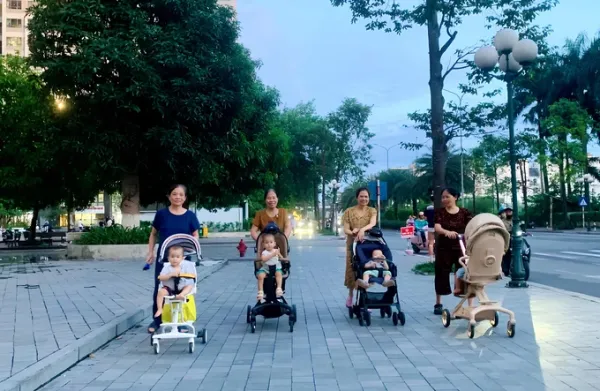
Seniors push strollers at an apartment complex in Dong Ngac Ward, Hanoi, June 2026. Photo by Phan Duong |
Dr. Ngo Viet Nam Son, an architect with over three decades of international experience, says senior housing in Japan, Singapore, Australia, and Europe varies in style but consistently integrates clinics, rehabilitation centers, and parks.
Real estate analyst Le Quoc Kien believes the demographic shift is already influencing housing design in Vietnam.
Demand for multi-bedroom units, split-level duplexes, and dual-key layouts is set to grow to accommodate multi-generational families living together or side by side, he says.
Hai Van, a 72-year-old retiree previously working in aviation, has experienced those benefits firsthand. Family gatherings used to require her children to drive across the city to pick her up, with trips at times canceled due to rain.
To change this, Van’s eldest daughter initiated a move, pooling capital with her sister and mother to purchase units in the same compound.
Today, the family lives in three separate towers within the same residential complex in Hanoi’s Nghia Do Ward, where they simply take the elevator down to the interconnected basement parking lot to meet.
Since moving into her 75-square-meter apartment, Van regularly joins community dance classes, yoga sessions, and swimming activities, seeing her children and grandchildren three to five times a week. “At this point, I fully support older people moving into apartments,” she says.
From an eldercare perspective, Tran Thuy Nga, deputy general director of Dien Hong Nursing Home, says many people still romanticize the idea of ageing in detached houses with gardens.
In reality, many retirees gradually limit themselves to just a few rooms, leading to sedentary lifestyles and increased fall risks. According to the World Health Organization, roughly 30% of people aged 65 and over, and nearly half of those aged over 80, experience at least one fall a year, with half suffering recurrent falls.
Nga points out: “Even healthy older adults can slip on steps or stairs. A single fall can cost someone their independence.”
She also notes that seniors not only need a flat living space but an environment that encourages them to step outside, meet neighbors, join clubs, and feel a sense of belonging. “A well-designed apartment community does not just help older people live safely; it must also help them avoid living in isolation.”
A 2026 study of 1,000 older adults in China found that flat housing with elevators helps foster seniors’ independence. The ability to stroll, shop, and socialize unassisted yields profound benefits for mental health.
 |
|
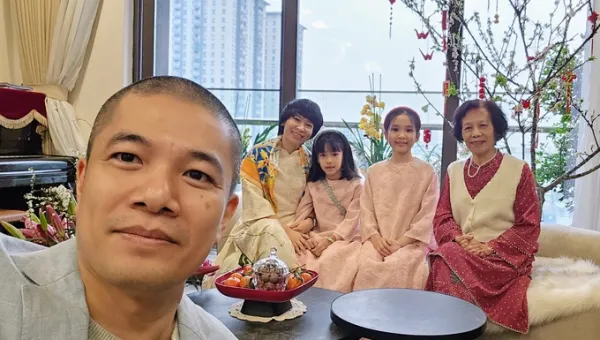
Van Anh with her family in their 180-square-meter apartment on Lang Ha Street, Hanoi, during Tet 2026. Photo courtesy of Van Anh’s family |
To prepare for this demographic shift, Son believes Vietnam needs to rethink apartment design, moving beyond housing primarily intended for young families to inclusive, age-friendly environments.
Safety features such as non-slip flooring, handrails, and emergency alert systems should become standard rather than optional, he says.
For Van Anh, the meaning of a fulfilling old age has also changed. “If a garden and courtyard once symbolized settling down, today what truly matters is having a single-level home where I can open the door and see my children and grandchildren, or take the elevator downstairs to meet friends.”
-
Morgan Rogers and Maxence Lacroix are gambling on Chelsea despite a model that has already stalled many careers

-
Neeraj Chopra battles cold, wind to qualify for CWG javelin final

-
These 2 Biotech Stocks Hit New 52-Week Highs Today – And CORT Clocked Its Best Day In Nearly 16 Months

-
Paper leak mafia will not be spared, says PM Modi on new exam Bill

-
NVDA, AMD, ORCL, MU And Other Stocks In Focus — Situational Awareness Reportedly Sells Bulk Of Public Portfolio To Citadel