For centuries, the Basava (bull) stood at the very center of Deccani agrarian life as an indispensable partner in tilling the soil and providing organic manure. Today, as tractors replace livestock and chemical fertilizers alter farming ecosystems, the quiet presence of the Basava is steadily fading from rural landscapes.
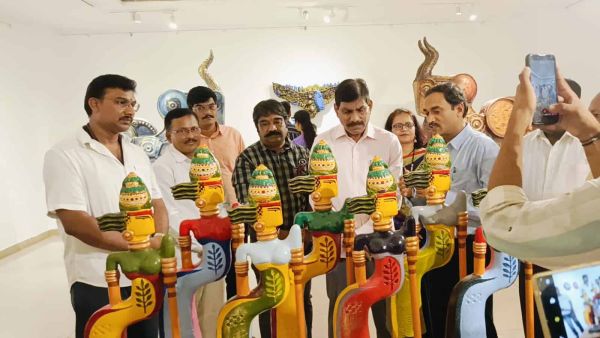
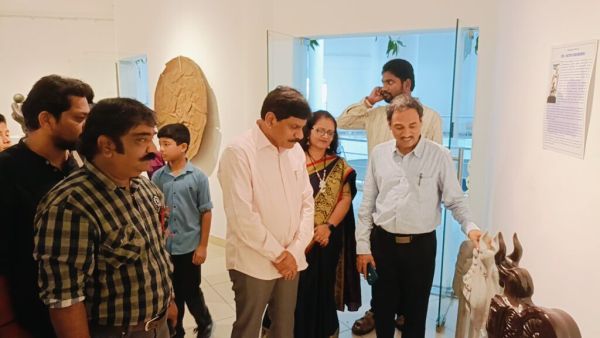
A solo exhibition at the Chitramayee State Gallery of Art in Madhapur, brought this shifting legacy back into focus from July 25 to 30. Created by renowned sculptor, painter, and installation artist Dr. Hothi Baswaraj, General Secretary of the Telangana Sculptors and Artists Association, the showcase brought together 30 years of artistic reflection on the cultural, spiritual, and ecological weight of the bull.
Rooted in tradition
For Dr. Baswaraj, whose outstanding contributions to visual arts earned him an Honorary Doctorate alongside national recognition, the obsession with the Basava is deeply personal.

“I grew up watching my mother make small earth sculptures of the Basava for household worship,” Dr. Baswaraj shared in a press release. “Seeing people in the village create these sacred forms sparked my curiosity early on. I have been sculpting and painting them continuously for the past three decades.”
That childhood reverie evolved into a career defined by shaping public art across Telangana. Known for crafting the iconic Basaveshwara statue on Hyderabad’s Tank Bund (inaugurated in 2017) and monumental statues of Chhatrapati Shivaji Maharaj, Louis Braille, and Dhanwantari, Dr. Baswaraj has also brought indigenous heritage to life through museum installations at Mannanur, Srisailam, Jodeghat, Medaram, and Hyderabad.
In his latest showcase, however, his focus returns to the ecological disconnect facing modern fields:
Vanishing Organic Cycles: The shift from cattle dung manure to heavy chemical fertilizers has altered soil health and introduced noticeable ecological side effects.
Loss of Cultural Anchor: The bull, once venerated as a living bridge between prehistory, divinity, and daily survival, is increasingly treated as obsolete in mechanized farming.
Folklore, scrap metal and festival synergy
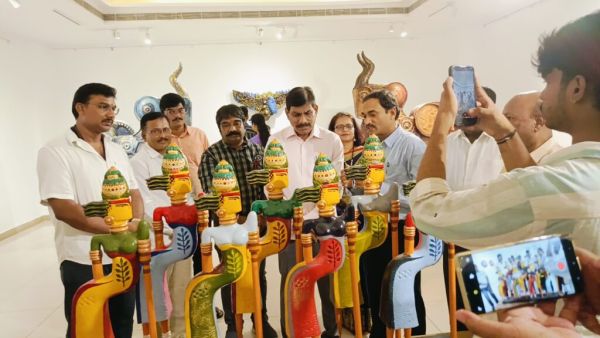
Curated by Dr. Satyanarayana Dyavanapalli, the exhibition showcased a wide array of mediums, from traditional clay forms and tribal-inspired pieces to contemporary sculptures welded from industrial iron waste.
A standout feature of the exhibition was a seven-part sculpture series that intricately intertwines the regional folk festivals of Bathukamma and Bonalu, bridging floral and maternal devotion with livestock heritage. Furthermore, featured pieces reflecting the artist’s unique style included Saptamatrikas – Bonalu, Shivadutha Basava, Winning Rooster, and Selfie.
According to curator Dr. Dyavanapalli, each artwork in the collection embodies a distinct idea, a social message, and a deep cultural context.
Speed sculpting blindfolded
Demonstrating the technical skill and measurement sense developed over decades of daily practice, Dr. Baswaraj performed a live sculpting feat during the event. He created figures of Lord Ganesha, Sri Rama, and Goddess Durga while blindfolded, completing each sculpture within an hour.
“Since I regularly practise sculpting, I know the measurements and can create the figures easily even while blindfolded,” he said.
Documenting a 25-year legacy in a book
The event also hosted the official release of Baswarajeevam, a comprehensive book documenting Dr. Baswaraj’s sculptures and paintings created over the past 25 years. The publication features rare photographs along with detailed descriptions of his quarter-century of artistic work.
-
TGCSB warns of fake income tax refund scams

-
Join BJP or you will be in trouble, Dipke claims intimidation by party
-
Delhi Mayor calls for closure of meat shops for Kanwar Yatra
-
2020 Delhi riots: Umar Khalid moves HC for bail in UAPA case
-
Nepal Violence Spreads Beyond Sunsari; Curfews, Army Deployment As Death Toll Rises