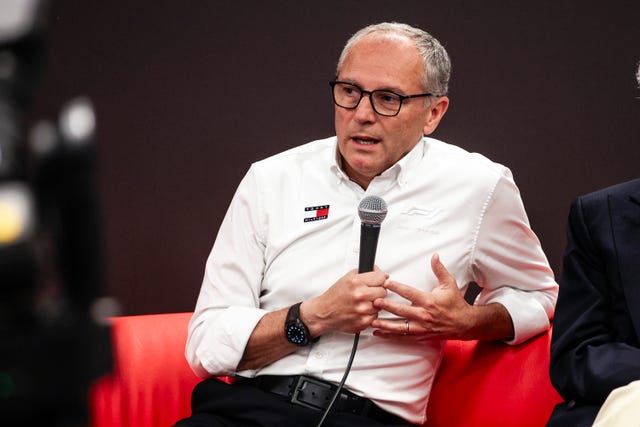
With four races on Formula 1’s calendar in the Middle East, the disruption linked to Iran earlier this year was always going to create a serious scheduling challenge for the championship and its chief executive, Stefano Domenicali. However, this is far from the first time he has had to navigate a period of global turmoil. In 2020, the Italian helped guide the sport through the COVID-19 crisis; that season eventually began in July and went on to feature 17 races, many of them arranged at short notice and held with either no fans or only limited attendance. The Gulf situation has not been quite as complicated to manage, at least up to now, but it has still caused significant difficulties.
Formula 1 had been scheduled to race in Bahrain and Jeddah in April this year, but as tensions intensified, it became clear that the situation could not continue as planned, and both events were removed. Attention then shifted to finding a way to restore at least one of those rounds later in the season. Conveniently, there was a free weekend available on October 2–4, between the Baku and Singapore races. Work was done on that plan for some time, and there were moments when it appeared the Gulf situation might settle down, only for tensions to rise again.
That forced F1 to look for another venue to occupy that October slot, and it had to be outside Europe — a flyaway event that would fit the freight route from Baku to Singapore. The challenge was locating a promoter that could stage a race at short notice and do so on a commercially workable basis, given the limited time available to sell tickets and handle the rest of the event planning. Turkey was considered, particularly as it is set to return to the calendar in 2027, but in the end Formula 1 settled on an unexpected solution: staging the Bahrain GP at Malaysia’s Sepang Circuit, a well-liked track that hosted F1 from 1999 to 2017 before dropping off the schedule for the usual financial reasons. Under the new arrangement, Bahrain covers the costs and retains the public-relations value, while Malaysia gets a chance to re-establish itself on the global sporting stage with minimal expense and limited risk.
“We wanted to maximise the number of races that are part of this calendar,” Domenicali said while speaking to F1 media on Wednesday. “We wanted to be in Bahrain, and we always said that that we have cut-off dates on which we need to take decisions, because for the recovery of one of the Grands Prix in Bahrain, we should have respected the deadline of the end of this month. Together, we have found a new way of hosting the Bahrain Grand Prix Malaysia. So it's a sign of cooperation. It's a sign of thinking wider than what other people believe. As I said, we want to make sure that the championship is with as many events as possible.”
There are solid financial reasons behind the push to keep the number of races as high as possible. Around one-third of F1’s revenue comes from race-hosting fees, and the four Middle East rounds contribute heavily to that total, making their presence extremely important. In addition, the championship needs a minimum number of events to fully activate television broadcast and sponsorship agreements, which account for the remaining two-third of F1’s income. During the COVID period, that threshold was generally accepted to be 16 races, and as noted earlier, the 2020 season ultimately reached 17. That experience then influenced newer contracts, which were built around totals in the 20–22 range, explaining why there is such urgency to run as many races as possible this year.
With the Bahrain/Malaysia arrangement now in place, attention shifts to the final part of the season. Formula 1 is currently meant to travel from Las Vegas on November 21 to Qatar on November 29, and then to Abu Dhabi on December 6. If the present situation does not improve, it is obvious that the last two races of the season would have to be removed. The FIA WEC championship has already pulled out of its planned events in Qatar and Bahrain, choosing instead to race at Barcelona and Monza.
“With regard to the end of the season, we are in touch with all the other championships,” Domenicali said. “I know that, for example, WEC has announced that they will not go at the end of the year in the Middle East and will stay in Europe. The way that we are structured is that we will take the maximum time to see how the situation will develop, and we will take the decision at the right time. That moment will be not before the middle of September. For us today, the races in Qatar and Abu Dhabi are confirmed.”
Domenicali accepts that the picture could still change. If it does, the season finale would move to Europe, with Imola seen as the leading candidate to take over the December 6 slot, although he stopped short of confirming that outcome. “Of course, if the situation will not be cleared the way that we believe it should be before the middle of September, we will take the decision,” he said. “And on that respect, I just want to confirm to you that if this will not be possible, that the end of the season will be in Europe, because we cannot go in other places, so the end eventually will be in Europe. There are some possibilities on the table, but I don't think it's right to make some promises or anticipate several things. But that's the situation of today.”
From a logistics point of view, remaining in the United States might appear to have been an option. But although a second race in Las Vegas was briefly examined, it was never truly realistic. “I can guarantee to you that we will not do any other race in the US,” Domenicali said. “There was a possibility there being two races in Las Vegas, but we don't want to ruin a jewel that is growing by undervaluing what we are doing there. And of course, we don't have to forget that in that period of the year, we are fighting in the U.S. against [the] NFL. That is a major sport that is ... I don't want to say attractive, but a lot of fans are watching that, so we need to avoid any kind of situation that will put us in front of something that is still very big in the US.”
A European replacement would mean the teams, most of which are based in Britain, would return to their factories after Las Vegas for a very quick turnaround. The December timing also creates the possibility of extremely cold weather, raising the clear risk that if conditions become severe enough, Formula 1 may not be able to stage a season finale at all. That would be an unsatisfactory way to decide the championship, especially if the title fight has not already been effectively settled on points.
Having grown up near Imola, Domenicali understands better than most what such a finale could look like. “It's definitely something that no one knows ... where the temperature will go or [what the] weather [will be] like,” he said. “I think that actually, we see in this situation ... how the evolution of the climate change is happening. There's no certainty, on everything about that. The only possibility we have is to finish in Europe within the same framework of the time, hoping that there will be no snow, as we can hope in other places. If it's happening, we will try to react on that. Pirelli will not be ready to have the winter snow [tires] for that! But maybe they need to work on them soon. But seriously, I think that the weather should allow us to race in Europe, even at the end of December.”
Although sorting out this year’s finale is the most immediate concern, Domenicali is also dealing with the still-unpublished 2027 calendar. Last year, the 2026 schedule was released on June 10, and Formula 1 is already seven weeks behind that timeline. It also appears there will be a further wait before the next one is revealed. “So far, the calendar that will be presented, let's say in autumn, will be as a sort of normal plan,” he said. “But of course, in case the situation in the Middle East will be not solved, we have options — different plans. The trigger for that, of course, is at the end of the year; so we have still a lot of time, if I may say, to adjust. But just to assure you, we have different plans, with different options ready in place that will accommodate the fact that we will keep, in any case, the target of 24 grands prix also for next year.”
-
Cucurella unveils striking new hairstyle after World Cup
-
A billion-dollar crime syndicate left behind 47 high-end cars, and now they are heading to auction
-
स्पोर्ट्स कार्स और मसल कार्स ‘जिस तरह चलाई जाती हैं, उसी वजह से खतरनाक हैं,’ आईआईएचएस प्रेसिडेंट ने रिपोर्ट में कहा
-
Car industry leaders ask new PM Andy Burnham to reassess EV sales rules. Here’s why
-
New Mercedes-Benz GLA unveiled as Audi Q4 rival with 408-mile range