Why are we so afraid of being needy?
ETimes | July 29, 2026 1:39 PM CST
There is a sentence many of us desperately want to hear but are strangely afraid to ask for:
Are we okay?
It’s not a dramatic question. It doesn't demand grand declarations of love or lifelong commitment. It simply asks for reassurance. But saying those three words feels deeply uncomfortable, almost humiliating.
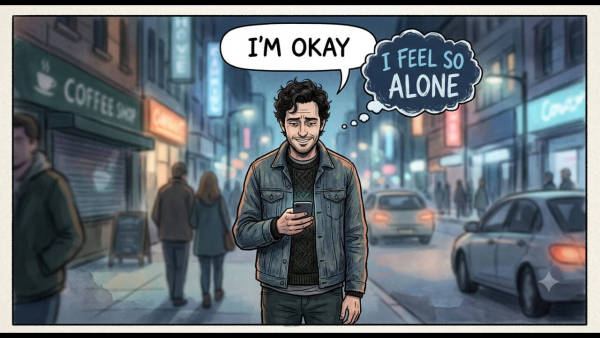
Instead, we tell ourselves not to text first. We convince ourselves to “play it cool.” We reread messages looking for hidden meanings, wonder why someone has become quieter than usual, and spend hours analysing what a five-minute conversation might have meant. We crave reassurance but avoid asking for it, worried that doing so will make us appear clingy, insecure or, perhaps the worst label in modern relationships : needy .
Somewhere along the way, needing people became something to be ashamed of. This is one of the great paradoxes of contemporary relationships. We are social creatures whose brains are literally wired for connection, but we increasingly celebrate emotional self-sufficiency as the ultimate virtue. Independence has become aspirational, which isn’t bad. But hyper individuality is the problem. Because that’s when vulnerability becomes negotiable.
The result is that many of us “perform” emotional confidence while quietly longing to be reassured. Psychologists have long argued that the desire for reassurance is not a weakness but a basic human need. From infancy onwards, our sense of safety is built through consistent emotional responses from the people who matter to us. A crying baby is comforted. A frightened child reaches for a parent's hand. These repeated experiences teach us whether the world—and the people in it—are emotionally reliable.
These early patterns often shape what psychologists call attachment styles, influencing how we navigate intimacy as adults.
People with a secure attachment generally find it easier to ask for what they need without feeling ashamed. Those with anxious attachment may crave closeness but fear abandonment, often worrying that asking for reassurance will push others away. Those with avoidant attachment tend to minimise their emotional needs altogether, convincing themselves they don't need anyone even when loneliness tells a different story.
But here’s the counter argument. Psychoanalyst John Bowlby, who developed attachment theory, believed that our need for close emotional bonds doesn't disappear after childhood. It stays with us throughout our lives. He argued that healthy dependence isn't a sign of immaturity but a source of emotional strength.
In romantic relationships, our brains are constantly asking a simple question: Is my person there for me? When we feel our partner is available, attentive and emotionally responsive, we feel safe. When that connection is threatened—through conflict, emotional distance or silence—our brain reacts almost as if we're facing physical danger. The amygdala, the brain's alarm system, is activated, triggering anxiety and stress.
Science backs this up. Studies show that long-term partners don't just share emotions; they regulate each other's bodies. They influence each other's heart rate, blood pressure, breathing and even stress hormones. Simply knowing that someone we love is emotionally available can calm our nervous system.
So, why have we become so afraid to be needy in our times?Experts say the fear of being needy often has very little to do with the present relationship. It is rooted in older emotional lessons about whether our needs will be welcomed or rejected.
Modern culture has only intensified this anxiety. Social media rewards the appearance of effortless confidence. Popular relationship advice tells us not to double-text, not to seem too available, not to reveal our feelings too early. Entire dating strategies revolve around appearing emotionally detached because detachment is mistaken for desirability. The ideal partner, it seems, is someone who needs absolutely nothing.
Knock, knock. That person doesn't exist. Every healthy relationship depends on mutual emotional dependence. We all need affection, comfort, validation and the reassurance that we matter to someone. It’s not even about whether we have needs… rather do we feel safe expressing them?
Ironically, the people who insist they "don't need anyone" are often not free of emotional needs at all. They have simply become experts at suppressing them.
Suppression comes at a costResearch consistently shows that emotional suppression increases stress, reduces relationship satisfaction and makes genuine intimacy harder to achieve. When we refuse to express our needs, our partners are left guessing. They may mistake silence for contentment, distance for independence or withdrawal for strength.
Resentment often begins where communication ends. Technology has complicated this further. Every message now carries invisible emotional weight. If someone reads a text and replies six hours later, is that normal busyness or emotional distance? If they stop sending good morning messages, does it mean something has changed? Digital communication offers endless opportunities for ambiguity, and ambiguity is fertile ground for insecurity.
Yet instead of asking directly, many people choose detective work. They study online activity. Count response times. Analyse punctuation. Interpret emojis. Anything feels easier than simply saying, "I've been feeling a little disconnected lately."
Part of this reluctance comes from misunderstanding what emotional dependence actually means. Being needy is often confused with being emotionally abusive, controlling or excessively dependent. These are not the same thing. Healthy reassurance sounds like: "Can we talk? I've been feeling anxious." Unhealthy reassurance demands constant proof of love, seeks to control another person's behaviour or makes one partner solely responsible for regulating the other's emotions.
Then there was hustle culture…These days, we are encouraged to optimize everything – our careers, fitness, finances and personal growth. Self-reliance is celebrated as maturity. Asking for help, whether professionally or emotionally, is often seen as evidence that we haven't quite figured life out. Relationships, too, quietly absorb this philosophy.
Instead of leaning on one another, couples often strive to become two completely self-contained individuals sharing the same space. But what we fail to understand is that radical emotional independence is another form of loneliness.
Perhaps this explains why so many people describe feeling unseen even in loving relationships. Relationship researcher Brené Brown has spent years studying vulnerability and shame, arguing that genuine connection is impossible without the willingness to be emotionally seen. Love requires uncertainty. It asks us to reveal parts of ourselves that might not always be met with the response we hope for. There is courage in saying, I miss you. There is courage in admitting, I need a hug. There is courage in asking, Can you reassure me?
None of these diminish independence, according to Brown. Instead, they deepen intimacy.
The hidden fear that lies beneath our hyper-individual confidencePhilosopher Alain de Botton believes most relationship arguments aren't actually about what they seem. Couples may argue about dirty dishes, forgotten birthdays or whose turn it is to plan dinner. But beneath these everyday conflicts often lies a much deeper question: Do I matter to you?
According to de Botton, many disagreements are really disguised requests for reassurance. Instead of saying, I feel ignored or I'm afraid I'm losing you, people argue about practical details because they feel safer than admitting vulnerability.
He suggests that most relationship conflicts are driven by a handful of universal emotional fears:
By celebrating extreme self-sufficiency, we have confused independence with emotional isolation. But humans are wired for connection. From infancy to old age, our nervous systems depend on trusted relationships to help us feel safe, regulate stress and navigate life.
The strongest people are not those who never need anyone. They are the ones who can say, without shame, I need you, and who can respond with kindness when someone else says the same.
It’s not a dramatic question. It doesn't demand grand declarations of love or lifelong commitment. It simply asks for reassurance. But saying those three words feels deeply uncomfortable, almost humiliating.
Instead, we tell ourselves not to text first. We convince ourselves to “play it cool.” We reread messages looking for hidden meanings, wonder why someone has become quieter than usual, and spend hours analysing what a five-minute conversation might have meant. We crave reassurance but avoid asking for it, worried that doing so will make us appear clingy, insecure or, perhaps the worst label in modern relationships : needy .
Somewhere along the way, needing people became something to be ashamed of. This is one of the great paradoxes of contemporary relationships. We are social creatures whose brains are literally wired for connection, but we increasingly celebrate emotional self-sufficiency as the ultimate virtue. Independence has become aspirational, which isn’t bad. But hyper individuality is the problem. Because that’s when vulnerability becomes negotiable.
The result is that many of us “perform” emotional confidence while quietly longing to be reassured. Psychologists have long argued that the desire for reassurance is not a weakness but a basic human need. From infancy onwards, our sense of safety is built through consistent emotional responses from the people who matter to us. A crying baby is comforted. A frightened child reaches for a parent's hand. These repeated experiences teach us whether the world—and the people in it—are emotionally reliable.
These early patterns often shape what psychologists call attachment styles, influencing how we navigate intimacy as adults.
People with a secure attachment generally find it easier to ask for what they need without feeling ashamed. Those with anxious attachment may crave closeness but fear abandonment, often worrying that asking for reassurance will push others away. Those with avoidant attachment tend to minimise their emotional needs altogether, convincing themselves they don't need anyone even when loneliness tells a different story.
But here’s the counter argument. Psychoanalyst John Bowlby, who developed attachment theory, believed that our need for close emotional bonds doesn't disappear after childhood. It stays with us throughout our lives. He argued that healthy dependence isn't a sign of immaturity but a source of emotional strength.
In romantic relationships, our brains are constantly asking a simple question: Is my person there for me? When we feel our partner is available, attentive and emotionally responsive, we feel safe. When that connection is threatened—through conflict, emotional distance or silence—our brain reacts almost as if we're facing physical danger. The amygdala, the brain's alarm system, is activated, triggering anxiety and stress.
Science backs this up. Studies show that long-term partners don't just share emotions; they regulate each other's bodies. They influence each other's heart rate, blood pressure, breathing and even stress hormones. Simply knowing that someone we love is emotionally available can calm our nervous system.
So, why have we become so afraid to be needy in our times?Experts say the fear of being needy often has very little to do with the present relationship. It is rooted in older emotional lessons about whether our needs will be welcomed or rejected.
Modern culture has only intensified this anxiety. Social media rewards the appearance of effortless confidence. Popular relationship advice tells us not to double-text, not to seem too available, not to reveal our feelings too early. Entire dating strategies revolve around appearing emotionally detached because detachment is mistaken for desirability. The ideal partner, it seems, is someone who needs absolutely nothing.
Knock, knock. That person doesn't exist. Every healthy relationship depends on mutual emotional dependence. We all need affection, comfort, validation and the reassurance that we matter to someone. It’s not even about whether we have needs… rather do we feel safe expressing them?
Ironically, the people who insist they "don't need anyone" are often not free of emotional needs at all. They have simply become experts at suppressing them.
Suppression comes at a costResearch consistently shows that emotional suppression increases stress, reduces relationship satisfaction and makes genuine intimacy harder to achieve. When we refuse to express our needs, our partners are left guessing. They may mistake silence for contentment, distance for independence or withdrawal for strength.
Resentment often begins where communication ends. Technology has complicated this further. Every message now carries invisible emotional weight. If someone reads a text and replies six hours later, is that normal busyness or emotional distance? If they stop sending good morning messages, does it mean something has changed? Digital communication offers endless opportunities for ambiguity, and ambiguity is fertile ground for insecurity.
Yet instead of asking directly, many people choose detective work. They study online activity. Count response times. Analyse punctuation. Interpret emojis. Anything feels easier than simply saying, "I've been feeling a little disconnected lately."
Part of this reluctance comes from misunderstanding what emotional dependence actually means. Being needy is often confused with being emotionally abusive, controlling or excessively dependent. These are not the same thing. Healthy reassurance sounds like: "Can we talk? I've been feeling anxious." Unhealthy reassurance demands constant proof of love, seeks to control another person's behaviour or makes one partner solely responsible for regulating the other's emotions.
Then there was hustle culture…These days, we are encouraged to optimize everything – our careers, fitness, finances and personal growth. Self-reliance is celebrated as maturity. Asking for help, whether professionally or emotionally, is often seen as evidence that we haven't quite figured life out. Relationships, too, quietly absorb this philosophy.
Instead of leaning on one another, couples often strive to become two completely self-contained individuals sharing the same space. But what we fail to understand is that radical emotional independence is another form of loneliness.
Perhaps this explains why so many people describe feeling unseen even in loving relationships. Relationship researcher Brené Brown has spent years studying vulnerability and shame, arguing that genuine connection is impossible without the willingness to be emotionally seen. Love requires uncertainty. It asks us to reveal parts of ourselves that might not always be met with the response we hope for. There is courage in saying, I miss you. There is courage in admitting, I need a hug. There is courage in asking, Can you reassure me?
None of these diminish independence, according to Brown. Instead, they deepen intimacy.
The hidden fear that lies beneath our hyper-individual confidencePhilosopher Alain de Botton believes most relationship arguments aren't actually about what they seem. Couples may argue about dirty dishes, forgotten birthdays or whose turn it is to plan dinner. But beneath these everyday conflicts often lies a much deeper question: Do I matter to you?
According to de Botton, many disagreements are really disguised requests for reassurance. Instead of saying, I feel ignored or I'm afraid I'm losing you, people argue about practical details because they feel safer than admitting vulnerability.
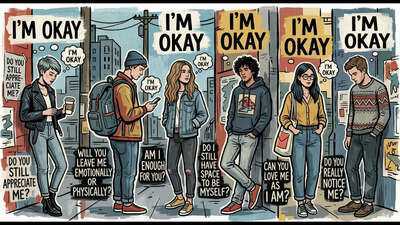
He suggests that most relationship conflicts are driven by a handful of universal emotional fears:
- Feeling unvalued: Do you still appreciate me?
- Feeling abandoned: Will you leave me emotionally or physically?
- Feeling inadequate: Am I enough for you?
- Feeling controlled: Do I still have space to be myself?
- Feeling unaccepted: Can you love me as I am?
- Feeling unseen: Do you really notice me?
By celebrating extreme self-sufficiency, we have confused independence with emotional isolation. But humans are wired for connection. From infancy to old age, our nervous systems depend on trusted relationships to help us feel safe, regulate stress and navigate life.
The strongest people are not those who never need anyone. They are the ones who can say, without shame, I need you, and who can respond with kindness when someone else says the same.
READ NEXT
-
Foreigner can’t be deported sans nationality proof: Centre to SC

-
SEBI bars Punit Goenka, Subhash Chandra from markets for 1 year

-
Ramayana trailer crosses border, wins praise in Pakistan

-
WATCH: Suryakumar Yadav Drops Biggest Hint On India Return

-
'Let People Choose Pure Petrol Or E20': Arvind Kejriwal Announces August 4 March Over Ethanol Fuel Policy