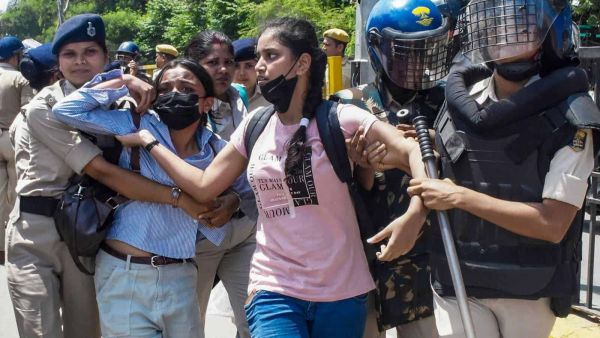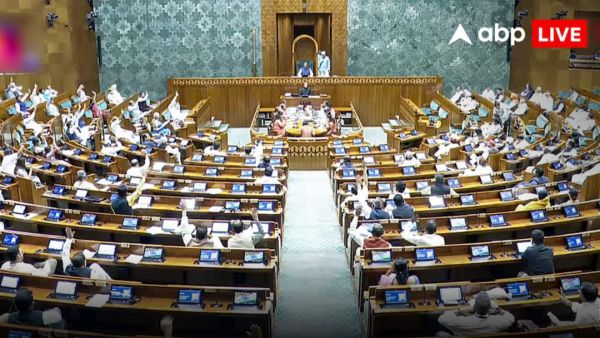
The Lok Sabha is expected to take up discussion on the Public Examinations (Prevention of Unfair Means) Amendment Bill, 2026 on Tuesday, a day after its introduction was overshadowed by repeated adjournments amid Opposition protests over alleged police action against demonstrators across the country.
The Bill, introduced on Monday by Union Minister of State Jitendra Singh, seeks to strengthen the legal framework against examination paper leaks and other malpractices. Although it was listed for discussion, the House could not take it up due to continuous sloganeering by Opposition MPs, particularly over allegations that police used an AK-47 during student protests in Bihar.
According to the Lok Sabha List of Business for July 28, Union Minister Jitendra Singh will move the Public Examinations (Prevention of Unfair Means) Amendment Bill, 2026, which seeks to amend the Public Examinations (Prevention of Unfair Means) Act, 2024, to be taken into consideration and passed by the Lok Sabha. The Bill is the only legislative business listed for consideration and passing in the Lower House.
Six-Hour Debate Expected
The parliamentary deadlock is expected to ease after efforts by Lok Sabha Speaker Om Birla, who has offered a dedicated six-hour discussion on the legislation. Parliamentary Affairs Minister Kiren Rijiju urged Opposition parties to participate, saying more time could be allocated if required, ANI reported.
Rijiju warned that the government could proceed with passing the Bill even without a debate if disruptions continue. BJP leaders, including Jagdambika Pal and Tarun Chugh, accused the Opposition of politicising an issue concerning students instead of contributing to examination reforms.
What The Bill Proposes
The amendment Bill was brought after nationwide protests over the NEET-UG paper leak and the resignation of Union Education Minister Dharmendra Pradhan.
It proposes increasing the punishment for those involved in paper leaks and unfair examination practices to five to ten years' imprisonment, up from the existing three to five years, while raising the maximum fine from Rs 10 lakh to Rs 50 lakh.
For organised examination-related crimes, the minimum jail term would increase from five years to seven years, with imprisonment extending up to 10 years and fines rising from Rs 1 crore to Rs 10 crore.
The Bill also proposes stricter action against service providers involved in malpractice, increasing the maximum penalty to Rs 5 crore and extending the debarment period from conducting public examinations from four years to eight years.
Among its key provisions, the Bill empowers the Centre to constitute a Special Task Force to investigate paper leak cases.
It also mandates completion of investigations within two months, provides for Special Fast-Track Courts to conduct day-to-day hearings, and requires trials to be completed within three months of filing the chargesheet.
The legislation also proposes the appointment of Special Public Prosecutors for every fast-track court.
Opposition Seeks Accountability
The Opposition continued to press for a discussion on alleged police excesses during student protests. Congress president Mallikarjun Kharge accused Union Home Minister Amit Shah of being responsible for the police action, while Congress MP Priyanka Gandhi Vadra questioned the need for a tougher anti-paper leak law if FIRs were allegedly still being filed against protesting students.
Congress leader Pawan Khera demanded a statement from the Home Minister over the reported use of an AK-47 during protests in Bihar's Siwan district. A police constable allegedly involved in the incident has since been suspended pending departmental proceedings.
Despite the political confrontation, several Opposition parties, including the AAP and the JMM, have indicated they are prepared to participate in the debate, while calling for greater safeguards to prevent misuse of the law and ensure comprehensive reforms to the examination system.