New Delhi: Myopia, commonly known as short-sightedness, is becoming increasingly common among children and teenagers worldwide, driven by rising screen time, prolonged near-work activities and reduced time spent outdoors. Eye specialists say that while myopia cannot always be prevented, its progression can often be slowed with early diagnosis and appropriate treatment, reducing the risk of serious eye diseases later in life.
Doctors warn that untreated progressive myopia can increase the risk of retinal detachment, glaucoma, cataracts and myopic macular degeneration in adulthood. As cases continue to rise globally, experts are urging parents to watch for early symptoms and schedule regular eye examinations for children.
What is myopia?
Myopia is a refractive error in which distant objects appear blurry because light focuses in front of the retina instead of directly on it. Near objects usually remain clear, making reading or using digital devices easier than seeing distant signs or classroom boards.
The condition usually develops during childhood and may continue to worsen until the late teenage years or early adulthood as the eye continues to grow. Genetics and environmental factors both contribute to its development.
Early warning signs
Eye care specialists say parents should seek an eye examination if a child shows any of the following symptoms:
- Difficulty seeing the classroom board or distant objects.
- Squinting frequently to see clearly.
- Sitting very close to the television or holding digital devices close to the face.
- Frequent headaches or eye strain.
- Excessive blinking or rubbing of the eyes.
- Complaints of blurred distance vision.
Experts note that children may not always realise their vision is deteriorating, making routine eye check-ups especially important.
Can myopia progression be slowed?
According to ophthalmologists, the answer is yes—particularly when treatment begins early.
Several evidence-based approaches are now used to slow the progression of childhood myopia rather than simply correcting vision. These include:
- Low-dose atropine eye drops, prescribed under specialist supervision.
- Myopia-control spectacles designed to reduce eye elongation.
- Special soft contact lenses for myopia management.
- Orthokeratology (Ortho-K) lenses worn overnight to temporarily reshape the cornea.
- Increasing outdoor activity, especially in younger children.
Studies show these treatments can significantly reduce the rate at which myopia progresses, although individual results vary.
Lifestyle changes that help
Experts also recommend simple lifestyle measures to protect children’s eyesight.
Spending at least one to two hours outdoors each day has been associated with a lower risk of developing myopia. Parents are also encouraged to limit prolonged screen time and remind children to follow the 20-20-20 rule—every 20 minutes, look at something 20 feet away for at least 20 seconds.
Maintaining proper reading distance, ensuring adequate lighting and taking regular breaks during close work can also help reduce eye strain.
Why early treatment matters
Progressive myopia is more than just needing stronger glasses every year.
High myopia significantly increases the lifetime risk of serious eye conditions, including retinal detachment, glaucoma, cataracts and damage to the retina. Detecting and managing the condition early can help reduce these long-term complications and preserve vision.
Conclusion
Although myopia is becoming increasingly common among children and adolescents, experts emphasise that early diagnosis, regular eye examinations and modern myopia-control treatments can help slow its progression. Parents are advised not to ignore symptoms such as blurred distance vision, squinting or frequent headaches, as timely intervention can protect long-term eye health and reduce the risk of future complications.
-
CG Teacher Recruitment 2026: Recruitment for 2,292 Assistant Teachers announced in Chhattisgarh; submit your application by August 21..

-
MP Police Vacancy 2026: Massive recruitment drive announced for various posts, including Constable and SI, in the MP Police Department..

-
NTA Young Professional Recruitment 2026: NTA invites applications for Young Professional posts; monthly salary of ₹80,000..

-
NFR Apprentice 2026: Applications open for 6,777 Apprentice posts at NFR Railway..

-
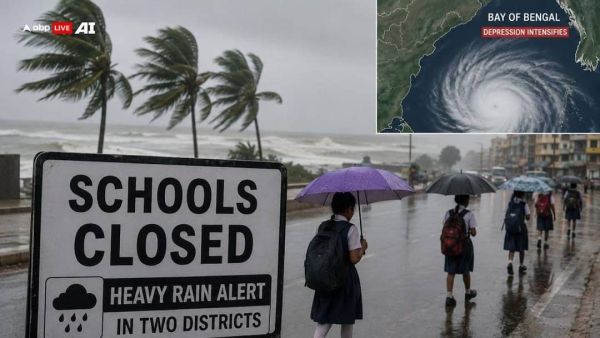
Odisha Schools Closed In Two Districts After Heavy Rain Alert; Bay Of Bengal Depression Intensifies