If you’ve ever travelled by train, you must have noticed those grey stones laid beneath the rails. Ever wondered why such rocks are placed there? They are certainly not randomly dumped. Most of us associate these rocks, called ballast, with railway nostalgia. But they are not there for looks. In fact, they play a significant role in keeping the tracks functioning smoothly.
Solves the weight problemThink about it: trains are heavy. A single freight car loaded with coal or containers can weigh over 100 tonnes. It’s somewhat similar for passenger cars as well. When that mass moves down a track, it doesn’t just rest gently on the rail. The weight concentrates in specific spots, applying pressure that would warp, bend, and ultimately destroy bare steel and wooden ties if left on soft ground. That’s where ballast comes in. It distributes that load across a wider surface area. Instead of the track pressing down like a knife through butter, the rocks spread the impact across a broader base. Without it, the rail bed would degrade almost immediately. These unassuming rocks, in fact, are a safety measure.
A drainage solution
Keeping the tracks in line
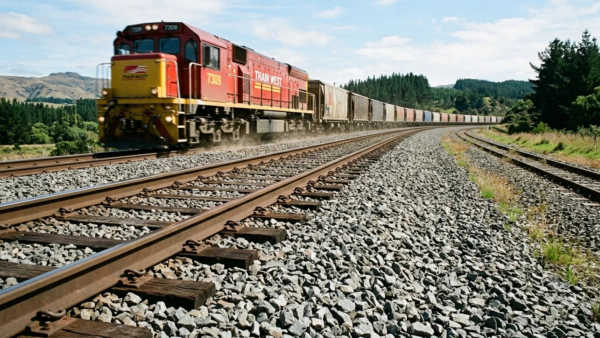 These rocks also play the role of anchoring the railway tracks. The tracks need to stay exactly as they are designed. The geometry really matters here. But rails expand and contract with temperature changes. The ballast is what holds them in place, preventing them from shifting sideways as trains lean into curves or brake with tremendous force. The rocks also reduce vibration as trains roll over them. Ballast absorbs much of the shockwave energy transmitted into the ground, preventing the track from bouncing or moving with each pass. These rocks also help reduce noise from movement. Another reason is to prevent weeds from growing easily, which means less maintenance and lower costs.
Why rocks?
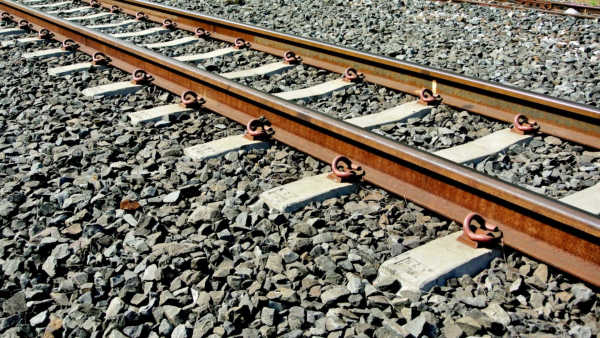 Ever wondered why railways often use crushed stone ballast, rather than something else, such as a concrete base? Some railway systems do use concrete slab tracks. But that is usually in situations where very high precision and lower maintenance are priorities. It is harder to modify and is not ideal for lines that need frequent adjustments or excellent drainage. Ballast, on the other hand, consists of sharp stones that interlock, resist movement, and drain well. It is also replaceable. When rocks get crushed or shift out of alignment (which happens over decades of use), workers can simply remove and replace them. It is a renewable solution that keeps the system adaptive and repairable.
Modern railways still use ballast because this 180-year-old method continues to get the job done. Some high-speed rail lines have experimented with alternatives like concrete slabs, but traditional ballast remains the preferred choice for heavy freight and most passenger lines. Why? The answer is simple: it is proven, predictable, and built into railway operations and maintenance schedules worldwide.
-
Nandan Nilekani to prepare roadmap for exam reforms: Modi

-
Gen Z protests: The Cockroach chose to approach, not encroach

-
Top 10 | ABP LIVE Evening Bulletin: Top News Headlines from 26 July 2026 - Evening

-
Fashion quote of the day by Iris Apfel: 'Jewellery is the most transformative thing you can wear'

-
Devoleena Bhattacharjee calls for Punjab education minister to resign following Dharmendra Pradhan resignation