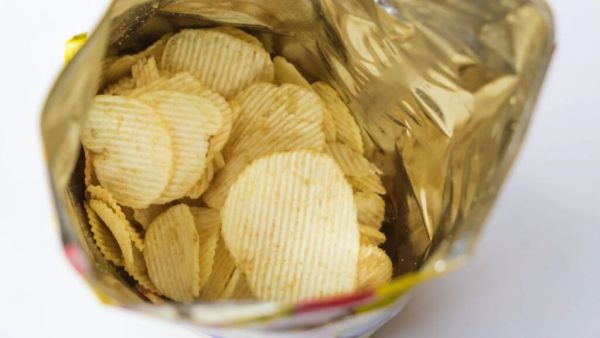
Opening a packet of chips and feeling slightly disappointed at how few chips are inside is a familiar experience for most of us. The packet looks full, but once it’s open, it can seem like more than half the space was just… air. It is easy to assume that brands use bigger packets to make us think we are getting more than we actually are. While packaging does play a role in how products are displayed and transported, the air inside serves a much more practical purpose. In fact, without it, your favorite chips would probably reach you as a bag full of crumbs. So, why is there air in the chips packet? Let’s break it down for you.
It’s Not Really Air In The Chips Packet
Photo: Unsplash
Here is something many people don’t know. The space inside a chips packet is not filled with ordinary air. Manufacturers flush the packet with nitrogen gas before sealing it. Nitrogen is colourless, odourless and makes up nearly 78 percent of the air we breathe. More importantly, it is an inert gas, which means it doesn’t easily react with food. Unlike oxygen, nitrogen doesn’t encourage the oils in chips to turn stale or rancid. By replacing oxygen with nitrogen, manufacturers help the chips stay fresh, crisp and flavourful for longer.
The Chips Packet Works Like A Cushion
That empty-looking space has another important job. Chips are fragile and can easily break during transport. From the factory to warehouses, delivery trucks and supermarket shelves, packets are handled many times before they reach your hands.
The nitrogen-filled space acts as a cushion, absorbing pressure and reducing the chances of the chips getting crushed. If the packet were tightly packed without this protective buffer, many of the chips would likely arrive broken into small pieces.
Why Not Just Use A Smaller Packet?

Photo: Unsplash
It’s a fair question, but the answer isn’t as simple as it seems. Packaging is designed by taking several factors into account, including protecting the product, fitting standard machinery used during manufacturing and making transportation easier. Different chip varieties also have different shapes and textures, so the amount of space needed can vary from one product to another.
What’s more, food labels don’t promise a packet filled to the top. They specify the net weight of the product inside. Whether the packet looks large or small, the quantity of chips is measured by weight, not by how much space they occupy.
So, Is The Air There To Fool You?
Not really.
While oversized packaging can sometimes influence how people perceive a product, the gas inside a chips packet has a genuine purpose. It helps preserve freshness, protects delicate chips from breaking and extends the product’s shelf life.
So, the next time you open a packet and wonder where all the chips went, remember that the seemingly empty space has been working behind the scenes all along. Without it, that satisfying crunch might not have survived the journey to your break snack.
-
Jhandu Kumar opens India's account at CWG with men's heavyweight para powerlifting bronze

-
No deal with Centre, ended fast fearing crackdown like Ladakh: Wangchuk

-
Michael Olise’s Real Madrid dream raises a big Bayern Munich question

-
Arsenal and Tottenham set for transfer fight over Norway World Cup star

-
Benjamin Sesko set Man Utd goal target that should be ‘written in his contract’ - with 1999 Treble winner explaining how £74m striker can ‘fly’ in the Premier League