When Prime Minister Narendra Modi told the AI Action Summit in Paris in February 2025 that “India leads in AI adoption, and techno-legal solutions on data privacy,” it described a decade of groundwork. The country that built the world's largest digital identity system and its busiest real-time payments network is now making AI in finance trustworthy by design.
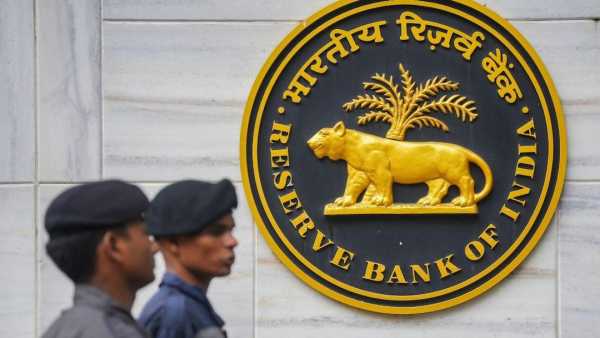
For investors, the stakes are direct: trust is the raw material of capital markets, and the Reserve Bank of India's approach to governing AI models could become one of its most important sources.
Aadhaar, UPI, & DPDP Act
India's credibility rests on a track record few economies can match. Aadhaar gave over a billion residents a verifiable digital identity; UPI turned it into a rail for instant, interoperable payments now processing billions of transactions a month.
Together they anchor Digital Public Infrastructure (DPI): open, population-scale systems banks build on rather than reinvent, showing that scale and trust grow together when rules and technology are designed in tandem. The legal keystone is the Digital Personal Data Protection (DPDP) Act, 2023, which makes consent, lawful basis and purpose limitation the ground rules for personal data and, with its Rules, scales obligations to risk: Significant Data Fiduciaries face stricter compliance, and penalties track the scale of potential harm.
Data Sovereignty & Techno-Legal Model
Underpinning this is data sovereignty: data generated by Indian citizens should be governed by Indian law and, where sensitive, subject to domestic oversight, meaning auditable data lineage and the ability of supervisors to inspect consequential systems.
As the Office of the Principal Scientific Adviser argues in its January 2026 white paper, baseline laws such as the IT Act and Bharatiya Nyaya Sanhita are often reactive; the remedy is a “techno-legal” model that embeds legal obligations into technical architecture, so compliance happens at data collection, training and deployment, not only in a courtroom afterward. Whether developed at home or sourced abroad, an AI system must align with the country's technical, legal and ethical norms.
Where Data Governance Meets AI Governance
Here the RBI moves to the centre. Its draft Guidance on Regulatory Principles for Model Risk Management (2026) extends prudential thinking to machine learning across regulated entities, from banks to NBFCs, treating a “model” expansively to include AI and ML. Every entity must maintain a Board-approved framework and three lines of defence, and tier models by materiality, high-risk ones needing Board Risk Management Committee approval, each inventoried, validated before and after deployment, and monitored for drift.
For AI specifically, entities must set explainability thresholds, guard against hallucination, run red-teaming, and maintain human oversight with “kill-switch” mechanisms. An entity, the RBI states plainly, “should not use any model that harms consumer.”
Responsible Data, AI, & Agents
Both the PSA paper and independent research govern AI across a lifecycle: data collection, data-in-use protection, model training, safe inference, and trusted agents.
The PERAI framework (Privacy Enhancing & Responsible AI), from PrivaSapien and presented at a 2025 IEEE symposium, maps controls to each stage, privacy threat modelling at collection, privacy-enhancing technologies during use, red-teaming at assessment, and a “responsible AI firewall” at inference. That is the meaning of responsible data: safeguards embedded at every handoff, with audit trails that make compliance provable.
Future Of Responsible Agentic Banking
The frontier is agentic AI: systems that act, not just advise, to reconcile accounts, initiate payments or rebalance portfolios. As autonomy rises, so does the attack surface: tool poisoning, prompt injection and agents exceeding their scope.
The answer is to establish trust before an agent enters a critical workflow and enforce it continuously, through agent identity, guardrails and behaviour logging with kill switches. The RBI's insistence on human oversight maps neatly onto this, making agentic banking a graduated extension of controls investors already understand rather than a leap of faith.
Why It Matters For Investors
The case is simple. Capital flows to jurisdictions where risk is legible and recourse is real. A system in which every consequential model is inventoried, tiered, validated, monitored and, when it fails a customer, withdrawn is one where tail risks are less likely to become systemic shocks. None of this is finished: the RBI Guidance is draft and agentic standards remain nascent.
But the direction is distinctively Indian, pair a pro-innovation posture with safeguards engineered into the technology, and let a decade of DPI credibility do the rest. The surest way to strengthen investor trust in the age of AI is to build it into the system rather than take it on faith.
-
15 Killed As Suicide Attack Hits Pakistan Security Checkpoint Near Afghan Border

-
10-Year Jail, Rs 10 Crore Fine: What's In The Modi Government's New Paper Leak Bill?

-
Encino Makes Winning Start To Pune Campaign With Dominant Atomic Prince Plate Triumph

-
Star Trek: Strange New Worlds Season 4 On OTT- When And Where To Watch The Sci-Fi Series?

-
Bangladesh President Mohammed Shahabuddin Resigns Mid-Term, Cites Health Reasons