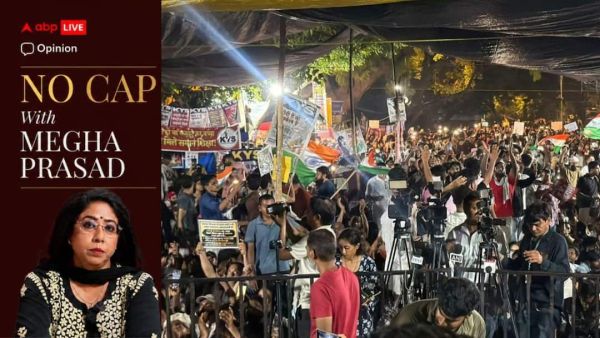
An examination can be held again. A question paper can be printed again. A new date can be announced. A fresh admit card can be issued. But can a student get another year of life? Can parents recover the money they spent? Can anyone return the nights lost to preparation, or restore the confidence that collapsed with one leaked paper?
That is the real question behind the protests in Delhi.
These students are not merely protesting against an examination. They are asking the Indian state for a basic guarantee: if they play by the rules, will the system protect them from those who do not? Because when an examination paper leaks, questions are not the only things exposed. The promises of the examination system are exposed too.
Around 22 lakh students appeared in the first NEET examination. Around 20 lakh appeared when it was held again. That means nearly two lakh students vanished between the first attempt and the second. The examination was repeated, but not everyone could repeat the ordeal.
For the second examination, lakhs of personnel were deployed. CCTV cameras were installed. Vehicles were tracked using GPS. Biometric verification was carried out. Telegram channels were blocked. Even the Air Force was called in to help. This was an entrance examination, not the evacuation of a conflict zone. Yet despite the cameras, tracking systems and multiple layers of security, the system failed.
The Real Question
So the question is not merely who stole the paper. The bigger question is how the paper remained stealable.
Prime Minister Narendra Modi has announced fast-track courts for paper-leak cases. That is necessary. It may restore some confidence. But a fast-track court enters the story only after the damage has been done. It can punish the criminal, but it cannot return a student's lost year.
A fire brigade is essential. But when a building catches fire repeatedly, somebody must inspect the wiring.
So today, no slogans. No political theatre. Instead, five constructive suggestions for the government.
Audit the Entire Examination System. Not just NEET. Not just one examination centre. Not just one official conveniently blamed after every scandal.
Audit the entire chain.
Who prepares the questions? Where are they printed? Who has access to them? How are they transported? How are they stored? Who handles the answer sheets? And how are the results processed?
Every link must be examined independently.
The audit must include cybersecurity specialists, experienced teachers, former judges and student representatives. The report must be completed within sixty days and made public.
India has never suffered from a shortage of committees. Sometimes, the committee survives longer than the crisis it was formed to investigate. This time, the government must give us more than a committee. Give us a deadline. Give us names. Give us responsibility. And give us a date for action.
Failure Must Have An Address
A paper leaked. Fine. But who failed? Was it the examination centre, the official in charge, the printing company, the technology provider, or an organised network connecting all of them?
At present, responsibility often disappears into the system. Everyone was involved. Therefore, apparently, no one was responsible. That must end.
Every national examination should have a clearly defined chain of accountability. The public must be told exactly where the breach occurred. A guilty company must not simply lose one contract and return next year with a new name, a new director and the same old habits. It must be blacklisted. It must be fined. The financial loss must be recovered. And if an official's negligence is established, prosecution must follow.
The government should also create a public tracker for paper-leak cases. How many police cases were registered? How many people were arrested? How many charge sheets were filed? How many trials were completed? How many convictions were secured?
Because a law is not a press release. It is a chain of consequences. And the strength of a law is not measured by its language. It is measured by the fear it creates among those planning to break it.
No Cap With Megha Prasad | Who Is Really Benefiting From Sonam Wangchuk's Hunger Strike?
The System Must Pay For Its Failure
When an examination is cancelled, the fee should be refunded automatically. Students travelling for a second examination should receive basic travel support. Age limits and the number of attempts should be relaxed wherever necessary. Their place in the admission process should be protected. Families that have lost their children during this crisis must also receive dignified assistance.
An examination agency can change the date and move on. A student cannot move on quite so easily. Her age continues to increase. Her family's debt remains. The pressure remains. The fear remains.
The system cannot create the crisis and then send the bill to the student.
Let Technology Assist, Not Hide Accountability
There has also been anger over CBSE's on-screen marking system. The central question is not whether computers are good or bad. The questions are much simpler. Were the scanned answer sheets clear? Were teachers properly trained? Did the software function correctly? And when something went wrong, was there a fair and quick remedy?
Every student should receive a free scanned copy of the evaluated answer sheet. Where there is a major discrepancy, a second examiner should review it. Every complaint should be decided within seven days.
Technology must make the system easier to question, not harder. It should remove opacity, not digitise it.
Separate Protesters From Rioters
A student holding a placard is not automatically a criminal. Being present at a protest cannot become evidence of guilt. The government should seriously consider protecting students who participated peacefully.
But the principle must work both ways.
Violence cannot hide behind the label of protest. If someone attacked the police or damaged public property, action must follow. But it must be based on evidence, not suspicion, political convenience, or a convenient sweep of everyone present at the site.
A placard is not a weapon. But a stone is not an argument either. The law must know the difference.
Reform Cannot Wait
Some protesters are demanding the resignation of Education Minister Dharmendra Pradhan. That is a political demand. The government will respond to it politically. But examination reform cannot wait for the fate of one minister.
A minister may stay. A minister may go. The question paper must stop going.
The protests in Delhi are not merely against an examination system. They are not merely against the Ministry of Education. They are not merely against the Government of India. They represent the anxiety of an entire generation-anxiety about its own future and about the future of the country.
The suggestions made here are not designed to defeat a government, nor are they designed to defend one. They are made in the public interest.
The government may remove students from a road. It may end a demonstration. It may announce a court. But distrust cannot be dispersed with barricades. It cannot be detained. It cannot be wished away through assurances.
It has to be answered.
With reform.
With transparency.
And with consequences.
Because an examination may be repeated.
A student's lost time cannot.
No Cap With Megha Prasad | Is Politics Hijacking The CJP Movement?
-
Naresh Pal Gangwar is new Education Secy, replaces Vineet Joshi
-
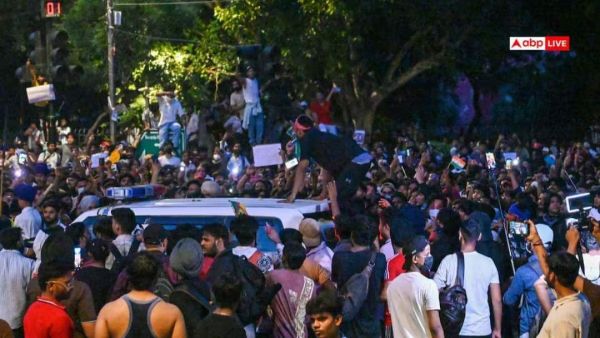
Delhi Police Blocks 480 Pakistan-Linked Handles, Warns Students Against Fake News
-
Education Secretary Vineet Joshi Replaced; Delhi HC Sets Up Fast-Track Court
-
PM Modi Hints At Tougher Anti-Paper Leak Measures In Friday's Cabinet Meeting
-
NCLT Stays BYJU'S Insolvency Bidding Process Till August 31