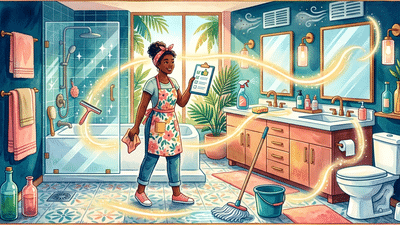
Most people clean their bathroom the same way they've always done it, without ever really thinking about the order. Wipe the sink, scrub the toilet, mop the floor, done. And to be fair, that's not a bad instinct. But if you've ever finished cleaning only to notice grime reappearing on a surface you'd already wiped down, there's a good chance the sequence, not the effort, is the problem.
Professional cleaners have known this for years, and it comes down to one basic idea: dirt and dust always fall downward. So if you clean in the wrong order, you end up undoing your own work without realizing it.
Why cleaning from top to bottom is more effective
Dust, soap scum, and grime don't just sit still where they land. They fall. So if you scrub your bathroom floor first and then move on to wiping down shelves or light fixtures above it, all that dust and residue is going to drift right back down onto the floor you just cleaned.
That's why the top-to-bottom approach works so much better. Start with whatever's highest up in the room, ceiling vents, light fixtures, the top of cabinets, and work your way down from there. Mirrors and shelves come next, then countertops and sinks, and the floor gets tackled dead last. By the time you get down there, everything that was going to fall has already fallen, and you're cleaning it once instead of twice.
It sounds like a small adjustment, and it is. But it's the difference between actually finishing your cleaning routine and just going through the motions while the room slowly gets dirty again behind you.
Which bathroom surfaces should be cleaned first — and which should wait
Order matters within each surface too, not just top to bottom across the room. A good place to start is often the surfaces that need product to sit and work before you scrub, things like the toilet bowl and the shower or tub. Spray these down early with your cleaner of choice and just let it sit there doing its job while you move on to something else. That waiting time isn't wasted, it's actually doing half the scrubbing for you.
While that's soaking, this is a good moment to hit the mirrors, glass surfaces, and any shelving or cabinet exteriors. These usually just need a quick wipe, nothing that requires heavy-duty product, and knocking them out now means you're not backtracking later.
Sinks and countertops come after that. These get touched constantly, so they build up soap residue, toothpaste splatter, and general grime fast, but they're usually quick work once you've got a rhythm going. And then, only then, do you go back to the toilet and shower you sprayed earlier and actually scrub them out, since the product has had time to break things down.
The floor, as mentioned, is always last. No exceptions. It's the one surface in the bathroom that's downstream of everything else you do, literally and figuratively, so cleaning it before you've finished everything above it is basically pointless.
The final step people skip that can keep your bathroom cleaner for longer
So here's the part almost everyone misses, and it's not even about scrubbing harder or buying a better product. It's ventilation. Once you're done cleaning, the instinct is to just walk out and shut the door behind you. But a damp bathroom, especially right after cleaning when surfaces are still wet, is basically an invitation for mold, mildew, and that musty smell to creep back in within days.
Cracking a window if you have one, or running the exhaust fan for a good twenty to thirty minutes after you finish, makes a real difference. It lets all that moisture actually leave the room instead of settling back onto the surfaces you just spent time cleaning. And if your bathroom doesn't have great airflow to begin with, even leaving the door open for a while after cleaning helps more than people expect.
There's a second small habit worth building in here too. Wiping down the shower walls and glass door with a squeegee right after your shower, not just during your big cleaning day, stops soap scum and water spots from building up in the first place. It takes maybe thirty seconds, but it's the kind of thing that quietly saves you a lot of scrubbing time down the road.
None of this requires new products or some elaborate system. It's really just about sequence, doing things in the order gravity and grime actually behave in, instead of the order that happens to feel intuitive. Once the habit sticks, cleaning the bathroom stops being a twice-a-week battle and starts feeling like something you can knock out in half the time, with results that actually last past the first day.
Disclaimer: This article is intended for general informational purposes only and reflects commonly recommended household cleaning practices. It does not cite a specific professional source and should not be treated as an endorsement from any cleaning company or expert. Results may vary depending on bathroom materials, ventilation, and the cleaning products used. For persistent mold, mildew, or hard water issues, readers are advised to consult a professional cleaning service.
-
Does not give a name to the relationship and does not allow to go to another relationship? Aren’t you a victim of ‘seagulling’?

-
Why Do We Crave Fried Food Even When Were Full?

-
You will be surprised when you hear the price! Bring home this EV scooter for less than a smart TV, the best surprise for college students

-
Mirabai Chanu created history by lifting 105 kg, scored a hat-trick of gold in Commonwealth

-
Delhi lathi charge case reaches Supreme Court, new petition filed after CJI’s comments