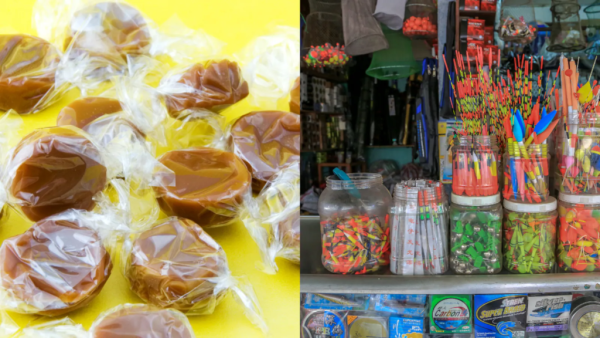
If you grew up in India, chances are you received toffees instead of loose change countless times. You would walk into your neighborhood kirana store, buy a packet of chips, a chocolate, a bottle of soft drink or even a notebook. Your total would come to Rs 99 or Rs 48. Instead of getting your Rs 1 or Rs 2 back, the shopkeeper would smile, open a glass jar kept near the counter and hand you an orange candy or chewing gum. That tiny candy became such a normal part of shopping that it almost felt like a free bonus.
A recent post on
Has UPI Quietly Killed India’s Rs 1 Toffee Business?
The discussion began after X user Mukul Dekhane wrote, “UPI has killed the Toffee Business.” Back when paying in cash was the norm, whether there was actually a shortage of coins or not, customers were often given a Rs 1 or Rs 2 toffee instead of loose change. Nobody argued over such a small amount. The toffee went into your pocket or straight into your mouth. According to Mukul, that everyday habit quietly helped build a massive market for low-priced candies.
Fast forward to today. You walk into the same shop, buy something worth Rs 99 and simply scan the QR code. You pay Rs 99 exactly. There’s no waiting for change, and of course, no excuse of “I’ll give you a toffee instead.” According to Mukul, this is one of the biggest reasons why the demand for low-value toffees has fallen over the years.
The Real Impact On Businesses
Most of us didn’t walk into a shop thinking, “I’m craving a Rs 1 toffee today.” We got one because it replaced a coin. Naturally, we’re all wondering whether a large part of the toffee business wasn’t driven by customer demand at all but by the simple lack of loose change.
The post claims, “In the earlier years, almost all big Toffees players, including Mondelez, Mars, Nestle, Perfetti, Parle & ITC, reported staggering growth year after year. But as UPI arrived, most of these brands have reported a steep decline in sales of Toffees.” Mukul even mentions that Hershey’s described India as one of its toughest markets in the post-COVID period, affecting its expansion plans.
Of course, it would be unfair to blame everything on UPI alone. Health-conscious consumers, inflation, premium brands and the pandemic are all factors that clearly played a role.
Technology Solved One Problem, And Created Another
As is evident in this case, technology doesn’t always disrupt businesses in obvious ways. UPI wasn’t designed to compete with confectionery companies. Its only purpose was to make payments faster, easier and exact. Yet, by removing the need for loose change, it may have also removed one of the biggest reasons millions of Rs 1 toffees were sold every day.
The post has sparked thousands of reactions, and people seem divided.
One user felt the post should also highlight the positive side, saying, “Sales that were boosted by a weak financial system – say, a shortage of coins (don’t know whether real or fabricated) – declined as the system became strong.”
Another person wasn’t convinced that UPI had really hurt the toffee business. They commented, “If people really liked toffees, they would buy and pay for them using UPI. If it was just a one-way change substitute, it had no place in the market.”
So the next time you scan a QR code to pay Rs 47 exactly, take a moment to remember that little orange candy.
-
Periods Health Tips: Does drinking cold water increase pain during periods? Know the expert’s opinion

-
Symptoms of gallstones, frequent abdominal pain, bloating and indigestion can be troublesome to ignore.

-
Top 5 Sedans Under Rs 15 Lakh in India: Check on Style, Comfort and Performance

-
Samsung Foldables: Samsung explodes in the Indian market; Entry of Galaxy Z Fold8 Ultra, Fold8 and Flip8 for the new generation
-
During testing, OpenAI’s AI agent went out of the security circle, reached other AI platforms, increased cyber security concerns.