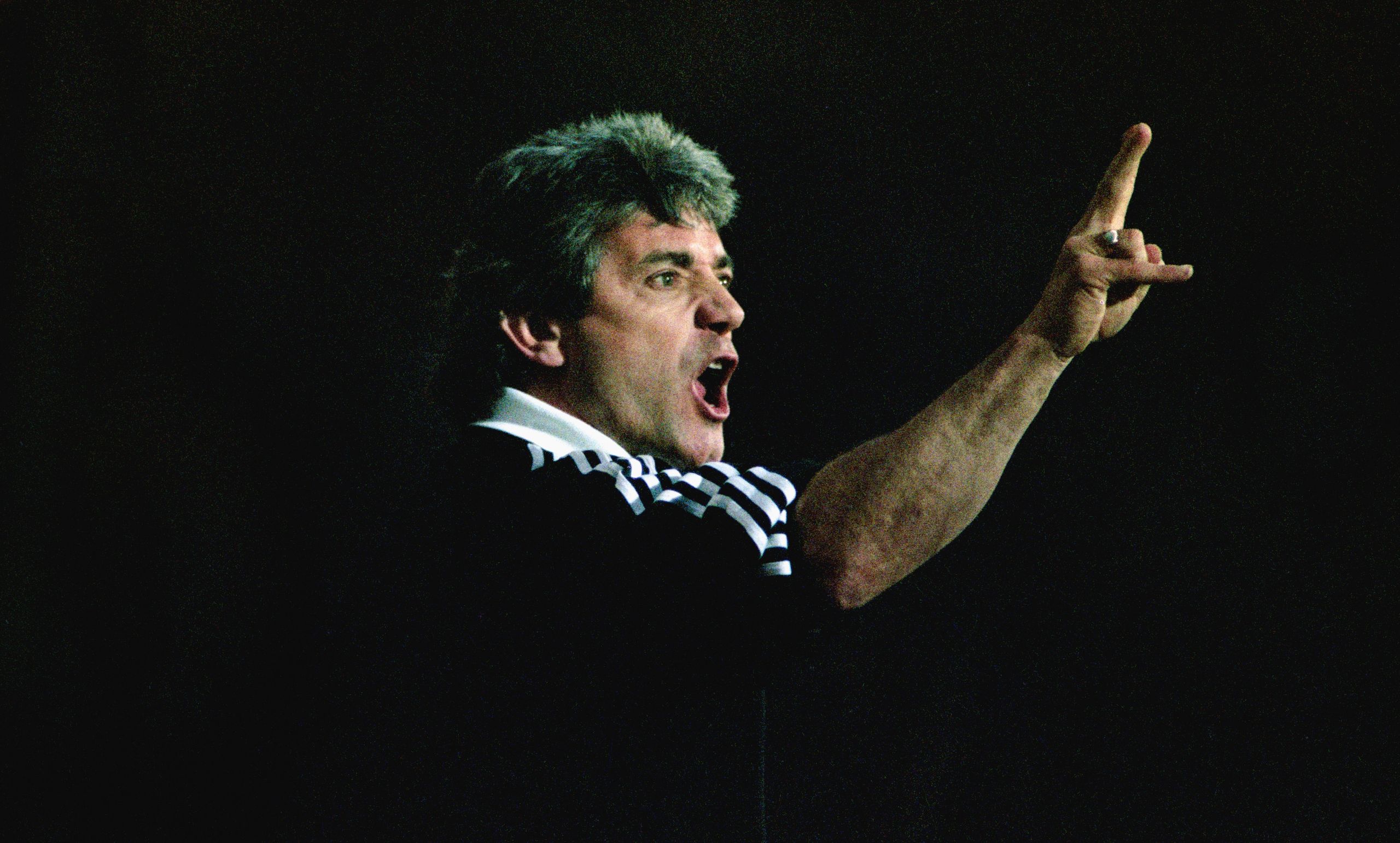
Kevin Keegan was often seen as the charismatic face of Newcastle United’s rebirth in the 1990s, but there was also a tougher, more ruthless side to him that rarely surfaced. One of his boldest and most controversial acts was a decision that would likely be unimaginable in today’s footballing environment.
Five years ago, while working with Newcastle’s leading newspaper ChronicleLive, I wrote a detailed feature that included interviews with four former Newcastle United youth players — the celebrated class of 1994. These youngsters were immensely talented and had achieved success at youth level, yet they ultimately fell victim to one of Kevin Keegan’s most cold-blooded managerial calls. Decades later, when I spoke with them about their experiences during the height of Keegan’s reign, their reflections were tinged with both appreciation and frustration. As young professionals fresh out of school, they had the privilege of training alongside Premier League icons like Peter Beardsley and Andy Cole, often under Keegan’s direct involvement on the training pitch.
However, despite being inspired by the man they idolised growing up, their route to the senior squad was effectively cut off by Keegan himself — a man adored by the Newcastle faithful.
Reaching the peak of world football demands strength, assertiveness, and an unflinching mentality — all traits Keegan possessed in abundance. His tenure at Newcastle showcased these qualities time and again. The most famous example was his decision to sell Andy Cole to Manchester United — a player who had scored an astonishing 41 goals in 46 appearances during the 1993/94 season, including 34 in the league. It was a move that required immense conviction, especially as he faced furious fans on the steps of St. James’ Park to justify selling their star striker to a direct rival.
His emotional outburst live on Sky Sports in April 1996 revealed the fire within him — a man tormented by the realisation that Newcastle’s best chance at a top-flight title since 1927 was slipping away.
But one of Keegan’s lesser-known and most divisive choices came earlier, in 1996, when he decided to completely dismantle the club’s reserve team. Known for his passionate, instinct-driven approach, Keegan could be headstrong and impulsive. His abrupt resignations from Newcastle in 1997 and 2008, and his decision to quit as England manager immediately after losing to Germany in the final match at the old Wembley Stadium, all reflected that same tendency. The choice to abandon the reserve setup stemmed largely from concerns about the condition of the St. James’ Park pitch.
Former Newcastle youth player Stuart Elliot explained to me in 2021: “Pontins sponsored the league, and because they’d invested money, they wanted more glamour. So they asked every club to play 50% of their home reserve games at the main stadium.”
He continued, “There were about 14 teams in the league, meaning six or seven home games at most.” Keegan, however, refused to compromise. The St. James’ Park pitch already suffered from wear and tear, and hosting additional matches would have worsened it. At the time, both Roy Evans and Alex Ferguson had also objected to the same demand, and all three managers initially agreed to resist it together.
But while Keegan stood firm, Evans and Ferguson later conceded. Ironically, Ferguson’s reserve team around that period had just produced talents like David Beckham, Paul Scholes, Gary Neville, and Nicky Butt. “It came down to the final week,” Elliot recalled. “The club had to sign the documents, and Liverpool and Manchester United went ahead with it.”
Paul Brayson was the only member of Newcastle’s class of ’94 to make a senior appearance — a single outing against Bristol City in the Coca-Cola Cup. Speaking in 2021, he said, “It [scrapping the reserves] was probably the worst decision ever. If a Premier League club did something like that today, there’d be uproar. We were just told, ‘There’s not going to be a reserve team this year.’”
Another player shared, “It sounds awful, and some might criticise me for saying this, but because of Keegan, there was nowhere to go in that club. He was a hero to everyone, but he wanted rid of the junior and reserve teams. We were left wondering what to do next. I lost interest toward the end of that season, and most of us were released.”
That same player also recalled an infamous training ground moment when Keegan threatened to ‘knock him out’. Far from being offended, he remembered the incident fondly: “It was fantastic!”
At the time, Newcastle trained at Durham University’s Maiden Castle sports complex, often on hockey pitches open to the public. Crowds would gather to watch sessions — an intimidating environment for young players. “We were playing seven-a-side,” he said. “Keegan was marking me and kept clipping the back of my ankles, winding me up. Eventually, I snapped. The next time he got the ball, I went straight through him. He went flying, landed badly, then got up and grabbed me by the scruff of the neck. I thought, ‘That’s it, I’m done.’”
“But to be fair, later he called me into his office. I went in terrified, and he said, ‘I appreciate what you did — I was winding you up.’”
Stu Elliot also confirmed what many already believed: Keegan’s management style was rooted in motivation rather than tactical detail. “I don’t like saying ‘old school’ because it sounds dated,” he said, “but did I ever see a tactics board as an apprentice, in the reserves, or with the first team? No. Kevin would just speak before games and say, ‘We’re better than them.’ That was his way.”
Elliot recounted another remarkable moment that captured Keegan’s uncompromising personality. “He never came to watch reserve games. When Kenny Dalglish arrived, he watched every single one, home and away. Once, Kevin came to see us play at Gateshead Stadium. We’d lost and played poorly. After the match, he stormed in and said something like, ‘You lot might as well f*** off now. Do you think I need any of you? None of you are anywhere near my first team.’ We were stunned.”
“We thought he’d tell us to keep our heads up, but instead, he pulled out his cheque book and said, ‘I can sign anyone I want from anywhere in the world. You lot might as well not even be here,’ and walked out. We just sat there, shocked.”
That was quintessential Kevin Keegan — a man from Doncaster who clawed his way from the bottom to the top through sheer belief and determination. He trusted his instincts completely, a trait that separated him from others. Known for winning back-to-back Ballon d’Ors, lifting the European Cup, claiming multiple league titles, and for his famous perm, his BBC Superstars bike crash, and even his pop hit ‘Head Over Heels in Love’, Keegan embodied a mix of charm and grit.
Yet behind the fame and charisma lay a steely working-class resolve and an unrelenting drive — the kind of force that defines true greatness and rarity in football and in life.
-
‘Getting Closer Each Day’ – PSG Midfielder Fabian Ruiz Expresses Desire to Return to Real Betis and Pursue Ballon d’Or Glory After Spain’s World Cup Triumph
-
Lord's Will Not Host ICC WTC 2027 Final! New Venue Revealed: Details Inside
-
CWG 2026: Lovlina Borgohain Secures India's First Medal Even Before Opening Ceremony
-
'Kashmir Will Always Remain An Integral Part': India Blasts Pakistan At UNSC, Calls Out Terror Policy
-
Liverpool’s £34 Million Offer for Maghnes Akliouche Turned Down Amid PSG Rivalry: Report