
Some books report facts, while others give a voice to people the world has long ignored. In Invisible in Plain Sight : Voices From the By-Lanes of Kamathipura , debut author Swati Pandey shines a light on the lives, struggles, and resilience of people living in one of India's most misunderstood neighbourhoods. Published by Juggernaut Books, the powerful work won the Best Author Debut Award at the AutHer Awards 2026. Through deeply reported stories and compassionate storytelling, Pandey does something rare: she listens without judgment and brings to the forefront voices that have remained invisible for far too long.
The bureaucrat who crossed a line most people never do
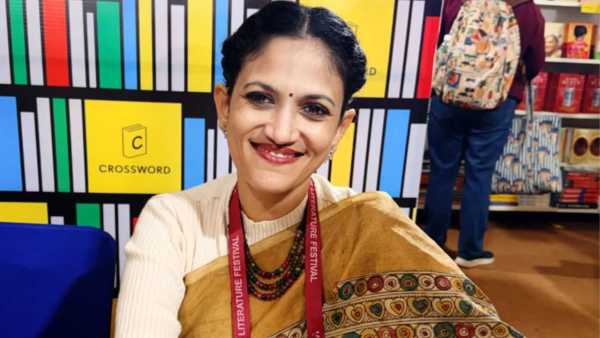
Swati Pandey is not a typical debut author. She is a distinguished bureaucrat with a 26-year career spanning India Post, the Department of Atomic Energy, and the Government of Maharashtra. Currently she serves as vice chairman and managing director of the Maharashtra Airport Development Company .
She is, by every conventional measure, a woman of the establishment.
When she was posted as postmaster general of Mumbai, she walked into Kamathipura, one of Asia's oldest and most infamous red-light districts, not as a visitor, not as a researcher, but as someone with a job to do. That job was Project Kamathipura , a financial inclusion initiative for sex workers that would go on to be recognised as a case study at Harvard. What she did not expect was what that project would do to her. "What started as a mere job to be done gradually transformed into a poignant journey full of emotions," she writes. "A journey of both hope and despair."
The women behind the invisible walls
The heart of Invisible in Plain Sight is not policy. It is people. Salma, also known as Aapa. Kajol. Annu. Rani. These are not composite characters or fictional representations. They are real women, with real names, real histories, and real lives that most of India has spent decades choosing not to see. Pandey takes us into a world she herself had never truly entered before, and she does it with a clarity and empathy that are rare in writing about marginalised communities . She does not pity these women. She does not sensationalise their lives. She simply tells us who they are.
"Not immoral women," she writes, "but real, resilient, and immensely courageous women who are warriors. For whom life has been synonymous with a bloody battlefield where they are forced to fight every single moment." That framing, "warriors, not victims," runs through every page of this book. And it changes something in the reader.
In 276 pages, Pandey covers the daily realities of the women of Kamathipura , their financial vulnerabilities, their relationships with their children, their dreams, their grief, and their extraordinary, almost incomprehensible strength. She writes about the shame society projects onto them and the dignity they carry despite it. She writes about what inclusion actually means when extended to people the system has spent generations excluding. This is not comfortable reading. But it is necessary reading.
A debut that announces an unmistakable voice
For a first book, Invisible in Plain Sight carries a remarkable confidence. Pandey does not write like someone tentatively entering the literary space. She writes like someone who has something urgent to say and the skill to say it clearly. The AutHer Award 2026 for Best Debut Author is not just a recognition of a promising new voice. It is a recognition of a book that uses the privilege of an insider's position to shine a light on lives that have been invisible in plain sight for far too long.
-
OFSS Bihar Admission: Major decision by BSEB following CBSE Class 10 results; application window for Class 11 admission to reopen..

-
Mayank, Prince Wreak Havoc As India Restrict Zimbabwe To 125/7 In 1st T20I

-
WATCH: Vaibhav Sooryavanshi Storm Arrives In Zimbabwe! Teen Star Smashes Maiden India Fifty

-
'Students Are Not Alone': Rahul Gandhi, INDIA Bloc Leaders March To Gandhi Smriti

-
Passports Of CJP Protesters Involved In Violence May Be Cancelled: Reports