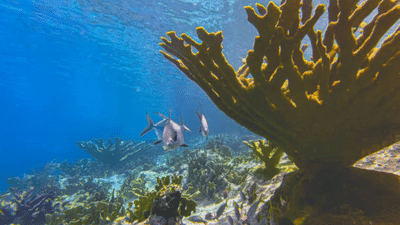
Researchers in Florida moved 30 pieces of endangered elkhorn coral from ocean nurseries onto dry land this week, worried that a brutal marine heat wave this summer could wipe out one of the last living pieces of the species.
The move happened Wednesday at the University of Miami's Rosenstiel School, where scientists carried coral fragments into saltwater tanks meant to keep them safe from the ocean itself. That's the strange part of this story. The water that elkhorn coral has lived in for thousands of years has become the thing most likely to kill it.
Elkhorn coral populations were already decimated by a 2023 heat wave and a milder one in 2024, and what's left is now scattered too thin to reproduce on its own in the wild. Scientists call that functionally extinct. The colonies are technically still alive, but they're too far apart and too few to make more coral the natural way.
So why move them now? Because the outlook for this summer isn't good. Researchers have been growing elkhorn at coastal nurseries for years, but they decided to bring some ashore because early signs point to 2026 being a genuinely bad year for bleaching, possibly worse than 2023.
Heat is the trigger. When ocean temperatures climb too high for too long, coral expels the algae living inside its tissue, the same algae that gives it color and, more importantly, food. That's bleaching. A bleached coral isn't dead yet, but if the heat doesn't ease up, it usually will be.
Why one coral species matters this much
Elkhorn isn't just another pretty reef fixture. It's structural. The coral gets its name from branches that fan out like antlers, and those branches are what build the reef crest, the shallow ridge that takes the first hit from incoming waves. It's the only coral species that builds that particular part of the reef, which is what dampens wave energy before it reaches the shoreline. Lose the elkhorn, and you lose a natural buffer that's been protecting Caribbean and Florida coastlines from storm surge for longer than anyone's been keeping records.
And the stakes go beyond the coastline itself. Coral reefs matter globally for seafood production, for protecting coastlines from storm surges, and for tourism. Pull one load-bearing species out of that system and everything downstream feels it, from the fish that shelter in reef structure to the communities that depend on tourism dollars.
That's part of why scientists aren't just trying to keep individual coral fragments alive. They're trying to protect what's inside them. Diego Lirman, associate professor of marine biology at the University of Miami told the AP that the university trades coral with other research facilities specifically to preserve as much original genetic diversity as possible, so a single disaster at one site doesn't erase information that can't be recovered. As he put it, some coral might turn out to be resistant to disease, some to heat, some to acidification, but "once we lose them, then that information is lost."
(With inputs from AP)
-
Students show votes, not people, can be stolen: Uddhav

-
Salman Khan’s reaction to Raghav Juyal’s Bhai Tera Star Hai

-
Rahul Gandhi Writes To Amit Shah, Demands Accountability For 'Barbaric' Assault On Students

-
Delhi's ₹7,000-crore mega tunnel project to cut airport travel time between Gurugram and South Delhi

-
Why luxury fashion is investing in fitness