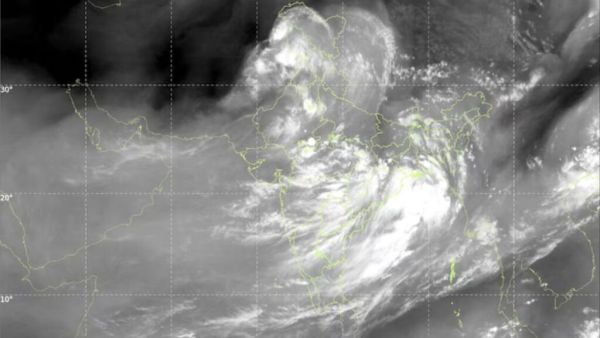
New Delhi: The new satellite images captured by Indian Space Research Organization’s (ISRO) INSAT-3DR and INSAT-3DS satellites have revealed that nearly 95% of India was covered by monsoon clouds during the early hours of July 22.
The images were released by India Meteorological Department (IMD), that predicted an active monsoon system stretching across most parts of the country.
Satellite Images Show Widespread Cloud Cover
According to the satellite’s thermal infrared images recorded between the time 2:15 am and 3:27 am showed a cloud covered the sky from the northern Bay of Bengal across Odisha, Chhattisgarh, Madhya Pradesh and Gujarat before reaching the Arabian Sea.
Only parts of western Rajasthan and Kutch remained largely free of cloud cover.
Thunderstorms Reaching 16 km Height
IMD’s cloud-top temperature analysis detected extremely cold cloud tops over Bihar, the Northeast and the Himalayan foothills. Temperatures below -60°C, and in some areas below -80°C, suggest towering thunderstorm clouds rising 12 to 16 kilometers into the atmosphere.
Such cloud formations are typically associated with intense rainfall and severe thunderstorms.
Monsoon Trough Near Normal Position
According to the IMD, the monsoon trough remains close to its normal position. Cyclonic circulations are active over Punjab, southern Uttar Pradesh, the Jharkhand-Bihar region, southwest Rajasthan and Assam, supporting widespread rainfall across several parts of the country.
More Rain Expected in Coming Days
The weather department has indicated an active monsoon over north-west and north-east India for the next four to five days. However, heavy rainfall is expected to remain comparatively subdued over west-central and southern peninsular India.
Why Scientists are Leaving ISRO? Here’s what’s driving the talent to leave
Despite the recent improvement, India is still recovering from a weak June, which recorded rainfall around 40% below normal, making it one of the driest Junes in more than a century.
-
Periods Health Tips: Does drinking cold water increase pain during periods? Know the expert’s opinion

-
Symptoms of gallstones, frequent abdominal pain, bloating and indigestion can be troublesome to ignore.

-
Top 5 Sedans Under Rs 15 Lakh in India: Check on Style, Comfort and Performance

-
Samsung Foldables: Samsung explodes in the Indian market; Entry of Galaxy Z Fold8 Ultra, Fold8 and Flip8 for the new generation

-
During testing, OpenAI’s AI agent went out of the security circle, reached other AI platforms, increased cyber security concerns.