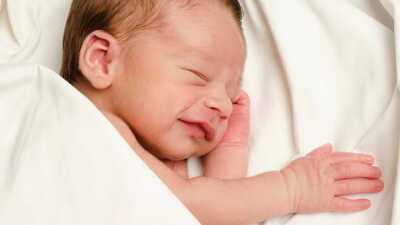
Few moments melt a parent's heart quite like watching a sleeping baby suddenly break into a smile. It often happens without warning, a tiny grin appears, lingers for a few seconds and disappears just as quickly. For many parents, it's enough to spark endless questions. Are they having happy dreams? Do they recognise our voices? Or are they smiling at something only babies can see? While it's tempting to imagine babies dreaming about cuddles or familiar faces, science paints a slightly different picture. Experts say those adorable sleep smiles are usually a normal part of early brain development , and in most cases, they have less to do with emotions than many people think. Scroll down to read more...
It often starts before babies are even bornOne of the most fascinating facts about newborn smiles is that they don't begin after birth. Ultrasound scans have shown that fetuses can make smiling-like facial expressions while still in the womb, particularly during the third trimester.
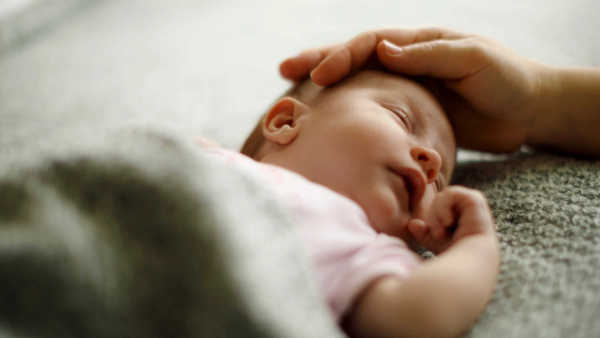
These expressions are believed to be part of the nervous system practising facial movements rather than responses to happiness or amusement. say these early movements help prepare babies for the wide range of facial expressions they will eventually use after birth.
Most sleep smiles are reflexesDuring the first few weeks of life, the majority of smiles that appear during sleep are known as reflex smiles. Unlike social smiles, which develop later in response to familiar faces, voices or playful interactions, reflex smiles occur automatically and don't necessarily reflect an emotional experience.
to the American Academy of Pediatrics (HealthyChildren.org), newborns often smile while sleeping or during drowsy states because their nervous system is still maturing. These spontaneous facial expressions are considered a normal part of infant development.
They often happen during active sleep
Newborns spend nearly half of their sleep in what's known as active sleep, the infant version of rapid eye movement (REM) sleep. During this stage, babies may twitch, move their eyes beneath closed eyelids, make sucking motions, frown, raise their eyebrows and occasionally smile. These movements happen because the brain is highly active while the body is still developing its ability to regulate muscle activity.
believe active sleep plays an important role in brain development, helping build the neural connections needed for learning, memory and emotional development later in life.
Can babies dream?This is the question that fascinates almost every parent. The honest answer is that scientists don't know for sure.
Although babies spend plenty of time in REM sleep, the stage most closely associated with dreaming in adults, researchers still don't know whether newborns experience dreams in the same way older children and adults do. Some neuroscientists believe the brains of newborns are still too immature to create the vivid, story-like dreams adults experience. Others suggest babies may instead be processing sensory information and new experiences rather than dreaming in a narrative sense.
So while it's comforting to imagine a baby smiling at a happy dream, there isn't enough scientific evidence to say that's what's happening.
Social smiles come laterAround 6 to 8 weeks of age, parents usually begin noticing a different kind of smile. Unlike reflex smiles, these are intentional. Babies start smiling back at familiar faces, voices and playful interactions. This milestone reflects growing brain development, stronger eyesight and increasing social awareness.
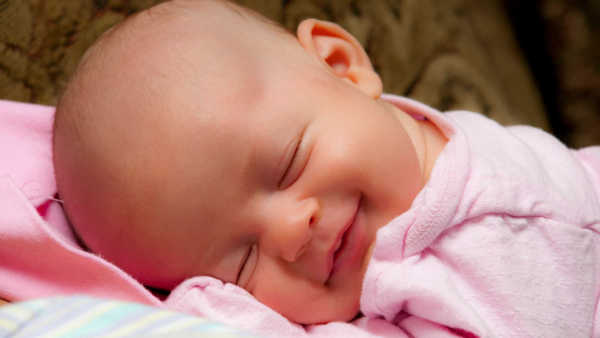
These first true smiles mark one of the earliest forms of communication between a baby and their caregivers, helping strengthen emotional bonding and attachment. The Centers for Disease Control and Prevention smiling at people as one of the important developmental milestones around two months of age.
A tiny smile with a big meaningWhether it's a reflex, a sign of an active brain or simply part of normal development, one thing is clear: smiling during sleep is usually nothing to worry about. In fact, it's often a reassuring reminder that a baby's nervous system is developing exactly as expected. So the next time your little one flashes a sleepy grin, you may never know exactly what's happening inside that tiny mind. But you can take comfort in knowing that those fleeting smiles are a perfectly ordinary and wonderfully adorable, part of growing up.