Indian equities tumbled on July 22 as tariffs, geopolitical tensions, soaring oil prices, a weaker rupee and rising US yields rattled investors.
Sanjeev Kumar | July 22, 2026 10:22 PM CST
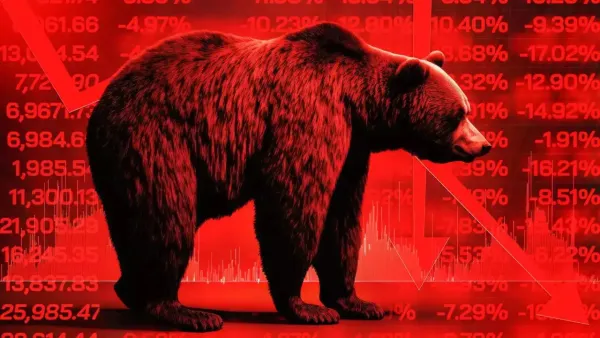
The Indian stock market came under intense selling pressure during Wednesday's trading session, with benchmark indices sliding nearly 1 per cent as investors turned cautious amid a combination of global and domestic headwinds. The weakness was visible across sectors, with broader markets taking an even bigger hit than frontline indices. The BSE Sensex plunged close to 750 points during intraday trade, touching a low of 76,722. Meanwhile, the NSE Nifty 50 slipped below the psychologically important 24,000 mark, falling to an intraday low of 23,973.70 after losing more than 200 points.
Selling pressure was more pronounced in the broader market, where the and Nifty Smallcap 100 indices declined by as much as 1.5 per cent, reflecting widespread risk aversion among investors.
Trump's Fresh Tariff Threats Hit Market Sentiment
Investor confidence weakened after US President Donald Trump unveiled a new tariff roadmap for generic medicines imported into the United States.
According to Trump's announcement, generic drugs entering the US will continue to attract zero tariffs until August 1, 2028. Thereafter, imports will face a 100 per cent tariff for one year before the levy increases to 200 per cent.
"Effective August 1st, 2026, all Generic Drugs being brought into the United States will continue to have a TARIFF of ZERO PERCENT for a two-year period of time, after which the TARIFF will be raised to 100 per cent for a one-year period of time, and 200 per cent thereafter," said Trump.
Adding to market uncertainty, US Trade Representative Jamieson Greer indicated that fresh tariff measures affecting several countries could be announced shortly, with the current temporary tariff framework nearing its expiry later this week.
Escalating US-Iran Conflict Raises Global Risk
Geopolitical tensions in the Middle East also weighed heavily on investor sentiment. Reports indicated that Iran launched a major drone attack targeting what it described as US ammunition storage and logistics facilities in Al-Dawha, Kuwait.
The conflict has continued to intensify, with the US military reportedly carrying out an 11th consecutive night of strikes on Iran. President Trump has also indicated that American forces could soon target the area near Pickaxe Mountain, located close to one of Iran's key nuclear enrichment facilities.
Iran has warned that any attack on Pickaxe Mountain would expand the conflict and prompt broader strikes against US allies in the region.
Surging Crude Oil Prices Add Inflation Concerns
Another key factor behind the market weakness was the sharp rise in crude oil prices. Brent crude extended gains for a fourth straight session, climbing to $92.67 per barrel, its highest level since June 11.
The spike has been driven by fears of supply disruptions linked to the Middle East conflict. For India, which imports a large share of its crude oil requirements, higher prices increase concerns over inflation, the current account deficit and corporate profitability.
Persistent strength in oil prices also raises the possibility of tighter monetary conditions if inflationary pressures intensify.
Rupee Weakens Amid Global Uncertainty
The Indian rupee also remained under pressure, falling 11 paise to 96.36 against the US dollar in early trade.
The currency has been weighed down by elevated crude oil prices, geopolitical uncertainty and increased demand for safe-haven assets like the US dollar. A weaker rupee can make imports more expensive, further adding to inflation concerns.
Higher US Dollar And Bond Yields Trigger FII Worries
Another major concern for the market is the strengthening US dollar and rising Treasury yields.
The dollar index has moved above the 101 mark, while the yield on the US 10-year Treasury has climbed to 4.635 per cent from 4.545 per cent within just four trading sessions.
Higher US bond yields typically make American debt more attractive relative to equities in emerging markets, increasing the likelihood of foreign institutional investors pulling money out of markets like India. Such outflows can put additional pressure on domestic equities and the rupee.
READ NEXT
-
Tension at KPCC office as Congress workers throw eggs at BJP MLA

-
Early arrival of POP Ganesh idols in Bengaluru despite ban

-
NGT Tears Into Bhopal Municipal Corporation Over Bhoj Wetland Delay

-
Odisha Gymnasts Set to Compete in Commonwealth Games 2026

-
Four Judokas from SAI Bhopal Selected for Commonwealth Games 2026