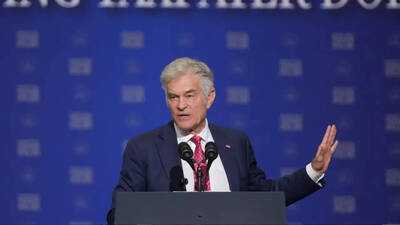
On Tuesday, the Trump administration revealed it would be withholding more than $1 billion in Medicaid payments to California and Minnesota, citing concerns over suspected fraud and noncompliance. This decision is part of a broader initiative aimed at addressing allegations of fraud predominantly in states led by Democratic officials. Health Secretary Robert F. Kennedy Jr. emphasized that these measures are intended to prevent fraudulent activities before they occur, contrasting with previous administrations that focused on recovering funds after the fact.
"We must halt payments, seek clarification, and pursue the evidence wherever it may lead," Kennedy stated during a press briefing. This approach is part of a larger campaign by the administration to demonstrate its commitment to combating fraud and protecting taxpayer dollars, especially as rising healthcare costs become a significant issue for voters ahead of the upcoming midterm elections.
In March, Vice President JD Vance initiated a new task force to combat fraud, responding to President Donald Trump's request. This task force aims to leverage data and technology to identify and investigate potential misuse of federal funds.
However, Minnesota's temporary Medicaid director, John Connolly, expressed concerns that the federal government has not provided adequate data or explanations regarding the calculations behind the deferral amounts. He criticized the federal actions as unprecedented and punitive, arguing that collaboration, rather than political maneuvering, is essential to combat fraud and safeguard services for those in need.
Minnesota's Democratic Governor Tim Walz suggested that the Republican administration's decision to defer funds might be a strategy to finance Trump's tax cuts for affluent Americans. Similarly, California's Democratic Governor Gavin Newsom accused the administration of politically motivated targeting.
Earlier this year, the Trump administration escalated its anti-immigration efforts in Minnesota, deploying a significant number of Immigration and Customs Enforcement officers, which led to extensive protests and tragic incidents involving civilian casualties. Trump has frequently criticized California, labeling it as poorly governed.
Challenges Faced by States
The administration's strategy has resulted in complications for the states involved. In April, the Centers for Medicare & Medicaid Services (CMS) acknowledged a significant error in the data used to justify a fraud investigation in New York. Additionally, California's Medicaid director informed a congressional committee that CMS had not provided any specific instances of fraud to justify a $1.3 billion funding deferral announced in May.
In Minnesota, state officials have been actively implementing a corrective action plan to address CMS's concerns, which have led to the deferral of approximately $260 million in federal funds and warnings of potential future cuts. Connolly stated that they have been cooperating in good faith with CMS to raise awareness about fraud in Minnesota's Medicaid program and to enhance safeguards against future misuse.
Kennedy did not clarify whether the new deferrals—$867.5 million for California and $199 million for Minnesota—are additional or overlap with previous deferrals announced this year. CMS Administrator Dr. Mehmet Oz did not provide specific examples of fraud in these states but mentioned patterns of billing that raised suspicions, such as providers billing for multiple patients simultaneously or billing after a Medicaid beneficiary's death. He also pointed to the rapid growth of California's home care program as a concern, which state officials argue is a deliberate strategy to avoid more costly nursing home placements.
Kennedy and Oz indicated that states could restore the flow of federal funding by submitting documentation that verifies the legitimacy of the questioned payments. A representative from California's Medicaid program did not respond immediately to requests for comments, although state officials have acknowledged their efforts to collaborate with the federal government to provide the necessary information. Oz noted that Minnesota had already submitted documents for reevaluation.
Kennedy also suggested that he would expand the authority to exclude providers from Medicaid, Medicare, and other federal health programs to CMS, a power that has traditionally been held by his department's Office of the Inspector General. HHS Inspector General Thomas March Bell remarked that this move would enhance efforts to exclude additional fraudulent actors from these programs.
-
Rodri's Remarkable Return

-
Kaylee Hottle, ‘Godzilla’ actor, killed in car crash at 18

-
Meet Aamir Khan’s brother, who has no home, struggles for food

-
Will Fresh Centre-CJP Talks Break The Deadlock? CJP Wants A Public Meeting, Hurdles Remain

-
Delhi CJP Protest: Injured Woman Taken Off Ventilator, Hospital Gives Health Update