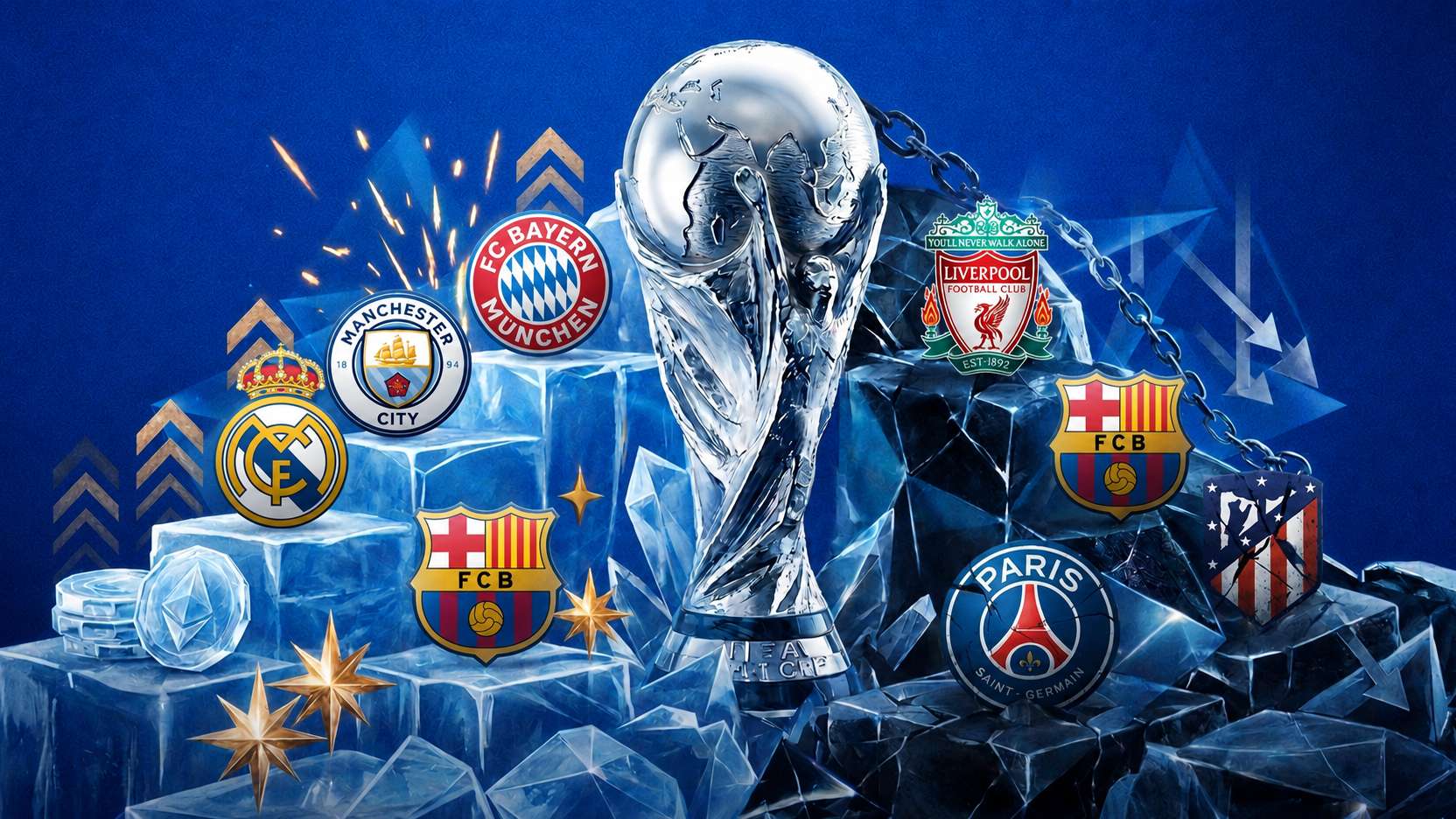
The 2026 World Cup brought varied fortunes for football clubs worldwide — while some celebrated substantial gains, others faced serious setbacks.
As the tournament wrapped up across the United States, Mexico, and Canada with Spain crowned champions, a different kind of competition began — one within the corridors of the world’s biggest clubs, each assessing the aftereffects on their squads.
Coaching teams are already preparing for the 2026–2027 season. But for many clubs, the expanded World Cup has left behind a complicated legacy — physical exhaustion, injuries, and financial implications intertwined with moments of glory.
This was no ordinary tournament. The 2026 World Cup reshaped the landscape of club football, leaving both triumphs and troubles in its wake. Some clubs emerged stronger, while others were left to count the cost.
Here’s a look at the most notable winners and losers of the 2026 World Cup.
Barcelona: The Giant That Won and Lost Simultaneously
Barcelona entered the World Cup with 14 players, nine of whom made it to the final stages, including new English signing Anthony Gordon. Gordon represented England in the third-place play-off, while Jules Koundé featured for France in the same fixture.
Spain’s victorious squad in the final included eight Barcelona players — Joan García in goal; Pau Cubarsí and Eric García in defence; Pedri González, Pablo Gavi, and Dani Olmo in midfield; and Lamine Yamal along with Ferran Torres in attack.
Having ten influential players go deep into the competition came at a cost — physically drained bodies and minimal rest ahead of the new season.
Beyond fatigue, Barcelona suffered in other ways: Frenkie de Jong sustained a serious knee injury expected to sideline him for four to five months; Raphinha Díaz struggled both on and off the pitch; and key stars such as Pedri and Yamal showed signs of physical strain despite their world champion status.
Still, not all was bleak for the Catalans. Their Spanish core returned with renewed confidence after lifting the trophy, and Yamal will now benefit from reduced international duties. Pau Cubarsí’s emergence as “Best Young Player” added to the positives, as did Anthony Gordon’s strong performances in the knockout rounds.
Financially, Barcelona will receive a sizable compensation from FIFA, given their heavy representation in the final days. The club also stands to profit should it decide to sell Ferran Torres, Spain’s title-winning goal scorer.
In essence, Barcelona emerged from the World Cup as both a beneficiary and a casualty — a “winning loser.”
Real Madrid: The Ultimate Winner
Real Madrid, by contrast, were clear victors. Their World Cup gains came in three major forms: rejuvenated stars, an early return of key players, and the stellar form of new signing Marc Cucurella.
Kylian Mbappé, Vinícius Júnior, and Jude Bellingham rediscovered their best form after an underwhelming 2025–2026 campaign, setting a promising tone for the season ahead under José Mourinho.
Mourinho’s wish for early exits to allow rest was largely granted — most Real Madrid players returned early, with only Mbappé, Ibrahima Konaté, Bellingham, and Cucurella reaching the final stages. Cucurella’s defensive solidity and attacking composure further reassured the club about a position that had long been problematic.
Atlético Madrid: Frustration Amid the Fight
Atletico Madrid, the third Spanish powerhouse, sent nine players to the World Cup final — more than any other club. Spain’s Marc Pubill, Marcos Llorente, and Alex Baena were joined by Argentina’s Juan Musso, Nahuel Molina, Thiago Almada, Nico Gonzalez, Giuliano Simeone, and Julian Alvarez.
During the tournament, Gonzalez’s loan from Juventus ended, and Atletico secured Spanish full-back Alejandro Grimaldo. Yet, despite strong representation, the club’s disappointments outweighed its triumphs: many players failed to impress, Argentina’s final defeat deflated spirits, and Julian Alvarez’s public declaration that he wanted to leave for Barcelona sparked internal turmoil.
Manchester City: Midfield Pride Restored
Manchester City entered a new era following Pep Guardiola’s departure after a decade of dominance. Despite that loss, the World Cup brought encouragement — Rodri rediscovered his world-class form, earning the “Best Player” award, while young Englishman Elliot Anderson impressed and gained vital experience for the upcoming season.
The resurgence of Rodri and development of Anderson promise to rejuvenate a midfield that had faltered over the past two years.
Liverpool: The World Cup Deepens the Reds’ Concerns
The 2026 World Cup was unkind to Liverpool. None of their stars stood out — Virgil van Dijk and Alexis Mac Allister performed poorly — while Mohamed Salah, having announced his exit, excelled for Egypt with tactical discipline and adaptability under coach Hossam Hassan.
While Salah’s performances boosted his personal stock, they underscored the challenges facing Liverpool as they head into a period of transition.
Paris Saint-Germain: Between Fatigue and Frustration
European champions Paris Saint-Germain had a mixed World Cup. Ousmane Dembélé maintained his level, and Fabián Ruiz rediscovered form as Spain triumphed. However, the team suffered from exhaustion after a long club season, emotional letdowns following France’s fourth-place finish, and poor displays from Portuguese stars João Neves and Vitinha.
Neves also stirred controversy by labelling Cristiano Ronaldo “a player like everyone else now,” a remark that angered fans of the Portuguese legend.
Bayern Munich: Michael Olise, the Lone Bright Spot
Bayern Munich’s World Cup fortunes revolved around one man — Michael Olise. The Frenchman’s dazzling form continued as he claimed the “Best Playmaker” award with seven assists. Real Madrid are reportedly prepared to bid between €200–250 million for him.
For Bayern, Olise’s success guarantees benefit — either through his continued excellence or a lucrative transfer. However, Germany’s national team collapse, featuring six Bayern players, cast a shadow over their overall outcome.
Arab Clubs: Al-Nassr and Al-Ahly Face Opposite Fates
Among Arab clubs, Al-Nassr and Egypt’s Al-Ahly experienced contrasting fortunes. For Al-Nassr, Cristiano Ronaldo’s farewell World Cup ended with disappointment as Portugal exited in the round of 16, prompting fierce criticism. His frustration could impact the Saudi club’s new season.
Al-Ahly, conversely, saw their players shine. Egypt reached the round of 16 for the first time, with Mostafa Shobier, Marwan Attia, and Emam Ashour attracting major transfer interest. The challenge now lies in retaining their stars amid mounting offers.
As the dust settles, the 2026–2027 season will reveal how each club manages the legacy — good or bad — of football’s biggest global spectacle.
-
Bruno Fernandes reconsiders Manchester United stay as Galatasaray step up £64m pursuit
-
"I am human too": Lamine Yamal’s girlfriend Ines Garcia speaks out after facing online abuse following World Cup celebration
-
Scorpio Horoscope Today, July 22, 2026: Focus on spending and investment, avoid paying attention to rumours
-
Libra Horoscope Today, July 22, 2026: Stay steady in business, profit levels set to rise
-
Gemini Horoscope Today, July 22, 2026: Stay Humble in Relationships and Cherish Joyful Moments