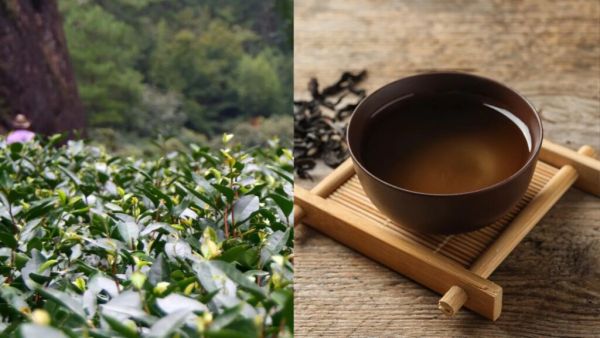
Imagine paying more than ₹1 lakh for just 20 grams of tea. It sounds unbelievable, but that’s exactly what makes Da Hong Pao the most fascinating teas ever discovered. Often called the world’s most expensive tea, this legendary Chinese oolong isn’t famous just because of its flavour. Its rarity, centuries-old history and royal legacy have turned it into one of the greatest treasures in the world of tea.
What makes it even more extraordinary is that the original Da Hong Pao tea is now completely banned from commercial harvesting. So, while you can still buy Da Hong Pao today, the real thing is something almost no one will ever get to taste again.
So, What Is Da Hong Pao?
Photo Credit: Pexels
Da Hong Pao, which translates to “Big Red Robe” in Mandarin, is a celebrated oolong tea grown in the stunning Wuyi Mountains of China’s Fujian Province. These dramatic rocky mountains, recognized as a UNESCO World Heritage Site, are famous for producing some of the finest teas in the world.
Unlike green tea or black tea, oolong sits somewhere in between. It combines the freshness of green tea with the richness of black tea, creating a complex cup with floral aromas often compared to fresh orchids, along with roasted, fruity and slightly smoky notes. Every sip finishes with a naturally sweet aftertaste, which is why tea connoisseurs across the world treasure it.
Why Is It The World’s Most Expensive Tea?
Hidden among the cliffs of the Wuyi Mountains stand just six original Da Hong Pao bushes, known as the legendary Mother Trees. These ancient plants are believed to be hundreds of years old and are considered priceless national treasures.
Because there are only six of them, the amount of tea they once produced was incredibly limited. That rarity pushed prices into an entirely different league. Considered a national treasure, the price for the real tea can exceed Rs 9 crore per pg.
In one of the most famous tea auctions ever held, 20 grams of original Da Hong Pao sold for 208,000 yuan (around ₹1.23 lakh). According to the BBC, the original tea costs over $1,400 (around ₹1.2 lakh) for a single gram, making it more than 30 times more valuable than gold by weight. A single pot brewed from the original leaves could cost well over $10,000 (around ₹8.5 lakh).
The Original Da Hong Pao Is Now Banned
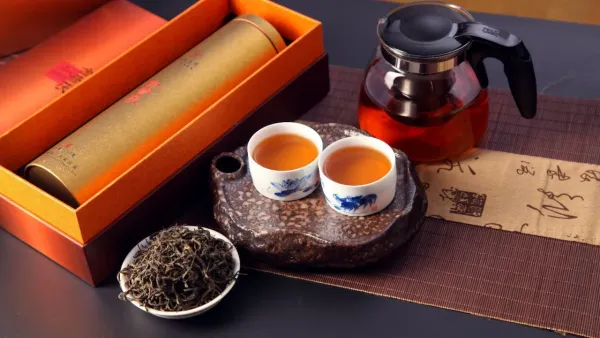
Photo Credit: Pexels
In 2006, the Chinese government permanently banned the commercial harvesting of leaves from the six original Mother Trees to protect them for future generations. These ancient bushes are now preserved as part of China’s cultural heritage, and no one is allowed to harvest tea from them anymore.
The government even insured the trees for 100 million RMB (approximately ₹142 crore) because of their immense historical and cultural value. The last-ever harvest from these Mother Trees has since been preserved inside Beijing’s Palace Museum.
The Da Hong Pao available today is produced from carefully cultivated descendants (clones) of the original Mother Trees or blended using premium Wuyi rock oolong teas that closely recreate the legendary flavour.
A Tea Wrapped In Legend
According to Chinese folklore, a young scholar was traveling through the Wuyi Mountains on his way to Beijing for the imperial examinations when he suddenly fell seriously ill. A monk from a nearby temple brewed tea using leaves from a special tea bush growing on the cliffs, and the scholar quickly recovered.
He went on to top the imperial examinations. Later, when the emperor himself became ill, the scholar prepared the same tea, and the emperor also recovered.
As a reward, the emperor gifted the scholar a magnificent red ceremonial robe. Wanting to honor the tea that had saved both their lives, the scholar returned to the mountains and draped the emperor’s robe over the tea bushes. Ever since, the tea has been known as Da Hong Pao, or “Big Red Robe.”
How Do You Brew It?
Da Hong Pao is best enjoyed slowly. Traditionally, it’s brewed in a small Chinese clay teapot or a gaiwan using freshly boiled water at 95-100°C. Unlike regular tea bags that are discarded after one use, Da Hong Pao leaves are meant to be steeped multiple times. Many tea enthusiasts believe the third and fourth infusions reveal the tea’s richest flavours, with its floral sweetness becoming even more pronounced after each brew.
With the original Mother Trees now permanently protected and commercial harvesting banned, the authentic tea has become almost mythical.
-
Sepp Blatter calls for Gianni Infantino’s removal as FIFA president, says World Cup ‘lost its integrity’

-
Emiliano Martínez hints at international retirement after 2026 World Cup heartbreak, saying: 'The pain is beyond words'

-
Inaki Williams praises brother Nico for achieving 'the pinnacle of success' after crucial substitute appearance in Spain’s World Cup triumph

-
Plans Underway for a 64-Team FIFA World Cup—And It Might Arrive Sooner Than Expected

-
Manchester United Target Borussia Dortmund Defender Waldemar Anton: A Smart Move for Carrick?