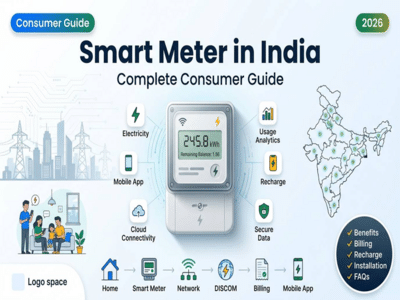
The rollout of smart electricity meters is gaining momentum across India under the Revamped Distribution Sector Scheme (RDSS). Several states have already installed millions of these meters, and many more households are expected to receive them in the coming months. The initiative aims to modernise power distribution, improve billing accuracy, and reduce electricity losses.
Unlike traditional electricity meters that require manual readings, smart meters automatically send consumption data to the power distribution company. This reduces the chances of billing errors, estimated bills, and delays in meter reading while allowing consumers to monitor their electricity usage more efficiently.
One of the biggest advantages of a smart meter is greater transparency. Consumers can track how much electricity they are using and identify appliances that consume the most power. This can help households manage their monthly electricity bills more effectively.
In many areas, smart meters also support prepaid or postpaid billing, depending on the policies of the local electricity distribution company. Consumers should check with their DISCOM to understand which billing system will apply after installation.
Another important benefit is faster fault detection. Since the meters communicate digitally, power companies can often identify outages or technical issues more quickly, which may help reduce restoration time during service disruptions.
Consumers should ensure that only authorised personnel from the electricity distribution company install the smart meter. It is advisable to verify the identity of the technician and keep a record of the initial meter reading after installation for future reference.
After the meter is installed, households should periodically review their electricity consumption through the utility's website or mobile app, if available. Monitoring usage regularly can help detect unusual increases in consumption and encourage energy-saving habits.
The government has clarified that the objective of the RDSS is to improve the operational efficiency and financial health of power distribution companies while providing better services to consumers. As smart meter installations continue across the country, more households are expected to benefit from digital billing, improved transparency, and modern electricity management.
-
Paytm Eyes New Horizons With Enterprise AI & Wallet Revival
-
Nepal, India Discuss Expanding Cross-Border Electricity Trade
-
'Kyunki Saas Bhi Kabhi Bahu Thi 2's Sumeet Sachdev opens up about near-death experience after choking on food; says, 'It was very scary'

-
Erling Haaland Birthday: The Norwegian Goal Machine Turns 26, Celebrates Birthday In Viking Style

-
Love to eat jhal jhal? Plant the plants of the house tub, a month is enough to fill the tree!