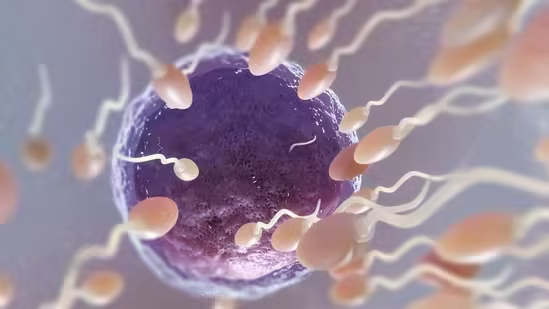
Conversations around egg freezing are steadily growing, giving women the option to delay pregnancy until they feel fully prepared. This allows them to prioritize education, career, or personal goals first. While there is no universal timeline for starting a family, it is important to understand how age impacts fertility and why egg freezing can be a proactive choice.
Why Consider Egg Freezing Early
- Egg quality and quantity naturally decline with age.
- The decline begins in the twenties, becomes more noticeable in the mid‑thirties, and accelerates after 35.
- Younger eggs generally have better chromosome quality, which increases the chances of a successful pregnancy later.
Benefits of Freezing Eggs Early
- Better chances of success in the future
- Lower risk of chromosomal abnormalities
- Greater preservation of reproductive potential
Who Might Consider Egg Freezing
Egg freezing is a personal decision, but some circumstances make it more relevant:
- Focusing on education or career milestones before starting a family
- Declining ovarian reserve (low egg count or quality)
- Not yet having found the right partner
- Undergoing medical treatments (like chemotherapy) that may affect fertility
- Family history of early menopause
- Conditions such as severe endometriosis impacting ovarian function
- Simply wanting to preserve options for the future
Rather than viewing egg freezing as a last resort, it can be seen as a proactive step that offers flexibility — though not a guarantee.
What Does the Process Involve
The procedure, medically known as oocyte cryopreservation, includes:
- Fertility assessment — hormone evaluation and ultrasound to check ovarian reserve.
- Hormone injections — given for 10–12 days to stimulate the ovaries to produce multiple eggs.
- Egg retrieval — a minor procedure to collect the eggs.
- Vitrification — a freezing process that preserves eggs until needed.
How Long Can Eggs Be Stored
According to India’s ART Rules 2021, eggs can be stored for up to 10 years, with possible extensions upon approval.
Success Rates
Success depends largely on the age at which eggs are frozen:
- Younger eggs have a higher likelihood of resulting in pregnancy.
- Multiple eggs may be required to improve chances.
- Sometimes, more than one egg‑freezing cycle is recommended.
Final Takeaway
There is no one‑size‑fits‑all answer to the right time for egg freezing. From a biological perspective, earlier is generally better. The most important step is to have an open discussion with a fertility expert about health conditions, family history, and future plans.
Note to readers: This article is for informational purposes only and not a substitute for professional medical advice. Always consult a qualified healthcare professional for guidance on fertility and reproductive health.
-
💸 Europe’s Biggest Football Transfers of the Summer So Far

-
Emergency Call Without SIM: How can you call 112 without a SIM card? Here's how the emergency calling system works.

-
Not all QR codes are the same! Learn the differences between Static and Dynamic QR codes and how they work.

-
E20 Fuel: Will the government reconsider E20 petrol? Here's what Parliament was told about ethanol-related vehicle damage concerns.

-
Union Bank Recruitment 2026: Recruitment for 395 Specialist Officer posts; packages up to ₹47 lakh offered