Mangoes were more than just a favourite fruit
Unlike many poets who immortalised food through verse, Ghalib’s love for mangoes is best preserved in his personal letters. During mango season, he eagerly awaited gifts of the fruit from friends and patrons and often wrote about them with remarkable enthusiasm. In one of his letters, Ghalib joked that age had become his greatest enemy. Once capable of eating dozens of mangoes, he lamented that by the time he was around 60, he could manage only “10 or 12” in one sitting, calling mangoes nothing less than a gift from God.
His famous definition of the perfect mango
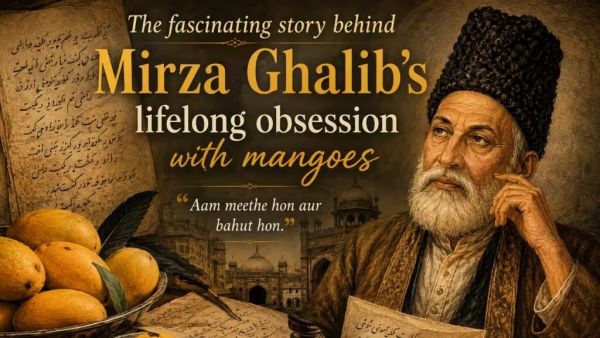
Perhaps the most quoted line associated with Ghalib’s love for mangoes is astonishingly simple. “Aam meethe hon aur bahut hon.”Translated, it means: “Mangoes should be sweet and there should be plenty of them.” In just a few words, Ghalib captured what many mango lovers still believe today. The line has become inseparable from his legacy and is often quoted every summer across India and Pakistan.
The donkey story that became legendary
No discussion of Ghalib’s mango obsession is complete without his sharp wit. According to a well-known anecdote, Ghalib was once eating mangoes with a friend who disliked the fruit. A donkey wandered by, sniffed the discarded mango peels and walked away without eating them. The friend remarked, “Even donkeys don’t eat mangoes.” Without missing a beat, Ghalib replied, “Exactly. Donkeys don’t eat mangoes.” The witty comeback has survived generations and remains one of the most beloved stories associated with the poet.Mirza Ghalib’s love for mangoes is one of the most charming aspects of his legacy. While his admiration is best known through his letters, he also described mangoes poetically in Persian, comparing their sweetness to the delights of heaven. In his correspondence, the fruit becomes much more than a seasonal indulgence. Ghalib wrote about mangoes with wit, affection and playful exaggeration, turning an everyday pleasure into a symbol of joy, comfort and refined taste. These writings reflect the same warmth, humour and literary elegance that made him one of the greatest voices in Urdu and Persian literature.
Why the stories still endure
Ghalib’s enduring love for mangoes offers a rare glimpse into the man behind the poetry. His letters show him not only as a literary genius but also as someone who eagerly awaited mango season, joked with friends and found immense joy in life’s simple pleasures.Perhaps that is why these stories continue to be retold every summer. They remind us that even one of the greatest poets of the Indian subcontinent could be completely captivated by the sweetness of a perfectly ripe mango.
-
Interstate ganja network busted, 3 held with 22 kg contraband

-
Samsung Galaxy Watch Ultra 2, Samsung Galaxy Watch 9 First Impressions: Smarter, Brighter, More Personal Than Ever

-
'Attack Ships In Hormuz And We'll Blow Up Your Bridges': Trump's Open Threat To Iran

-
Kuldeep Yadav Signs with Yorkshire for English Domestic Season

-
Ram temple trust meeting underway in Ayodhya; key appointments, CEO post on agenda