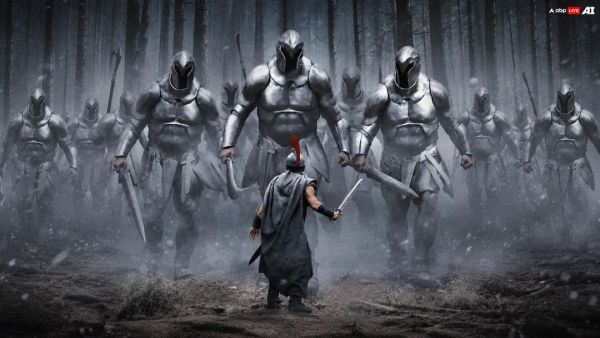
The Odyssey had a lot of hype building it up as one of the greatest cinematic masterpieces of our generation. Despite being an ardent Christopher Nolan fanboy, I still had a couple of qualms heading into the IMAX auditorium in Noida. First: India does not have a 70mm IMAX screen. You know, how Nolan intended the cinema to be viewed. I went to the PVR IMAX available at Mall Of India, which has a 45x24 feet screen (a typical 70mm IMAX print is designed to be best viewed on a screen of at least 72x53 feet). There are no 70mm IMAX screens in India, but you probably already knew that. Second: Nolan took on the gargantuan task of putting the nearly unfilmable Homer epic on screen. Naturally, I knew that would be nothing short of impossible.
However, after my nearly three-hour long watch, I came out of the theatre both elated and deflated. Elated because I had just witnessed how a great director grounds a story, no matter how 'epic' it might be. Deflated because I know that India's next big epic, the Ranveer-Yash starrer Ramayana will never be able to humanise the great story of Lord Ram and make it just a bit more relatable and attuned to our times.
Spoiler Alert: If you have already watched The Odyssey, this does not matter to you. If you haven't, I highly suggest that you watch the movie first and then perhaps return back here.
Nolans's Great Labour Of Humanising Odysseus & The World Around Him
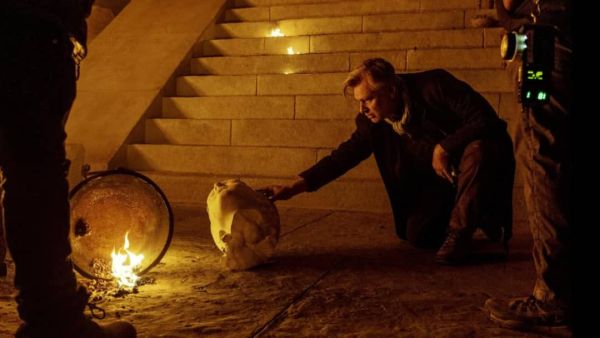
Photo credit: Melinda Sue Gordon/Universal Pic/Melinda Sue Gordon - © Universal Studios (via IMDb)
Yes, labour. After all, the greatest of Greek heroes (the likes of Heracles, or Hercules for those more accustomed to Roman nomenclature) attained immortality (or is it superstardom) after completing great labours: one task more great than the previous.
For the Oscar-winning director, the labours were no less than improbable. First, you had to recreate the Night of the Horse from the great Trojan War. Second, you had to bring to life some hall-of-famer Greek monsters and creatures on screen, including the likes of Polyphemus the cyclops, the gigantic and cannibalistic Laestrygonians, the goddess/sorceress Circe (a masterclass by Samantha Morton of The Serpent Queen fame) and a nod to one of the most tense body horror sequences, the alluring Sirens, and last but not the least, the bloody homecoming and eventual demise of the cunning Antinous (excellently portrayed by Robert Pattinson, who simply excels in antagonist roles, à la The Devil All the Time or The King).
Let's break it down one by one.
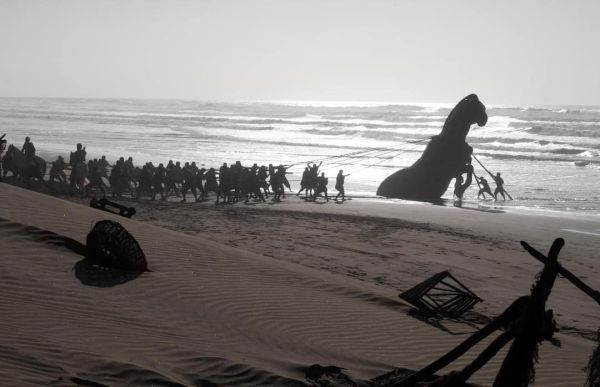
Photo credit: Melinda Sue Gordon/Universal Pic/Melinda Sue Gordon - © Universal Studios (via IMDb)
First, let's address the giant wooden horse in the room. Yes, the actual Trojan Horse shown in the movie is very Nolan-esque. Dark, brooding, and evokes a sense of craftsmanship in the design. Not your run-of-the-mill empty horse carriage shown in the 2004 Brad Pitt-starrer Troy.
But what stayed with me was the inhumane ordeal the soldiers had to go through stuck inside the wooden frame for days, battling the risks of getting drowned during high tide, hunger, the claustrophobic hours spent roomed with their own sweat and excrement, and trying not to scream even when Trojan soldiers perforate stab the horse with spears and swords to check if its empty. This is Nolan at his best. You cannot show struggle on screen unless the struggle is 'humane'.
Nolan did the same in that Dunkirk scene where he showed Allied troops hiding in the grounded trawler to avoid German aerial attacks. Nobody does hold-your-breath thrillers quite like Nolan.
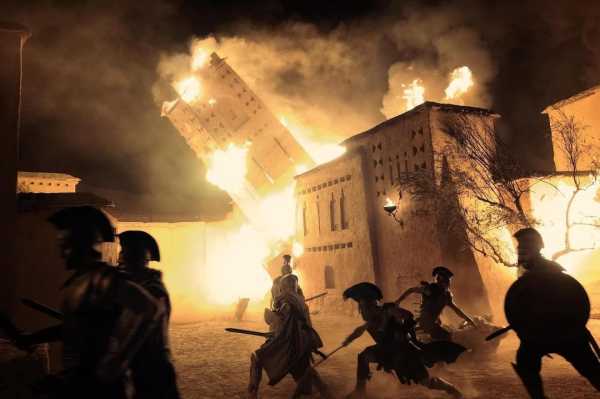
Photo credit: Melinda Sue Gordon/Universal Pic/Melinda Sue Gordon - © Universal Studios (via IMDb)
In The Odyssey, the inflitration of Troy by Odysseus (delicately portrayed by Matt Damon) and his band of brothers is fast, silent, and deadly, and all builds up to a cresecendo when the gates are opened to Agamemnon's fear-striking armour (whoever dissed it calling his whole outfit Batman-y deserves a special place in hell) and the soldiers spill into the streets of Troy, wreaking havoc and destruction whose price the so-callled victors had to pay the hard way years after the batter was over (I won't spoil this one for you).
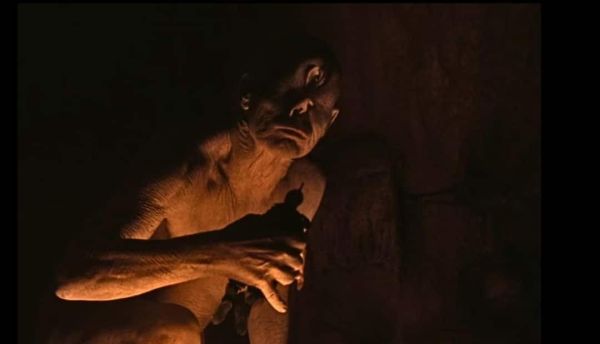
Photo credit: Universal Pictures (via IMDb)
Next up, the monsters and creatures. No CGI were used to bring Polyphemus (played by famed comedian Bill Irwin) alive on screen. Seeing the screenshot above won't help my case. Watching the tense sequence on screen, even I could not believe that it was actually a 60-foot mechanical puppet and animatronics in action. Again, Nolan doing what he does best. Minimal VFX was used to touch up the face of the monster.
Even the towering Laestrygonians (the silver armour-clad soldiers seen in the feature image earlier) were a product of oversized props and sets, extended body armours, and nifty camerawork, bringing the scale alive on screen.
However, in these two sequences, what really stayed with me was again, Nolan's humanisation. Polyphemus, despite being a giant, did not run after the fleeing soldiers in blink-and-miss speed. He is no Hulk who'd leap tall buildings in a single bound. This is not a superhero movie. Just like you would not imagine a giant elephant or a whale to jump across a canyon just becase they are huge in real life, the cyclops and the slightly clumsy Laestrygonians had to deal with 'humane' problems of gravity, struggling to exist in a world not really designed for them.
The Problem With India's Epic, Ramayana
This is where I have an itch to scratch with the upcoming Ramayana. While we await the full trailer to be released to public on July 24, we did get a teaser which was trolled for using too much CGI. I don't care about using CGI, to be honest. Some of my most favourite fantasy movies (including the critically and commercially acclaimed The Lord of the Rings trilpgy) are chockablock with CGI. However, I do have an issue with trying to be yet another copy-paste job.
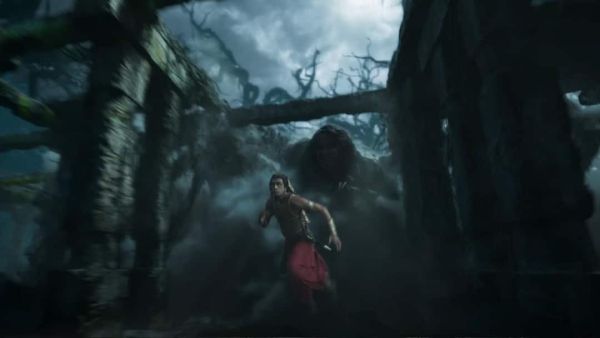
Photo credit: Screenshot (YouTube/World Of Ramayana)
The screenshot above is from the said teaser. Here, we see Ram sprinting away from a beastly giant as it blisters through a ruined temple in the forests. Ermm, great but we have seen this before. Remember 2012's The Avengers? The scene where Black Widow runs away from the Hulk as he bashes through a facility? If you don't check out the screenshot below:
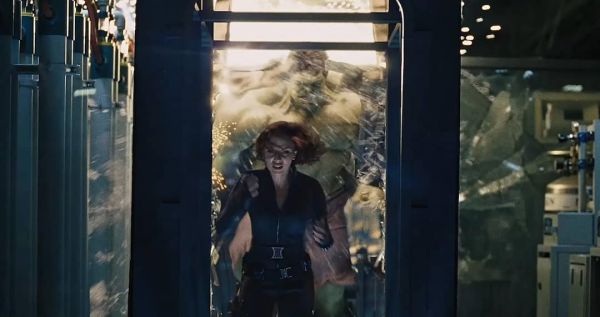
Photo credit: Screenshot (YouTube/Best Movie Scenes)
Come on! Surely we deserve better? This is not the copy-paste era of the 80s or the early 2000s. When peers and fellow directors are putting in the effort to be different, Bollywood is simply doing what Bollywood does best: copying Bollywood and then taking offence when the nomeclature has a resemblance to 'Hollywood'.
Next, let's talk about the posters of Ramayana. Check out this side-by-side comparison of The Odyssey and Ramayana below:
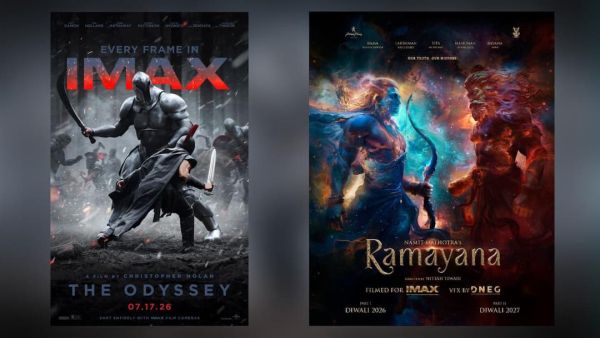
Both movie posters have mentions of IMAX. Of course, The Odyssey is the first feature film to be shot entirely with 70mm IMAX cameras (hence the novel 'Every Frame In IMAX' tag), whereas Ramayana is India's first feature film to officially carry the 'Filmed For IMAX', which is no mean feat in itself. It is honestly impressive to see movies like Ramayana or SS Rajamouli's upcoming Varanasi to carry the large format film branding, showing just how far India has come in the world of cinema in a comparitively short span of time.
But, allow me to make another observation. Let's ponder a bit on The Odyssey poster. Odysseus is arguably one of the greatest Greek commanders, having deviced the whole Trojan Horse plan or even the other many trickeries he pulled off during his journey back home as seen in the movie. Even the great leader Agamemnon (who succesfully united a massively fragmented coalition of independent Greek kingdoms to take on Troy) only listened to Odysseus when it came to military strategies. However, in the poster, Odysseus is reduced to just another fierce warrior, almost minuscle in stature compared to the towering Laestrygonian. But his spirit is indomitable, his posture shows himself raring to get into a fight, no matter how big the challenge would be. Somewhat invokes the tale of David and Goliath. Again, Nolan 'humanising' his characters to make them more relatable.
On the other hand, we have Ramayana, whose poster shows the figures of Ram and Ravan, one with the universe, evoking the sense of supreme beings, bigger than universe itself. Yes, sure. That is what the epic has us believe. Ram, the purushottam, through his actions became a legend, a God.
Not willing to go into the fallacies of the above statement, can this author simply request a more 'humane' story? We do not need another Baahubali. We do not need another blockbuster movie that does not appeal to the senses of artists and visionaries across the world. The story of Ram is a great one. It is fraught with epic challenges, it raises questions of beliefs and duty in the face of unsurmountable odds, and is not void of its own set of controversies. Why can’t we have a 'humane' Ram? Someone who can be attuned to the sign of our times? Do we always need the superficial-bordering-on-brainless gimmick?
That is the issue with Bollywood now. It still wants to sell gimmicks. Movies like Laapataa Ladies are rare once-in-a-blue-moon gems now. When was the last time a Hindi Film Industry production evoked the beauty-in-tragedy sense like Hrishikesh Mukherjee’s Anand did? What we instead get is testosterone-charged films celebrating the ‘toxic’ male, and a bunch of gheesa-peeta remake of older Bollywood dance numbers.
Why Movies Like The Odyssey Will Live On
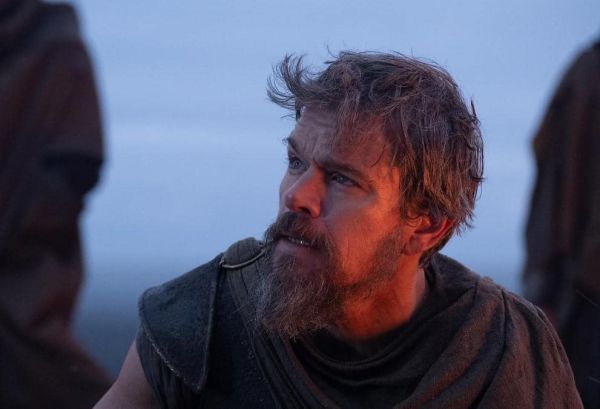
Photo credit: Melinda Sue Gordon/Universal Pic/Melinda Sue Gordon - © Universal Studios (via IMDb)
In one scene, Odysseus advises son Telemachus (a humbling performance by Tom Holland) to not 'look for Gods in Men's eyes'. Matter of fact, bit of a spoiler debate here, one could even argue that Athena (emotinal cameos by Zendaya) was never there in the film. It was just the memories of a young girl assailed during the Night of the Horse, guilt of whose death led Odysseus to have visions and delusions.
Even in that one heart-wrenching scene with the Sirens, when Odysseus was the only one who could listen to their achingly luring songs, Odysseus did not lust after the magical feminine creatures with typical 'male' drive. He instead broke down in tears because the songs admittedly reminded him of what he cannot have the most: what he already once had.
That, my dear reader, is heartbreaking in the true sense. To see a great hero not boast about being 'King Of Lyari' but lament about all the mistakes he could never unmake? That is beautiful, indeed. And that is what makes The Odyssey a beautiful piece of cinematic storytelling. Is it not commercially viable? Yes it is. It has already grossed $257.8 million globally in its opening weekend. Of course, it has the Hollywood industry muscles driving those numbers. But still, you cannot give the excuse that we make crass, brainless films because the audience only wants crass, brainless products.
While India (or at least the larger commercial filmmaking industry) is still chasing gimmicks like dime-a-dozen sequels nobody 'welcomes' anymore or uninspired copy-pastes of what Hollywood has done a decade ago, Nolan's Odyssey did what we expect genius filmmakers to do: take us somewhere we have never been to before, but make it relatable.
And that is precisely why The Odyssey will remain immortal, while Ramayana will be replaced by the next fantasy thriller Rajamouli brings out soon.
-
Manchester United considering £10 million bid for Leicester City defender Ben Nelson

-
Argentina vs Spain preview: Can Lionel Messi claim back-to-back World Cup titles?

-
Spain beat Argentina 1-0 to clinch their second Fifa World Cup title

-
Usha Vance Welcomes Fourth Child Amid Vice Presidency

-
July 2026 Social Security Payments: Key Dates and Amounts