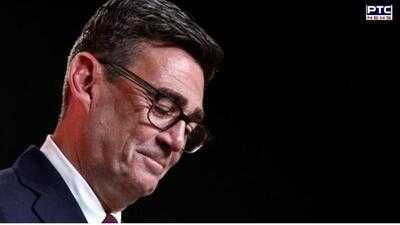
UK politics: Britain is preparing for another change in leadership, with senior Labour Party leader Andy Burnham set to become the country's next Prime Minister on Monday. His appointment follows the resignation of Keir Starmer, who stepped down as Labour leader last month after facing growing political pressure.
Burnham has secured overwhelming backing from Labour lawmakers, making him the party's new leader. As Labour currently holds a majority in Parliament, its leader automatically becomes the Prime Minister without the need for a general election.
Also Read | Sonam Wangchuk hospitalised, his wife says no treatment be given without her consent
Andy Burnham emerged as the sole candidate to qualify for the Labour leadership contest after receiving the support of 349 of the party's 401 Members of Parliament. His leadership was formally confirmed at a special Labour Party conference on Friday. However, he will officially take charge as Prime Minister on Monday, when he meets King Charles III at Buckingham Palace to receive the monarch's formal invitation to form a government. Until that ceremony takes place, Keir Starmer will continue to serve as caretaker Prime Minister.
Why Britain is getting a new PMUnlike countries where a national election is required to replace a head of government, the UK's parliamentary system allows the ruling party to change its leader during its term.
Since Labour commands a majority in the House of Commons, the party's newly elected leader automatically assumes the role of Prime Minister. The next general election is not due until 2029.
Why Keir Starmer resignedKeir Starmer announced his resignation as Labour leader on June 22 after less than two years in office.
His leadership had come under increasing scrutiny following a series of political setbacks. Among the most controversial issues was criticism over the appointment of an individual with reported links to convicted sex offender Jeffrey Epstein as Britain's ambassador to the United States.
Labour's disappointing performance in local elections earlier this year further intensified calls within the party for a leadership change. As pressure mounted and Burnham gained significant support among MPs, Starmer decided to step aside.
Also Read |Who is Andy Burnham ? Newly elected Labour Party leader and UK's Prime Minister-designate
Burnham will become the seventh person to serve as British Prime Minister in the last ten years, reflecting a period of frequent political change in the country.
Several recent British leaders, including Theresa May, Boris Johnson, Liz Truss and Rishi Sunak, also entered Downing Street after winning internal party leadership contests rather than through a general election.
The rapid turnover of prime ministers has been one of the defining features of British politics in the years following the country's departure from the European Union.
How the transfer of power will take placeThe formal handover of power will follow long-established constitutional traditions.
On Monday, Keir Starmer is expected to deliver a farewell address before travelling to Buckingham Palace to officially resign before King Charles III.
Afterward, Andy Burnham will meet the King, who will invite him to form a new government. The ceremony, traditionally known as the "Kissing of Hands," is largely symbolic and marks the official transfer of power.
Following the meeting, Burnham will travel to 10 Downing Street, where he will deliver his first speech as Britain's new Prime Minister and announce the beginning of his administration.
-
World Cup Revenue Breakdown: Milan Lead Serie A Earnings, Manchester City Top Global Chart

-
Michail Antonio recalls West Ham row with Slaven Bilic and Mark Noble before becoming the club’s main striker
-
Mahabubnagar shocker: Couple ‘sells’ 15-day-old baby for Rs 1L
-
Mystery shrouds death of woman found naked at Peerzadigua lake

-
TMC MP Abhishek Banerjee’s party office demolished by bulldozer