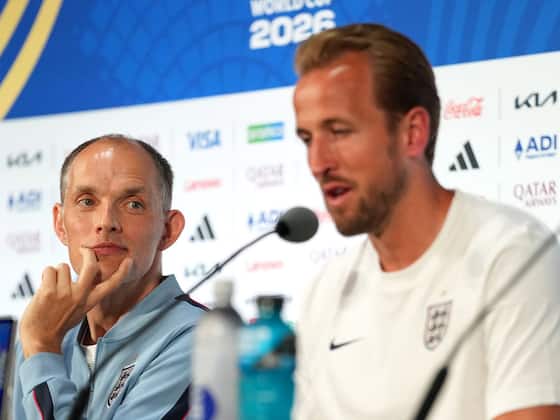
Thomas Tuchel is keen to continue as England manager, and the Football Association also hopes he stays on. Both parties can frame it as the continuation of a project. With two years left on his contract and the next European Championships to be held on home soil, the opportunity appears more attainable than a World Cup across the Atlantic. In 2028, England may not have to fear another defeat to Argentina.
However, the semi-final loss in Atlanta highlighted the need for England to evolve. Tuchel’s fallback strategy—sitting deep and holding on—failed against Argentina, and his overall tactical approach might require fine-tuning. Should Spain clinch the World Cup, it would only reinforce the importance of possession-based football. England’s average possession of 54 per cent in the tournament falls significantly short of Spain’s 63 per cent.
Harry Kane, who will turn 35 shortly after Euro 2028, remains central to Tuchel’s plans, with the manager “100 per cent” committed to staying on. Tuchel initially signed an 18-month deal, a short tenure that perhaps encouraged short-term thinking—evident in his decisions to include Dan Burn and Jordan Henderson. Although Burn became a cult favourite with a few memorable cameos, it is unlikely both he and Henderson will feature in 2028, when they will be 36 and 38 respectively. If Tuchel still desires a Bellingham confidant and a towering presence at the back, perhaps he should consider Denise Bellingham and the Angel of the North.
While Henderson and Burn were more squad options in the United States, England’s starting lineup could face issues of ageing. Kane, who may soon reach 100 international goals, will likely remain involved, though the absence of an obvious successor is a growing concern. This World Cup might have represented the best chance to win major silverware while Kane and the younger Jude Bellingham were both near their peaks.
It could also mark the end of an era for one of England’s finest defenders. John Stones, who has been dependable across the past five tournaments, is now 32 and without a club, having spent portions of this World Cup on the bench. By 2028, the only constants from 2018 may be Kane and goalkeeper Jordan Pickford.
Tuchel’s willingness to make bold omissions freed him from certain expectations during the World Cup, but a rebuild now requires mending relationships. Players such as Cole Palmer, Phil Foden, and Trent Alexander-Arnold could all need to be reintegrated. With England boasting an abundance of creative midfielders, Tuchel must make tough calls. The ongoing uncertainty over Reece James’s fitness and the emergence of Tino Livramento make it impossible to overlook Alexander-Arnold any longer.
There are, however, players who could drive change. The back-up midfield pairing of an ageing veteran—brought for his leadership but sidelined after breaking his wrist in an off-field accident—and youngster Kobbie Mainoo, who did not play a minute, failed to deliver. Tuchel must now look towards the next generation, with Mainoo, Adam Wharton, and Alex Scott as possible deputies or challengers to Declan Rice and Elliot Anderson.
Further depth could emerge from within the Bellingham family itself, with Jobe Bellingham potentially joining his brother Jude, who may adopt a deeper role. In that case, one of Morgan Rogers, Morgan Gibbs-White, Palmer, or Foden could occupy the No. 10 position. It would also be harsh to leave out Eberechi Eze, who may argue that Tuchel has favoured loyalty over talent in some selections.
Levi Colwill fits both categories of player to be recalled and one shaping the future. Despite missing much of the season through injury, the Chelsea defender could return to strengthen England’s pool of ball-playing centre-backs—an area currently thin beyond Stones and Marc Guehi. Colwill’s left-footed balance could become a vital asset.
The left-back position remains another area requiring attention. Djed Spence’s success under Tuchel owes much to his pace, yet early in Tuchel’s tenure, Myles Lewis-Skelly appeared to be his preferred option. Questions persist over Lewis-Skelly’s role at Arsenal—whether he will play in midfield—and similar uncertainties surround Nico O’Reilly’s usage under Enzo Maresca at Manchester City. Tuchel may again have to choose between right-footed full-backs like Spence or Livramento, though recalling left-footer Lewis Hall, who is expected to play regularly for Newcastle, would be a logical move.
England’s production line of attacking talent continues to thrive, though emerging centre-forwards remain scarce. Kane’s back-ups, Ollie Watkins and Ivan Toney, are already in their thirties. Rio Ngumoha’s promising debut against New Zealand suggests he could be fast-tracked, while Max Dowman and Ethan Nwaneri represent even younger prospects. Despite these rising talents, Anthony Gordon and Bukayo Saka will likely stay central to Tuchel’s plans. After experimenting with traditional wingers, Tuchel may now prefer wide forwards like Rogers and Palmer who drift inside to create overloads.
Beyond the tactical and technical aspects, Tuchel’s challenge for 2028 is also mental. Senior players such as Kane and Guehi discreetly questioned the team’s approach after the Argentina match, reflecting concerns about Tuchel’s methods. Rebuilding confidence and unity will be vital, combining continuity with necessary evolution.
Projected England Squad for Euro 2028: Jordan Pickford, Dean Henderson, James Trafford; Reece James, Trent Alexander-Arnold, Tino Livramento, Myles Lewis-Skelly, Lewis Hall, Marc Guehi, Ezri Konsa, Jarell Quansah, Levi Colwill; Declan Rice, Elliot Anderson, Alex Scott, Adam Wharton; Jude Bellingham, Cole Palmer, Morgan Gibbs-White, Morgan Rogers, Anthony Gordon, Bukayo Saka, Rio Ngumoha, Marcus Rashford; Harry Kane, Liam Delap.
-
Vinicius Jr.’s potential exit could pave way for Real Madrid to sign Michael Olise – report
-
FIFA to Examine If Argentina Violated Rules Over Falklands Banner Celebration

-
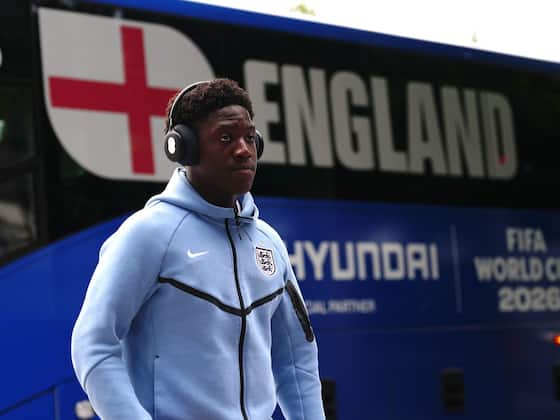
England: Real reason Thomas Tuchel overlooked disappointed Kobbie Mainoo during World Cup revealed
-
Seven MS Education Academy students excel in CMA Foundation exam

-
PM Modi launches major railway projects in Punjab.