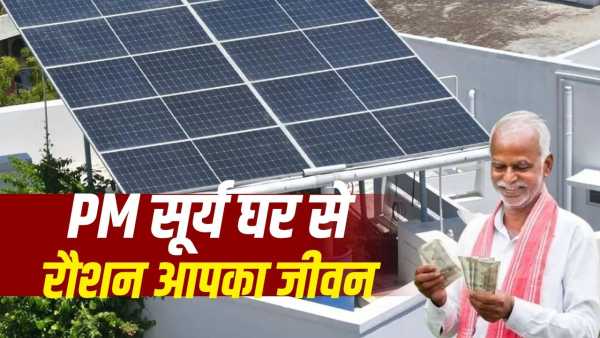
The entire life of a middle class family revolves around the budget. The month starts with calculating the expenses in the diary and by the end one feels proud of every small savings. In the houses of this class, more than happiness, the discussion is on how long the cooler ran, why the AC was on during the day and whether the electricity bill will be higher this time than last month. Electricity bill is not just a piece of paper, but a monthly mental stress for the middle class which determines their daily decisions.
To provide relief from this stress, the government's 'PM Surya Ghar Free Electricity Scheme' came into existence, but the work of taking it to the hearts of common people was done by Season 5 of TVF's famous series 'Gullak' aired on SonyLIV. This combination of entertainment and government policy has given a new dimension to the pace of adoption of rooftop solar in the country.
How solar panels are a profitable deal
The campaign started with two special episodes 'Aman Ka Farewell' and 'Papa Ka Male Ego' released in July 2026, which received more than 32 lakh views on YouTube and Facebook. The story begins on a scorching summer Sunday morning, where the Mishra family is struggling with the same familiar problem that every middle class house in the country faces every year. Due to the increasing heat, the use of AC is a compulsion, but at the same time In some corner of the mind, the electricity bill meter is also spinning equally fast. To find a permanent and practical solution to this problem, Santosh Mishra, the traditionalist and proactive head of the family, takes a big decision. He decides to install solar panels on his roof. His conservative nature makes this decision more credible to the audience, because when a saving father goes solar, the general public feels that it is not a wasteful expenditure but a profitable deal.
Trust comes from seeing the neighbor
The story progresses very smoothly and removes all the superstitions and doubts of the middle class which prevent them from adopting new technology. Through the dialogues, the audience comes to know that under the scheme, direct government subsidy of up to ₹ 78,000 is available and for the remaining amount, an easy bank loan is available at just 6% interest rate without any guarantee. This information removes the two biggest stones that the middle class is afraid of. Huge initial expenses and the hassle of government paperwork. When in the next episode, real solar panels shine on Mishra ji's roof and his house's electricity bill drops to almost zero, even his most skeptical neighbor gets impressed and fills the form for going solar. This scene reflects the 'social proof' psychology of India where people believe something not after seeing an advertisement, but only after seeing the live results on their neighbor's roof.
Journey from worry about electricity bill to confidence in solar
If this entire jugalbandi is analyzed, then this campaign is a great example of 'Behavioral Economics'. The biggest reason for it being a hit is that instead of talking about big technical things like 'Global Warming' or 'Environment Protection', it directly addressed the concerns of the common man about his pocket and the fear of rising bills. The middle class, who see their budget before the environment, immediately understood this language. Through Santosh Mishra, the scheme was presented to the common families as a 'smart lifestyle upgrade' which eliminates the hassle of saving electricity in the family and People are able to live freely. Since the deadline for government subsidy under this scheme is limited to March 2027, this story of 'Gullak' has created a positive urge in the minds of the audience to take immediate action. This medium of entertainment has turned a complex government policy into a household discussion and has inspired people to go to the national portal and register without any delay, thereby completing the journey of the middle class from the worry of electricity bill to the belief in solar. Could.


-
World Cup reshapes Ballon d’Or race as Yamal prepares for career-defining showdown with childhood hero

-
Apple Beats Nvidia In $4.88 Trillion Race To Become World's Most Valuable Company
-
MEA Hits Back At Former Japanese Minister Over Bullet Train Project Remarks
-
Harry Kane’s World Cup dream may have slipped away after his most painful England defeat yet, leaving his Ballon d’Or chances in jeopardy

-
'He Wanted To Keep Akshay Kumar Out...': OMG 2 Producer Shares Statement On Paresh Rawal's Claims That Film's Story Was His Idea