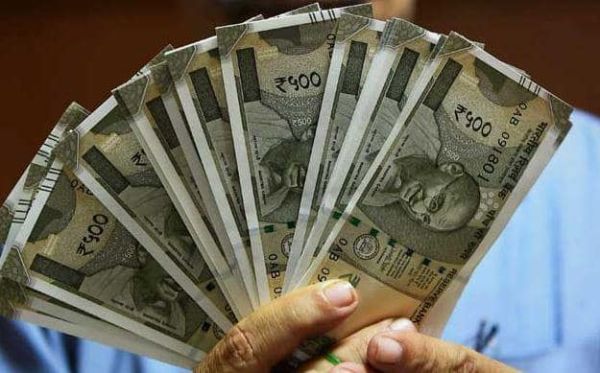
The Reserve Bank of India (RBI) appears to be taking fresh steps towards introducing polymer currency notes, reviving a proposal that has remained under discussion for more than a decade.
The latest development comes after Bharatiya Reserve Bank Note Mudran Private Limited (BRBNMPL), the RBI-owned company responsible for printing Indian currency, invited Expressions of Interest (EOI) from global companies for the manufacture and supply of polymer sheets. The move indicates that preparations for sourcing the specialised material required to print polymer banknotes have begun.
Although the process has advanced, RBI Governor Sanjay Malhotra has said that no final decision has yet been taken and that the central bank is still evaluating the proposal.
RBI Begins Procurement Process For Polymer Sheets
BRBNMPL operates India's currency printing presses at Mysuru and Salboni. Its decision to invite bids from international suppliers marks an important procedural step in exploring polymer-based banknotes.
The EOI is aimed at identifying manufacturers capable of supplying the specialised polymer substrate used for printing currency. While the development signals progress, it does not indicate that polymer notes will be introduced immediately, as several stages remain before any rollout.
What Are Polymer Notes?
Polymer notes are banknotes printed on a specially engineered plastic film rather than conventional paper.
The material is coated with a white layer that enables high-quality printing while also incorporating a transparent window, a feature widely regarded as one of the strongest anti-counterfeiting measures.
Unlike ordinary plastic, the polymer substrate is specifically designed for currency production and offers greater durability during everyday use.
RBI Yet To Take A Final Call
Following the RBI's monetary policy announcement on June 5, 2026, Governor Sanjay Malhotra said during the post-policy press conference that the proposal to introduce polymer currency remains under consideration.
He clarified that the central bank is assessing both the advantages and the challenges associated with polymer notes before taking a final decision.
The latest procurement exercise therefore represents a preparatory step rather than confirmation of an imminent launch.
Lower Denomination Notes May Be Introduced First
If India eventually proceeds with polymer currency, industry experts believe the first rollout could focus on lower-value denominations such as Rs 10 and Rs 20 notes.
These notes circulate more frequently than higher denominations and therefore suffer greater wear and tear, making them suitable candidates for testing the durability and operational efficiency of polymer currency.
A Proposal That Dates Back More Than A Decade
The idea of introducing polymer banknotes in India is not new.
Discussions first began around 2009, with the government approving field trials of one billion (100 crore) Rs 10 polymer notes in 2012.
Two years later, it was decided that the notes would be tested in Kochi, Mysuru, Jaipur, Shimla and Bhubaneswar to assess their performance under different climatic conditions.
In 2016, the government said procurement of materials had commenced. However, technical and operational issues delayed implementation, and the proposal was eventually put on hold.
The latest EOI issued by BRBNMPL suggests that the long-pending initiative has once again gathered momentum.
Rising Cash Usage Strengthens The Case
The renewed push comes despite the rapid expansion of digital payments in recent years.
Cash usage in India has continued to grow, with the value of currency in circulation reaching a record Rs 42.86 lakh crore by May 2026.
At the same time, damaged and soiled notes continue to be withdrawn in large numbers. During 2024-25, around 23.8 billion notes were removed from circulation.
Since currency printing and replacement involve significant expenditure each year, longer-lasting banknotes could help lower replacement costs over time.
Why Many Countries Prefer Polymer Currency
One of the biggest advantages of polymer notes is their durability.
They generally last between 2.5 and four times longer than conventional paper notes. They are also more resistant to water, tearing and dirt, making them better suited for prolonged circulation.
The transparent security window and other advanced security features make them significantly more difficult to counterfeit.
Studies have also suggested that polymer notes retain fewer bacteria than conventional paper currency because of their non-porous surface.
Challenges Before A Nationwide Rollout
Despite their benefits, polymer notes also present several practical challenges.
Production costs are initially higher because the specialised polymer substrate is more expensive and may need to be imported.
The transition could also require modifications to ATMs, currency-counting machines and other cash-handling infrastructure across the country.
India's climatic conditions may present additional operational challenges, while users in some countries have reported that polymer notes can stick together or develop permanent creases after repeated folding.
More Than 40 Countries Already Use Polymer Banknotes
Australia became the first country to introduce polymer banknotes in 1988 before gradually replacing its entire paper currency.
Since then, more than 40 countries, including the United Kingdom, Canada, New Zealand, Singapore, Malaysia, Vietnam and Brunei, have adopted polymer notes.
Their experience suggests that although the initial investment is higher, the notes generally prove more durable and cost-effective over their lifespan.
What Happens Before Polymer Notes Reach Your Wallet?
The EOI issued by BRBNMPL marks only the beginning of the procurement process.
The next stages are expected to include tendering, technical evaluation of suppliers, testing of polymer samples, security assessments and pilot printing before any decision on public circulation is taken.
If the proposal eventually receives approval, polymer notes are expected to be introduced gradually, beginning with select denominations while paper and polymer currency continue to circulate together.
For now, the RBI has only initiated preparatory steps. Whether polymer notes become a permanent feature of India's currency system will depend on the outcome of technical evaluations and the central bank's final assessment.
-
Perfect Rakhi Gift Ideas for sister, from beauty to gadgets, fit in every budget

-
Micro Vacation: Best destination for 2-3 day holidays

-
Kourtney Kardashian launches anti-aging candy supplement

-
There will be no change in the design of Aadhar card, government rejected the rumours, made special appeal to the citizens.
-
Winds will blow at a speed of 80 km, heavy rain is expected in these states