Reports about E20 fuel, contaminated petrol, and ethanol-blended fuel allegedly causing vehicle issues have been circulating widely on the internet over the last couple of weeks. Amid the growing concerns, state-owned fuel retailers Indian Oil Corporation (IOC), Bharat Petroleum Corporation Limited (BPCL), and Hindustan Petroleum Corporation Limited (HPCL) have intensified quality checks at petrol pumps across the country.
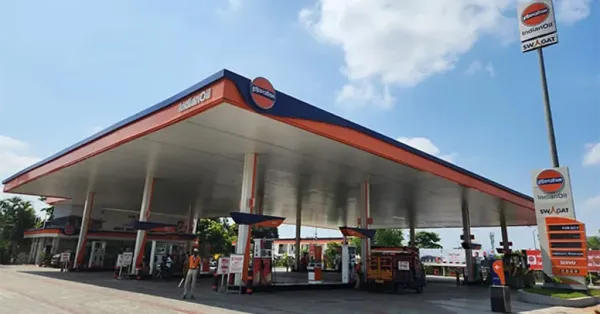
Indian Oil Corporation (IOC) said it has conducted surprise inspections at nearly 10,000 fuel stations and carried out over 8,500 quality tests across its retail outlets during the past week.
The company deployed hundreds of dedicated teams to verify that fuel stations were dispensing petrol that met the prescribed quality standards. In an official statement, IOC said:”Fuel quality is a matter of utmost importance for IndianOil. Every day, our teams work across the country to ensure that customers receive fuel that meets all prescribed quality standards. Regular inspections, surprise checks and scientific testing are carried out as part of a rigorous quality assurance system.”
IOC also stated that it has a zero-tolerance policy towards fuel adulteration and that strict action would be taken against any dealer found violating fuel quality norms.
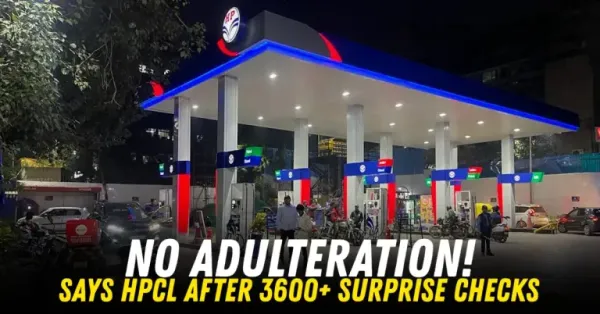
Apart from IOC, Bharat Petroleum Corporation Limited (BPCL) conducted surprise inspections at 932 retail outlets between July 3 and July 13. The company’s Quality Control team carried out another 111 inspections, while its Quality Assurance Department conducted 50 surprise fuel sampling and on-site testing exercises using its mobile laboratory network.
According to BPCL, the inspections did not uncover any cases of adulteration, contamination, critical irregularities, or compliance lapses.
Similarly, Hindustan Petroleum Corporation Limited (HPCL) conducted surprise inspections at 2,173 retail outlets between July 7 and July 13. The company also verified compliance with ethanol blending norms during these inspections. This was in addition to 1,385 routine inspections carried out between July 3 and July 13. HPCL’s Quality Control Cell also conducted 93 surprise inspections and tested 49 fuel samples using mobile laboratories.
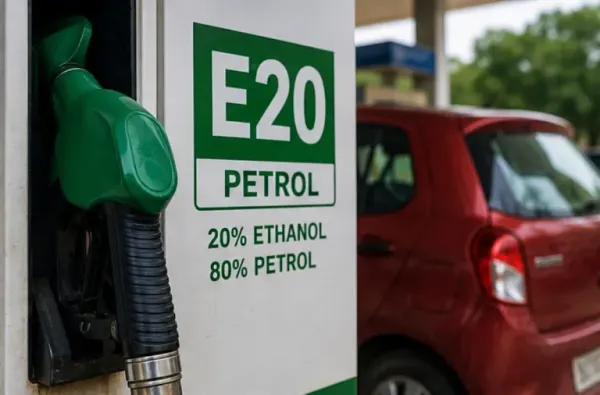
Despite these inspections, several videos have surfaced online in which vehicle owners have alleged that ethanol-blended fuel has caused damage to their vehicles. Even leaders from petrol pump dealers’ associations have urged the government to reconsider the ethanol blending programme, claiming that customers often blame petrol pumps for vehicle issues and create disturbances at fuel stations.
Recently, another report surfaced in which a petrol pump owner claimed that the hygroscopic nature of E20 petrol (its tendency to absorb moisture) is contributing to problems, particularly during the monsoon season and at fuel stations located in coastal areas. According to him, the existing underground storage tanks at many fuel stations were originally designed for regular petrol and not for higher ethanol blends.
Public concern over the E20 fuel policy also appears to be reflected in a recent CVoter survey. According to the survey, a majority of respondents said they do not prefer using E20 petrol in their vehicles. Many respondents also said they want the government to offer consumers a choice between regular petrol and ethanol-blended petrol instead of making E20 the only available option.
The debate surrounding the E20 fuel policy continues, with vehicle owners, fuel dealers, and industry stakeholders expressing differing views. Whether the government revises the policy or continues with the current implementation remains to be seen.
-
IMDb exclusive: Saif Ali Khan says “they don't make movies like Kal Ho Na Ho anymore”

-
Odisha: Two die after 'unprecedented rush' during Puri Rath Yatra

-
Kissht Receives Certification For Mutual Fund Distribution

-
BYJU'S Inches Closer To Resolving Aakash Dispute After Creditors' Nod

-
Bengal: Three killed as train hits school van at railway crossing