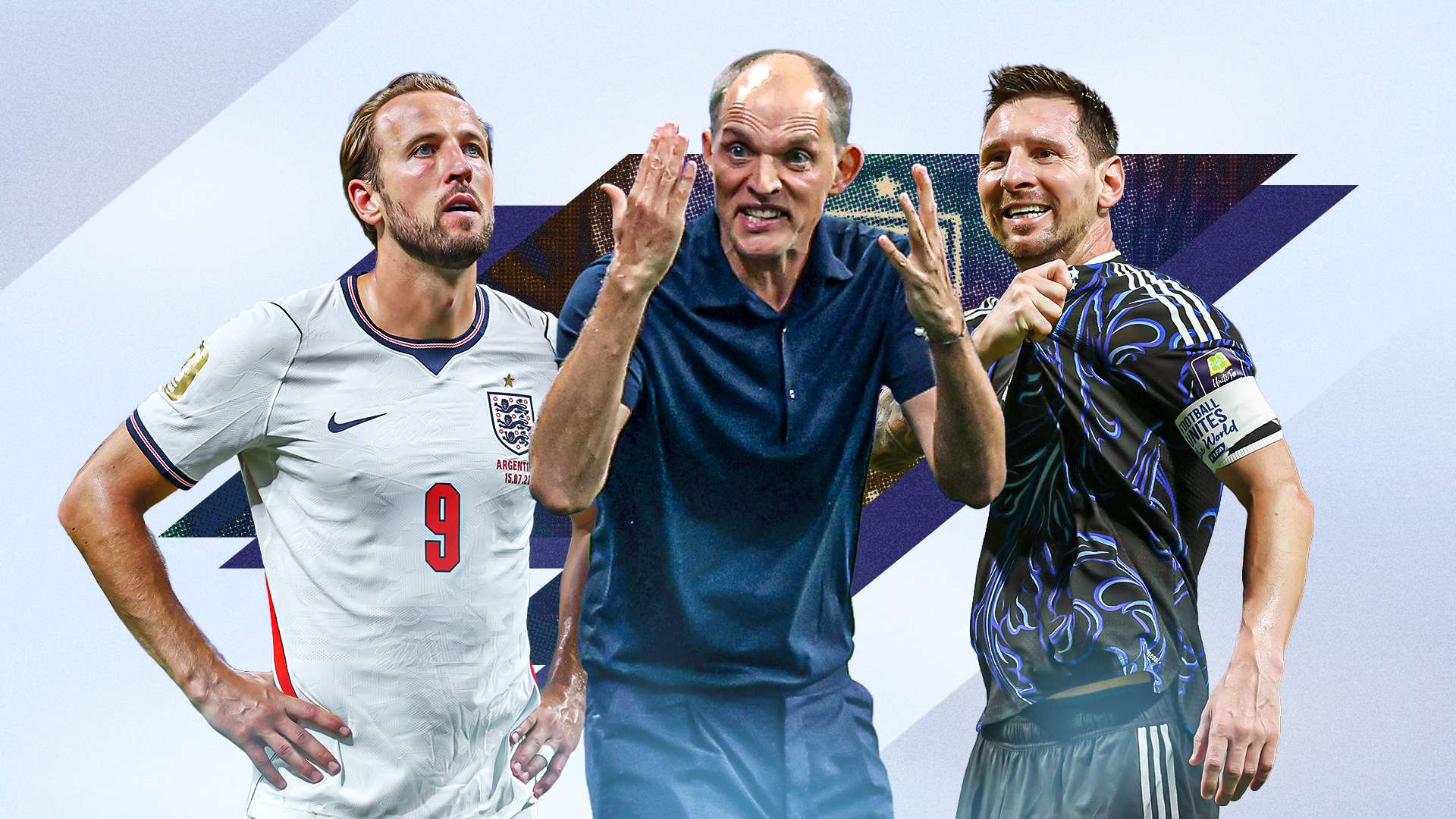
England’s World Cup dream collapsed yet again in heartbreaking fashion after Argentina staged a late comeback to claim a 2-1 win and secure their place in the final. For 80 minutes, Thomas Tuchel’s men appeared destined for glory, holding a deserved 1-0 lead and controlling the game. But a series of defensive substitutions and a retreat into their own half invited pressure that Lionel Messi and company ruthlessly exploited.
Tuchel first replaced goalscorer Anthony Gordon with Ezri Konsa before sending on two more defenders in an attempt to protect the lead. England sat deep, hoping to weather the storm from Messi, still football’s most creative force, but their resistance finally broke.
Argentina, showing the sense of destiny that has defined their campaign, struck twice in the final five minutes to condemn England to another painful defeat in a match they could—and arguably should—have won.
“We were just not active enough in any structure,” Tuchel admitted afterwards. “We didn’t find any duels, any activity, we couldn’t get close anymore. We struggled to defend crosses.”
The build-up to the semi-final had focused on the physical and historical rivalry between the two nations, and for the first 30 minutes, neither side created a chance, with Argentina content to impose themselves physically rather than creatively.
The breakthrough came 10 minutes into the second half when Gordon turned in Morgan Rogers’ cross. At that point, England could have taken control, but they instead retreated. Even before switching to a back five—the same setup that held firm against Mexico at the Azteca—Tuchel’s men began to drop deeper and deeper.
This time, however, their defensive approach failed. Enzo Fernandez and Lautaro Martinez converted from Messi assists, ensuring Argentina maintained their flawless record in World Cup semi-finals.
As the final whistle blew, England’s players could only look on in disbelief, applauding their fans half-heartedly as another golden chance slipped away. The blame, once again, lay largely within their own camp.
WINNER: Lionel Messi
For much of the game, Messi was quiet. The eight-time Ballon d’Or winner had only fleeting moments of brilliance—some clever touches, a few driving runs, and one heavy challenge from Elliot Anderson—but little else. Yet when England dropped deep and gave him time and space, he seized control.
Messi began to find pockets of space around the penalty area, dictating play with his trademark precision. His first assist was instinctive: a perfectly weighted pass to Fernandez on the edge of the box. The second was vintage Messi—a feint, a change of pace, and a delicate right-footed cross that Martinez powered home with a header.
“He’s obviously one of the best players ever for a reason,” said England captain Harry Kane after the match. “It was disappointing to give up the space that we did. In those final 20 minutes, it allowed not just him but their other creative players to grow into the game. In the end, it was too much for us.”
At 39 years old, this may well be Messi’s final major tournament, but once again he proved he remains capable of deciding matches. He will now have one last chance to lift another trophy when Argentina face Spain in Sunday’s final.
LOSER: Thomas Tuchel
England’s recurring inability to hold their nerve on the biggest stage struck again. Tuchel, seen as the pragmatic tournament expert who would break that cycle, instead fell victim to it. While defending a lead is a valid approach, his decision to bunker down with nearly 20 minutes left proved premature and costly.
The first defensive change came in the 72nd minute, when Gordon was replaced by Konsa as England shifted to a back five. Dan Burn and Nico O’Reilly followed soon after. From the moment of Gordon’s goal to Lautaro’s winner, Argentina enjoyed 88 percent of possession. The Three Lions simply couldn’t absorb that level of pressure.
“That’s just the nature of the game,” Tuchel said in his post-match press conference. “As soon as you lose, you get criticised… I take the criticism, that’s just the way it is.”
Although the Football Association reportedly plan to retain Tuchel through Euro 2028, he must take responsibility for this collapse, one that reinforced England’s reputation for falling short when it matters most.
WINNER: Lionel Scaloni
While Tuchel grew cautious, Lionel Scaloni doubled down on attack. The Argentina manager’s substitutions embodied belief: he removed Leandro Paredes, his best player until that point, for the more attack-minded Nico Gonzalez, and later introduced Rodrigo De Paul to exploit England’s weakening left flank.
“There was blood in the water and we went for it,” Scaloni said after the match.
Argentina’s tactical identity remains simple—get the ball to Messi—but the system around him is fluid. Scaloni has built a team that plays for one man, united by belief and camaraderie. Since taking charge before the 2021 Copa America, he’s guided them to three trophies and now stands one win away from a fourth.
“It’s a display of the brotherhood we share; we fight until the end,” Scaloni added. “We know how special this team is.”
LOSER: Harry Kane
This was not a night for Harry Kane. Despite scoring over 70 goals for club and country this season, the England captain struggled to make an impact. Forced into midfield battles rather than operating as a forward outlet, he managed only one blocked long-range shot and 26 touches—none inside the Argentina penalty area.
With Euro 2028 looming, there is growing speculation this might be Kane’s final World Cup. He dismissed such talk afterward, but at 32, he may never again reach such sharp form on the biggest stage. It was a missed chance for both England and their talismanic striker.
Kane could still add to his tournament tally in Saturday’s third-place playoff against France, but his hopes for individual honours—such as the Ballon d’Or—may now hinge on others. If Messi or Spain’s Lamine Yamal shines in the final, they could surpass him in the Golden Ball race.
WINNER: Argentina’s sense of destiny
Argentina’s road to the final has been filled with close calls—extra-time wins over Cape Verde and Switzerland, comeback victories against Egypt and England—but each has reinforced their belief that destiny is on their side. Scaloni himself spoke of that conviction after the match.
This is the same belief that carried them through Qatar 2022, where they twice squandered two-goal leads yet triumphed in penalty shootouts, including the final against France. Lautaro’s late winner in the 2024 Copa America final echoed that same spirit. For this team, belief is not just an emotion—it’s a weapon. And they will carry it into the final against Spain.
LOSER: England’s inferiority complex
Tuchel’s realism and tactical acumen were meant to cure England’s long-standing mental fragility. Yet, despite his credentials, even he could not overcome the psychological barrier that has haunted the Three Lions for decades.
“It’s a similar story to previous tournaments,” Kane admitted. “We struggled to keep momentum. We played well for 60 minutes, scored, deserved to be in front, but then we couldn’t keep the ball.”
Since 1998, England have faced seven top-10 ranked teams at World Cups—and lost every time. Whether at the Euro 2024 final, the one before it, or the 2018 World Cup semi-final, the pattern persists: early leads, late heartbreaks.
While Tuchel’s conservative tactics deserve scrutiny, the deeper issue remains psychological. England’s inferiority complex continues to undo them on the world stage, regardless of who stands on the touchline.
-
Manchester United Yet to Decide on Potential Left-Back Signing Amid Rashford Uncertainty
-
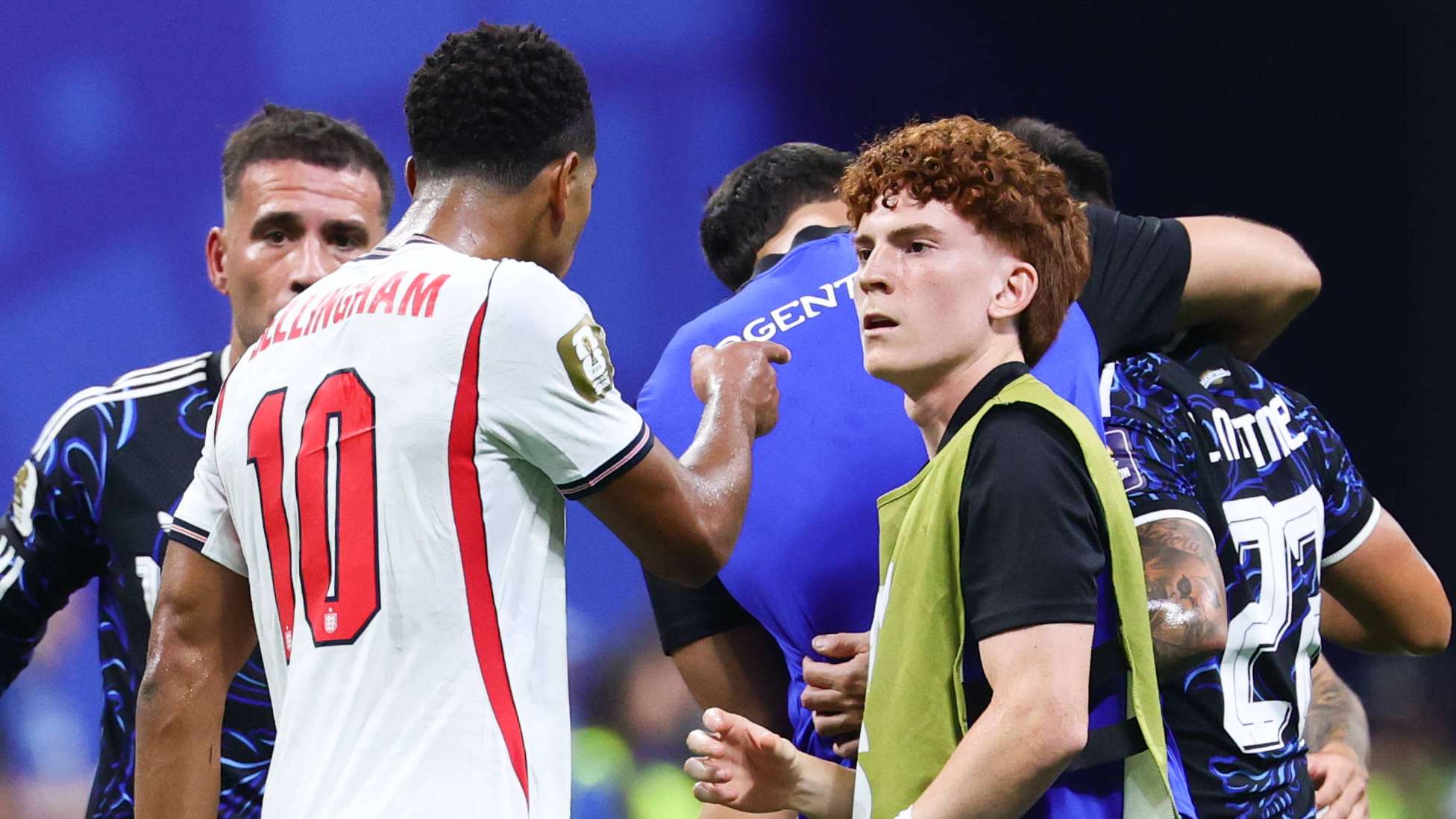
New footage reveals reason behind Jude Bellingham’s slap on Valentin Barco after Argentina substitute’s provocative celebration
-
Are reels taking a toll on children’s education, focus and memory? Is your child also a victim?

-
Are you fond of eating momos? Red chutney was being made from dirty water, raid exposed

-
Is it right to clean yoga mat with just water?