Amaravati: In a significant revelation, the Archaeological Survey of India (ASI) has found that Srisailam in Nandyala district of Andhra Pradesh has not just been a religious centre but was also an international trading centre during the medieval period.
For the past month, ASI’s Epigraphy Branch has been studying the inscriptions in the Nallamala forests spread across Andhra Pradesh and Telangana. Srisailam, which is located inside the Nallamala forests, is home to the Lord Mallikarjuna’s (Shiva) Jyotirlinga temple, which is also one of the 12 Jyotirlingas and a major Shakti Peetham.
The temple complex contains numerous narrative bas-reliefs (figures and designs projected slightly from a flat background surface) on its outer walls. They are dated largely between the 14th and 16th century AD, when the region was under the rule of the Vijayanagara empire.

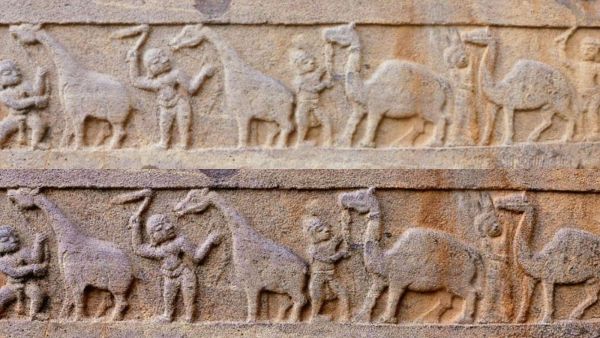
Giraffes and camels
One significant panel on the southern side of the prakara wall depicts a procession of two giraffes and two camels, each led by attendants. The carving is a notable example of Vijayanagara-era narrative art and offers concrete evidence of cultural exchange and royal symbolism at Srisailam.
According to K Munirathnam Reddy, Director of Epigraphy, ASI, who is leading the effort of deciphering the inscriptions, the presence of giraffes is particularly important, as they are not native to India.
“Their depiction points to maritime trade links with Africa and the Middle East through coastal ports. Srisailam, though a major pilgrimage center, was also integrated into wider regional and international networks,” he told Siasat.com.
“In essence, the bas-relief positions Srisailam not only as a religious center, but also as a site of commerce, diplomacy, and cross-cultural contact during the medieval period,” he added.
-
England Player Ratings vs Argentina: World Cup Hopes Shattered in Semi-Final Defeat

-
Will Thomas Tuchel Step Down as England Manager? Three Lions Boss Faces Tough Questions After World Cup Semi-Final Defeat to Argentina

-
Hyderabad: Man beaten to death by friend under Kompally flyover

-
Telangana CM’s gunman dies in accident in Gajwel

-
Man held for carrying 1.2 kg ganja in Hyderabad