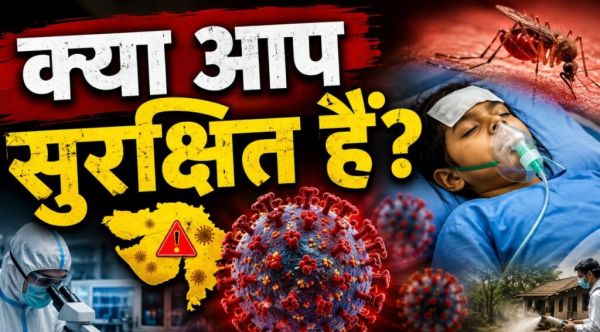
Chandipura virus has once again knocked in Gujarat and has increased the concern of the health department. Till now many children have fallen victim to it and the deaths have created fear among the people. The most frightening thing is that initially this infection seems like a normal viral fever, but within a few hours it can directly attack the brain. In many cases, the patient’s condition becomes so serious within 24 hours that it becomes difficult to save him. There is neither any sure cure nor any vaccine for it.
In such a situation, it is very important to know what is Chandipura virus, how dangerous it is, which children are most at risk and how it can be prevented.
What is Chandipura virus?
Chandipura Virus (CHPV) is a rare but extremely dangerous virus, which mainly affects children under 15 years of age. It is a virus of the Rhabdoviridae family and its infection usually spreads through the bite of a sand fly. It was first identified in the year 1965 in Chandipur village of Maharashtra, after which it was named. According to experts, this virus rapidly attacks the brain and in many cases causes Acute Encephalitis Syndrome (AES). Its biggest challenge is that the initial symptoms seem like normal viral fever, but within a few hours it can become serious.
How does it become deadly in 24 hours?
The speed of Chandipura virus is considered very fast. The infection begins with high fever, headache, nausea, vomiting and weakness, but within a few hours the virus can reach the brain. After this, serious problems like restlessness, repeated vomiting, seizures, mental confusion, unconsciousness and swelling of the brain may develop in the patient. According to doctors, if timely treatment is not received, the patient’s condition can deteriorate rapidly within 24 to 48 hours, whereas in severe cases, the patient can even go into coma within 48 to 72 hours and his life can be in danger. This is why experts consider the initial hours to be the most important.
How many patients have appeared so far and how many deaths have occurred?
The concern of the health department and doctors has increased after cases of Chandipura virus were reported once again in Gujarat in July 2026. According to the latest government information, so far 7 children have been found infected and 3 children have died. After the cases came to light, the state government has issued a high alert and increased surveillance and the health department has issued special guidelines to hospitals.
The biggest outbreak of Chandipura virus in the last five years was seen in the year 2024. According to the World Health Organization (WHO), between June and August 2024, 245 Acute Encephalitis Syndrome (AES) patients were reported in India, out of which 82 people died. Of these, Chandipura virus was confirmed in 64 cases and most of the patients were from Gujarat. WHO had described it as the biggest outbreak of the last 20 years. No large-scale outbreak was recorded in the year 2025, whereas in 2026, new cases of infection started appearing again in Gujarat.
Why does its risk increase during monsoon?
According to the National Center for Disease Control (NCDC), most outbreaks of Chandipura virus in India have occurred during the monsoon. The reason for this is that the sand fly, which spreads the virus, becomes more active in this season. As their numbers increase in rural and forest areas, the risk of spreading the infection also increases. This is why the health department advises to take special precautions during monsoon.
Which districts of Gujarat saw the maximum impact?
Based on the cases reported in the years 2024 and 2026, the maximum impact of Chandipura virus has been seen in the northern and central parts of Gujarat. According to Health Department data, Sabarkantha, Panchmahal, Aravali and Mahisagar districts have been most affected. Apart from this, cases of infection have also been reported in Kheda, Mehsana, Ahmedabad, Gandhinagar, Rajkot, Surendranagar, Morbi and Jamnagar.
Chandipura virus experts say that the risk of infection increases due to the presence of sand flies and high rural population in these areas. In previous outbreaks, Sabarkantha and Panchmahal have been among the most affected districts.
Who are most at risk?
According to doctors, children below 15 years of age are most at risk of Chandipura virus. Children’s developing nervous system and relatively weak immune system make them more susceptible to this infection. Therefore, one should not be careless if high fever or neurological symptoms appear in children.
What are its symptoms?
When Chandipura virus infection starts, the patient may feel high fever, severe headache, nausea, vomiting and weakness in the body. As the disease progresses, serious problems like restlessness, repeated vomiting, seizures, mental confusion, extreme lethargy, behavioral changes, unconsciousness and swelling of the brain can develop. If the child shows symptoms such as fever more than 101 degrees Fahrenheit (38.3 degrees Celsius), persistent vomiting, seizures, sudden changes in behavior, extreme lethargy or fainting, he should be taken to the hospital immediately. Doctors say that in such cases, the first few hours prove to be most important in saving the life of the patient.
Is there any cure for it?
At present, neither any specific antiviral medicine nor any vaccine is available for Chandipura virus. The patient is treated only on the basis of symptoms, which is called supportive treatment. In the hospital, efforts are made to manage the patient’s condition through ICU, oxygen, medicines to control seizures and other necessary treatments. According to reports, the mortality rate due to this virus has been recorded at 56 to 75 percent, while in many studies it has been reported to be more than 50 percent. Therefore, timely treatment is considered the biggest protection.
How can we protect ourselves?
Since this virus spreads through the bite of infected sand flies, prevention is the most effective solution. According to experts, children should wear full-sleeved clothes, use safe insect repellents according to their age and, if necessary, should sleep in insecticide-treated mosquito nets. Apart from this, maintain cleanliness in and around the house, do not allow garbage to accumulate, regularly clean damp places and bushes and keep those places clean where sand flies can breed. If symptoms like high fever, seizures or unconsciousness appear, you should immediately reach the hospital. The Health Department and the Indian Medical Association (IMA) have also appealed to the people to be alert and start treatment without delay as soon as symptoms appear.
What is its history?
Chandipura Virus (CHPV) is a rare and extremely dangerous viral disease, which mainly affects children and causes swelling in the brain (Viral Encephalitis). This disease is so fatal that if timely treatment is not received, the condition of the infected patient can become critical within 24 to 48 hours and there is a risk of going into coma or even death.
Chandipura virus was first identified in 1965 in ‘Chandipura’ village of Nagpur district of Maharashtra. Since then, outbreaks have been occurring from time to time in many states of India (such as Maharashtra, Gujarat, and Rajasthan).
-
England Player Ratings vs Argentina: World Cup Hopes Shattered in Semi-Final Defeat

-
Will Thomas Tuchel Step Down as England Manager? Three Lions Boss Faces Tough Questions After World Cup Semi-Final Defeat to Argentina

-
Hyderabad: Man beaten to death by friend under Kompally flyover

-
Telangana CM’s gunman dies in accident in Gajwel

-
Man held for carrying 1.2 kg ganja in Hyderabad