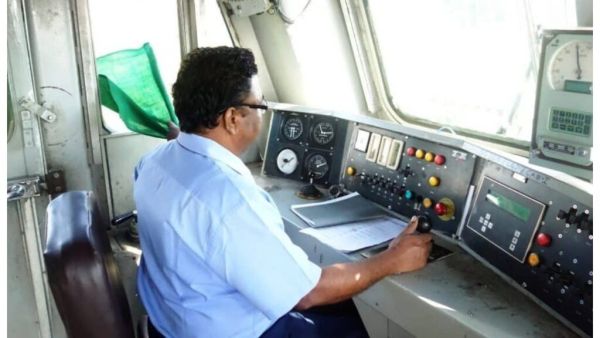
Loco Pilot: While traveling by train, we often have a question in our mind that when there are so many railway tracks (rails) spread in front of us, how do loco pilots choose the right route for their train? Unlike a car or a bus, a train does not have a steering wheel, so the train cannot change course on its own. So how does a loco pilot know the correct route? Let’s know the complete technical and interesting process behind this…
The train itself does not change course
The task of changing the train route is not in the hands of the loco pilot but is done through the ‘Points and Crossing’ system of the Railways. Railway staff or station master sitting in the control room at the station change the track electronically. The main job of a loco pilot is to operate the train safely on the route they have been given. Loco Pilot
Home signal and route indicator
When a train approaches a major station or junction, there are several train tracks to move on. Before the station to show the exact track on which the train will proceed ‘home signal’ is installed. Just above this signal ‘root indicator’ There is a panel of white lights called the name. If the train is going straight, only the usual main signal (green or yellow) is needed. But if the train has to turn left or right to another track (or platform), the white lights on that side are illuminated in a diagonal line. By seeing this, the loco pilot knows from a distance which platform or route his train is going to take. If the lights flash in the wrong direction, the loco pilot can immediately stop the train. Loco Pilot
Section Road Learning
No loco pilot is allowed to operate a train directly on a new or unfamiliar route. For them ‘Road Learning’ One has to complete a special practical training called Before embarking on a journey, the loco pilot along with another experienced driver sit in the engine for 3 to 4 times on that particular route. During this journey they memorize the exact locations of all the signals on the route, the ups and downs of the tracks, where to reduce the speed limit, and the layout of the stations. It is mandatory to retake this training every 6 months or in case of any new changes in the route, so that the loco pilot can operate the train with complete confidence and safety. Loco Pilot
Track Indicator Lamps (Night Security)
Small indicator bulbs are placed near the ‘points’ of the railway track to avoid confusion when multiple lines converge in the dark of night. These bulbs give a clear indication to the loco pilot from a distance as to which side the next track is set. Loco Pilot
‘Calling on’ and constant communication
While driving the train, both the Assistant Loco Pilot and the Chief Loco Pilot observe each signal in front and pronounce it aloud. This method is called ‘calling on’, so that neither is distracted. Also, they are in constant touch with the station master through ‘VHF’ walkie-talkies in case of any emergency. Loco Pilot
-
Como president Mirwan Suwarso unveils grand vision to make Serie A club a global sports tourism powerhouse, defiantly challenges UEFA's financial rules
-
Horoscope Today: Astrological predictions for July 16, 2026, for all zodiac signs

-
Leo Tarot Horoscope Today, July 16, 2026: Stay Calm, Plan Carefully, and Maintain Discipline

-
Pisces Tarot Horoscope Today, July 16, 2026: Respect Guests and Enjoy Harmony in Relationships

-
Scorpio Tarot Horoscope Today, July 16, 2026: Promising chances for travel and strong commitments ahead