On June 13, Jalen Brunson dropped 45 points in San Antonio, and the New York Knicks ended a 53-year championship drought. It was a beautiful night for basketball — and the Knicks became the NBA’s eighth consecutive different champion, the longest such streak in league history.
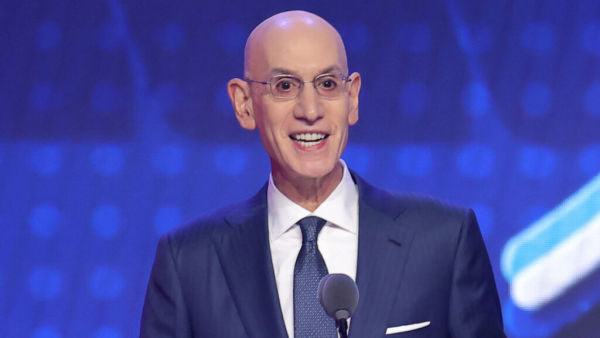
Adam Silver finally has the parity he so dearly desires.
Unfortunately for Silver, the parity party didn’t last very long. Within weeks, all eyes shifted toward the increasing issues with the league. The Celtics traded a franchise icon in Jaylen Brown for pennies on the dollar due to financial constraints stemming from the awful CBA in place, and the Kawhi Leonard-Aspiration saga took another turn.
With all of its talent and intriguing players, the NBA should be thriving right now, but it’s not. Why is that?
Because of its leadership — or lack thereof. Silver, in his soulless pursuit of parity, has lost the plot and no longer has a long-term vision of what the NBA should look like. A league that has historically thrived off rivalries and superstar players has made continuity impossible and quashed player empowerment in recent years. And the man at the helm has lost control of the Frankenstein monster he created.
The worst of both worlds
When Silver took over in 2014, it was as if he had studied baseball and football and asked one question: What are the worst things about these sports?
For baseball, the answer is obvious — the game turned homogeneous. Analytics flattened America’s Game into a spreadsheet of launch angles and three true outcomes, and every team started playing the same way.
For football, it’s that teams cannot afford to keep their non-quarterback stars. The salary cap forces franchises to either 1) trade beloved, homegrown players the moment their rookie contracts expire, replacing them with younger, cheaper labor, or 2) franchise-tag them to keep them from hitting free agency. Great players rarely make it to free agency, and the ones who do often find a limited number of suitors due to salary-cap constraints.
Silver looked at both diseases and decided to incorporate them into his game.
First came the homogenization. Every team now shoots a million threes, runs five-out spacing and plays the same drive-and-kick offense in 30 different jerseys. Not necessarily Silver’s fault that it began happening, but he certainly could have taken measures against it — adjusting the court dimensions, adjusting the rules, adjusting the officiating — so that it didn’t become the only way to play the game.
Then the 2023 CBA finished the job. Silver destroyed the NBA Players Association at the negotiating table during CBA talks and implemented, among other things, a second apron that has strangled free agency and made it damn near impossible to pay two superstars — punishing the teams that draft and develop the best.
Continuity is dead unless the players fall on the sword for the owners
We just witnessed the end of the Jaylen Brown-Jayson Tatum era in Boston. Brown gave the Celtics 10 seasons and a 2024 Finals MVP. His jersey will be retired in Boston. And he just got salary-dumped in the middle of his prime because Boston couldn’t stomach the apron penalties of paying Brown and Tatum two supermax deals.
The Luka Doncic-LeBron James-Austin Reaves era just ended in Los Angeles because the Lakers didn’t want to pay all three supermax deals. The league’s top players — Jalen Brunson, Victor Wembanyama, Reaves, etc. — are taking less than the supermax or max to give their teams financial flexibility. Put differently, the talent is making sacrifices so that the billionaires can save money.
That’s the system working exactly as designed — for the benefit of the billionaire owners. Sadly, Silver’s system is starting to really hurt the league, and he seems unequipped and uninterested in stopping it.
There’s a good chance that OKC will have to break up their Big Three of Shai Gilgeous-Alexander, Jalen Williams and Chet Holmgren at some point in the near future. And the same goes for San Antonio with Victor Wembanyama, Stephon Castle and Dylan Harper. You simply cannot build a full roster with multiple supermax guys under the current CBA (unless your owner is prepared to go into the red).
Would you rather see the Thunder and Spurs have a decade-long rivalry that we talk about the way people wax poetic about the Celtics and Lakers rivalry in the 80s? Or a two-year rivalry that ends when OKC has to salary-dump Holmgren and San Antonio has to flip Castle for some first-round picks and an expiring contract? I know my answer — and it’s apparently not the same as Adam Silver’s.
The Kawhi circus
Then there’s this fiasco. The NBA opened its investigation into the Clippers, Leonard and the $28M Aspiration endorsement deal back in September. Nearly a year later — with the probe still open — Silver let the Clippers and Raptors agree to a blockbuster trade sending Leonard back to Toronto for Brandon Ingram, Gradey Dick and draft picks.
Only then did the NBA inform the Raptors they’d assume the risk of whatever the investigation turns up. The trade is now on hold indefinitely.
How on earth is this investigation not concluded? And why would Silver allow teams to negotiate and agree to a trade centered on the one player his own investigation revolves around? By the way, there’s still an arbitration phase after this investigation. And training camp opens in two months! What are the Raptors and Clippers supposed to do if this isn’t wrapped up by then? Where is the leadership from Silver?
Basketball is jazz, not an algorithm
Basketball is supposed to be jazz — improvisation, rhythm, individual brilliance inside a collective groove. Magic vs. Bird. MJ vs. the Bad Boys. Kobe and Shaq feuding their way to three-peats. LeBron vs. Steph. The NBA at its best is a superstar-driven soap opera, not an actuarial table where every franchise gets its turn holding the trophy.
Silver needs to see the forest for the trees and start worrying about the product and the players — the two things that actually made this league worth billions. Because right now, the man who wanted everyone to have a chance has built an NBA where nothing — not rosters, not rivalries, not even agreed-upon trades — is allowed to last.
-
Travel News : The world’s most unique airport, a flight lands on the beach here

-
Recipe to make onion hair oil for hair care in rains

-
Tech News: Sony’s 25X Optical Zoom Camera Launch! Even distant objects will be seen very clearly, know the feature
-
New earbuds launched for less than Rs 1500, GoBoult Tenet Pro equipped with features like 75 hours of battery and ANC

-
BBL|16: Cricket Australia releases full schedule of Big Bash League 2026-27