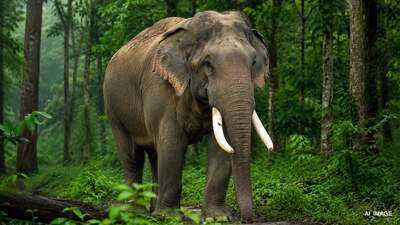
According to Nepalese forest officials, Dhrubye is considered one of the country's most dangerous wild elephants and has allegedly been involved in more than 25 fatal attacks on humans since 2010. The latest incident has sparked renewed concerns over public safety in areas bordering forests. Family's Attempt to Escape Ended in Tragedy
Officials said the family's ordeal began in 2010 when two of its members were killed in separate elephant attacks.
Fearing for their lives, the family decided to leave their ancestral village and relocate elsewhere, believing the move would keep them safe from the aggressive tusker.
However, tragedy struck again when Dhrubye entered their new village and attacked their home. A woman and her four-year-old son were killed in the latest incident, bringing the family's death toll from attacks linked to the elephant to four.
The repeated attacks on the same family have shocked local communities and wildlife experts.
Forest department records identify Dhrubye as one of Nepal's most aggressive elephants.
Authorities claim the tusker has been responsible for over 25 human deaths in Nepal and nearby border regions during the past 14 years. Wildlife teams have monitored the elephant using GPS devices and radio collars, but tracking it has proved difficult because of its unpredictable movements through dense forests.
Officials say the elephant frequently enters villages located near forest boundaries, increasing the risk of fatal encounters.
Wildlife experts say elephants possess exceptional memory and can remember locations, migration routes and even scents for many years.
Some researchers believe elephants may react aggressively if they associate certain places or experiences with past threats. However, experts stress that there is no scientific evidence proving Dhrubye intentionally targeted the same family due to revenge or recognition.
Conservationists also point to shrinking forests and increasing human settlements along traditional elephant corridors as major reasons behind the rise in human-elephant conflicts across Nepal. ALSO READ: Kerala Tragedy: 3-Year-Old Boy Dies After Choking on Peanut in Malappuram
The Nepal Forest Department and security agencies have been trying to capture or tranquilise Dhrubye, but the operation has been challenging due to the elephant's mobility and its ability to disappear into dense forests.
Following the latest attack, fear has spread across nearby villages, with residents demanding stronger measures to prevent further casualties.
-
Govt backtracks, says CM Revanth has no duplicate voter list entry

-
Indian firms offer higher pay for GenAI micro-credentials: Report

-
Eight jail officials suspended after three convicts escape

-
Bihar: Leaders of Prashant Kishor's Jan Suraaj party join BJP ahead of Bankipur bye-poll

-
Karnataka drops charges against three police officers in Bengaluru stampede case