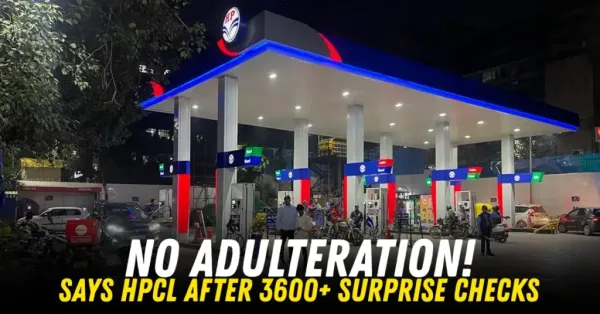
Hindustan Petroleum Corporation Limited has completed a large fuel-quality surveillance exercise across its nationwide retail network, carrying out 3,651 inspections between July 3 and July 13, 2026.
HPCL said the exercise found no adulteration, contamination, critical irregularity or quality-compliance lapse during the reporting period.
The findings arrive during a heated argument over E20 petrol, with motorists questioning fuel economy, vehicle compatibility and the absence of lower-ethanol alternatives at most pumps. The inspection drive does not settle all those questions. It provides a useful answer to a narrower one: did HPCL find evidence that its inspected fuel supplies had been tampered with or had failed prescribed quality checks?
The answer was no.
HPCL’s field officers conducted 2,173 surprise inspections at retail outlets between July 7 and July 13. These checks were intended to verify compliance with ethanol-blending and fuel-quality requirements.
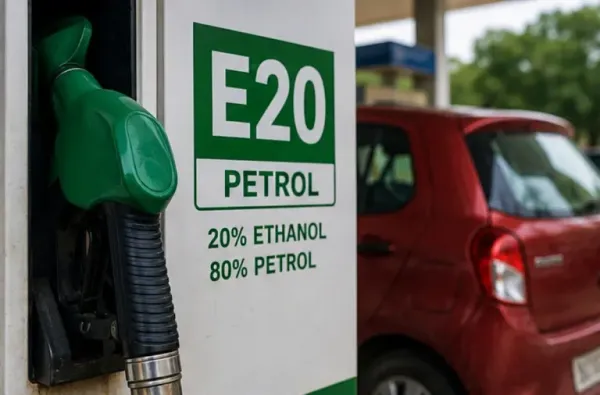
The company also completed 1,385 regular field inspections between July 3 and July 13 as part of its established quality-monitoring programme.
Its Quality Assurance Anti-Adulteration Cell carried out another 93 surprise inspections.
Those three categories add up to 3,651 inspections. HPCL’s mobile laboratories separately tested 49 fuel samples. The laboratory samples should not be added to the inspection total, nor were they tested by an outside third party. They were tested through HPCL’s own mobile laboratory facilities.
The company has not disclosed how many unique retail outlets were covered. An outlet may have been inspected under more than one part of the programme. The figure should therefore be described as 3,651 inspections, not necessarily 3,651 different petrol pumps.
HPCL also did not publish outlet-wise test data, the ethanol percentage recorded in each sample or the geographical distribution of the checks. The statement establishes the overall result, but does not provide enough detail to treat the exercise as a statistical audit of every HPCL outlet.
The Ministry of Petroleum and Natural Gas recently issued a detailed response to criticism of the ethanol-blending programme. It asked state chief secretaries to ensure firm enforcement against adulteration and any procedural lapses in the fuel supply chain.
The ministry called for zero tolerance where fuel quality is compromised.
That request came as criticism of E20 intensified. Vehicle owners have complained about lower mileage, drivability changes and uncertainty over the long-term effect on older cars that were originally certified for lower ethanol blends.
The government and fuel retailers need to separate three different questions that are often combined in the public debate.
The first is whether petrol has been adulterated or contaminated somewhere in the distribution chain. The second is whether the ethanol percentage and other properties comply with the prescribed E20 specification. The third is whether a particular vehicle was designed, calibrated and equipped to run on that specification.
HPCL’s inspection result addresses the first two questions within the cases it checked. It does not prove that every vehicle will deliver unchanged mileage on E20, or that every older fuel system will react in the same way.
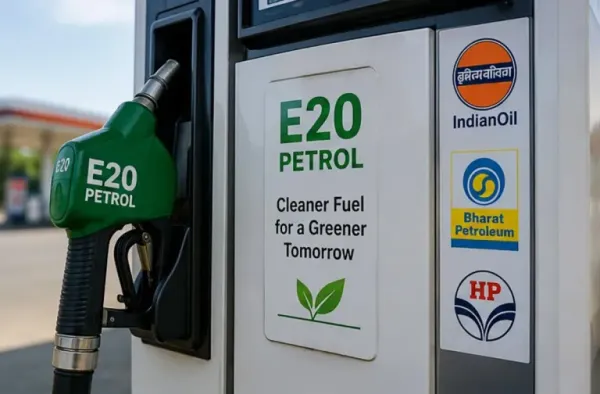
Ethanol contains less energy per litre than petrol. A vehicle may therefore record some reduction in fuel economy when moving to a blend with more ethanol, depending on its engine calibration, driving conditions and the fuel previously used.
Material compatibility is a separate issue. Vehicles designed for E20 use fuel lines, seals and other components selected for the higher ethanol content. Older vehicles designed around E10 or lower blends may not have identical specifications.
That is why the inspection findings should not be presented as proof that all E20 complaints are false. They show that HPCL did not find adulteration or quality lapses in this surveillance exercise. They do not measure changes in mileage or long-term vehicle durability.
The reverse is also true. A motorist experiencing lower mileage cannot assume that the petrol pump diluted or tampered with the fuel. The change could result from ethanol content, traffic, weather, tyre pressure, engine condition, driving style or several factors acting together.
The most useful feature of HPCL’s programme is its layered structure. Routine inspections provide continuing oversight. Surprise visits reduce the ability of an outlet to prepare temporarily for a known inspection. A specialised anti-adulteration team adds another level of scrutiny, while mobile laboratory testing can examine samples outside the retail outlet.
The zero-adulteration finding is a positive result for HPCL’s control system during the inspected period. It also gives the government its first large, publicly reported set of inspection figures during the current E20 controversy.
The limits remain clear. The exercise covered HPCL’s network, not Indian Oil, BPCL or private retailers. It covered a defined period of less than two weeks. HPCL has not identified how many different outlets were checked or released the detailed results for individual fuel samples.
A motorist filling up at an HPCL outlet can reasonably take some reassurance from the findings. The stronger conclusion is not that every E20 concern has been answered. It is that HPCL conducted 3,651 checks and reported no evidence of adulteration, contamination or quality failure in any of them.
-
FIFA World Cup 2026: Ticket Prices, Player Reactions, and Historic Facts

-
England Star Jude Bellingham Backed to Surpass Harry Kane for Ballon d'Or as Michael Owen Urges Three Lions to Raise Their Game in World Cup Semi-final Against Argentina

-
'He Is a Very Composed Player': Saba Karim Hails Shubman Gill's Captaincy After India's ODI Win Over England

-
ICC Men's ODI WC To Have Three-Stage Format, 'Super 10' With Eliminators In T20 WC Revamp
-
University Of Aberdeen Mumbai Receives Letter Of Approval From UGC; Admissions Open For September 2026 Intake