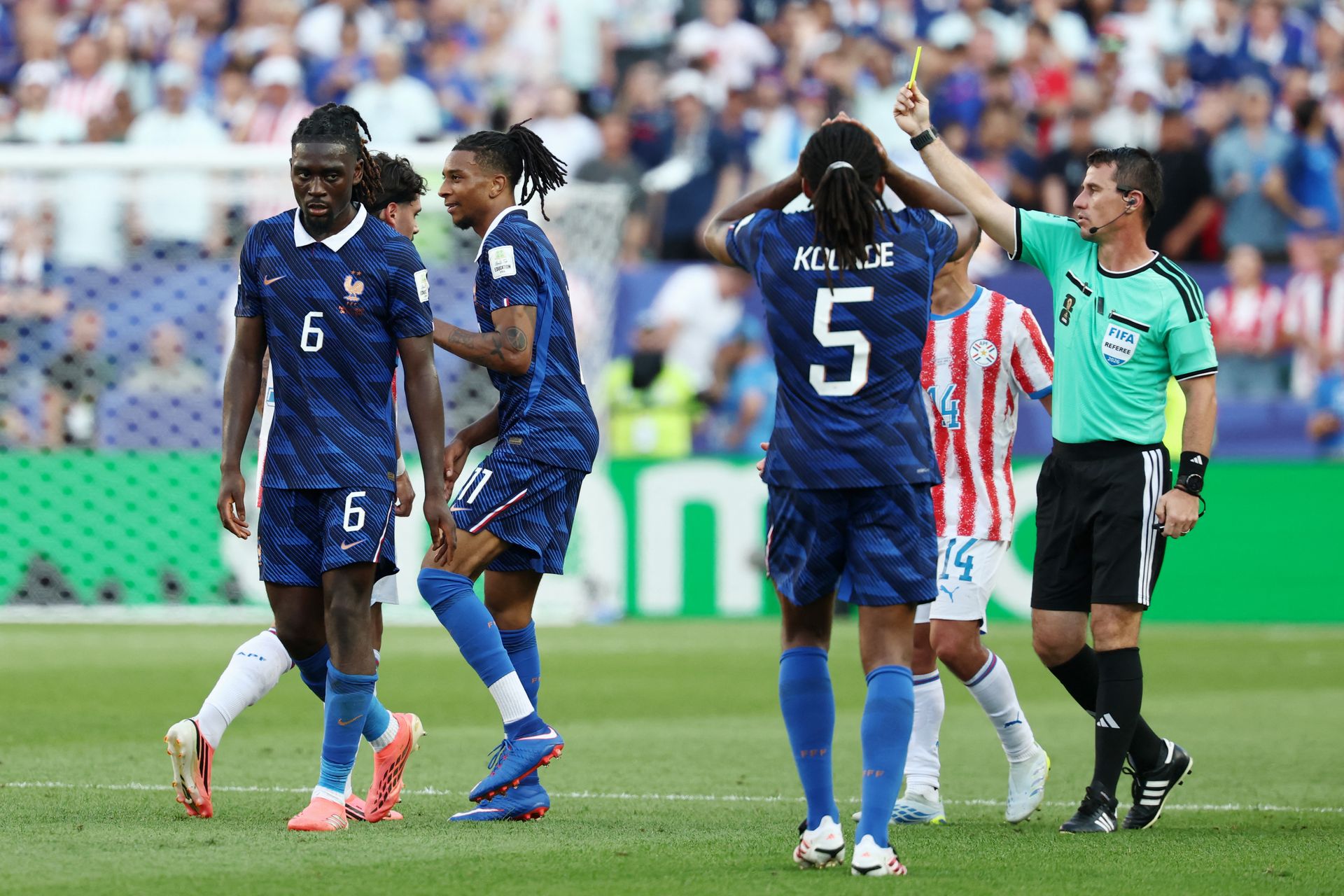
For many football fans of a certain generation, the idea of a player picking up a yellow card in the semi-final of a World Cup and being ruled out of the final instantly brings back one unforgettable image.
The 1990 World Cup may seem a distant memory now, but the sight of England’s midfielder Paul Gascoigne in tears after being booked against West Germany remains as iconic as the player himself.
As Bobby Robson’s England battled to book their place in the Rome final that summer, Gascoigne was already aware that his accumulation of yellow cards meant he would be suspended if his team progressed. Although England eventually fell short, Gazza’s emotional reaction became an enduring moment in English football history.
Gascoigne is not the only footballer to have faced the heartbreak of potentially missing a career-defining match due to a yellow card suspension. However, in recent years, there has been a shift towards reducing such harsh punishments, especially as modern tournaments have become larger and longer than ever before.
Back in 1990, the World Cup featured only half the number of teams that will compete in World Cup 2026. The upcoming edition includes 48 teams and introduces a new round of 32 for the first time. Consequently, nations reaching the semi-finals will have played eight matches, making the accumulation of bookings a more pressing issue.
To address the problem of unnecessary suspensions, FIFA implements a yellow card amnesty system. At specific stages during the World Cup, yellow cards that have not already resulted in a ban are cleared from a player’s record.
World Cup 2026 marks the first major tournament where this amnesty has been applied twice. Yellow cards were reset after the group stage and again following the quarter-finals. This means that players only needed to avoid receiving two bookings in three matches—twice—to stay eligible for the final despite earlier cautions.
As we approach the semi-finals, no player from Spain, France, England or Argentina currently has a yellow card to their name. Any player who receives a yellow card in the semi-finals will still be allowed to play in Sunday’s World Cup final.
England’s Jude Bellingham and Argentina’s Gonzalo Montiel were both cautioned in the round of 32. In the round of 16, France’s Manu Kone, Michael Olise and Bradley Barcola, along with Spain’s Ferran Torres, each received yellow cards.
For England, Marc Guehi, Nico O’Reilly and Declan Rice were booked during their match against Mexico, while Jordan Henderson received a yellow card despite not taking the field at the Azteca Stadium.
In the quarter-finals, Spain’s Pau Cubarsi and Aymeric Laporte were both cautioned, as were Argentina’s Lautaro Martinez, Thiago Almada and Manuel Lopez. Altogether, 15 players have had their yellow cards wiped ahead of the semi-finals, meaning they can be booked once without the risk of missing the final.
However, any player who is sent off in the semi-finals—whether through a direct red card or two yellows—will still face suspension for the final, which will take place at New York New Jersey Stadium on Sunday.
-
IND vs ENG 1st ODI: Shubman Gill Shines Before Retiring Hurt As India Cruise Past England
-
Brussels Tower Fire Kills 2; Several Workers Feared Trapped In Elevator

-
Manchester United plan three more signings after securing Youri Tielemans; two players set to depart Old Trafford
-
France Vs Spain Live Streaming: FIFA World Cup 2026 Semi-Final Prediction, Team News, Lineups & Kick-off Time

-
CBSE Three-Language Policy: Supreme Court Assures Protection For Teachers, Seeks Board's Response