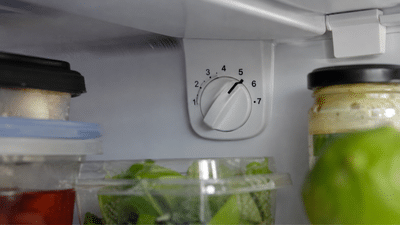
Open an older refrigerator, and there is a good chance its temperature control looks reassuringly simple: a small dial marked with numbers, perhaps from one to five or one to nine, with the knob sitting somewhere near the middle. The problem is that a number such as “5” may be a control setting rather than an actual temperature reading, so looking at the dial alone does not tell you whether the milk, leftovers and raw meat inside are really being held below the federal food-safety threshold.
, a refrigerator should be kept at
40°F, or 4°C, or below, while a freezer should be maintained at 0°F, or -18°C. The FDA specifically recommends checking temperatures periodically and says appliance thermometers are the best way to know the temperature inside. That matters because pathogenic bacteria can be present even when food does not look, smell, or taste spoiled, and proper chilling is one of the main ways to slow bacterial growth.
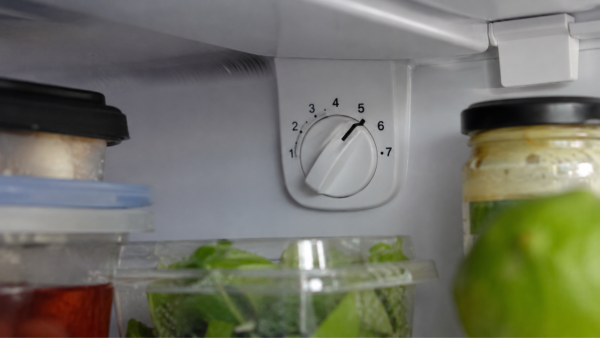 The number on the dial may not be the number you need
The confusion begins with the way many refrigerators present their controls. A numbered setting can indicate the relative strength of cooling rather than a measured internal temperature, meaning a middle setting is not automatically 5°C, 5°F or any other directly readable figure. Even refrigerators with electronic controls can distinguish between a selected temperature and the actual conditions inside the cabinet. The temperature inside a refrigerator also does not remain perfectly uniform. Opening the door introduces warmer air; tightly packed shelves can interfere with circulation, and the door itself can be warmer than the main compartment. The FDA, for example, advises storing eggs in their carton inside the refrigerator rather than on the door specifically because the door is warmer. It also warns against crowding a refrigerator or freezer so tightly that cold air cannot circulate.
Dirty coils covered with lint, dust or pet hair can force a refrigerator to work harder and may prevent it from cooling properly and efficiently. The agency recommends cleaning refrigerator coils every six months to a year and keeping the appliance away from direct sunlight, ovens, and other heat sources.
The simple test tells you what the dial cannot
The most direct answer is to measure the refrigerator itself. , one method is to put an appliance thermometer in a glass of water, place it in the middle of the refrigerator and leave it there for
five to eight hours before checking the reading. If the temperature is not between 38°F and 40°F, the refrigerator control should be adjusted. So the headline’s “check it in a minute” should be understood as the
setup taking about a minute, not the refrigerator producing an accurate, stabilized reading in 60 seconds. Once the thermometer is positioned, it needs time to reflect the refrigerator’s conditions.
Listeria has more opportunity to grow when refrigerator temperatures rise above that point. That small numbered dial is useful for making the refrigerator colder or warmer, but it is not necessarily a food-safety measurement. If the question is whether your fridge is actually below 40°F, there is no reliable way to judge from the knob, the coldness of a soda can or the absence of a strange smell. Measure the temperature, then use the dial to correct it.
-
HYDRAA protects public utility land worth Rs 25 cr in Chengicherla

-
Telugu University’s space to house tribal art museum declined

-
Conspiracy to silence pro-Palestinian voices: Mahmoud Khalil

-
Trump welcomes Iraq’s new prime minister to the White House

-
Key Reasons for Medical College Admission Cancellations After NEET UG