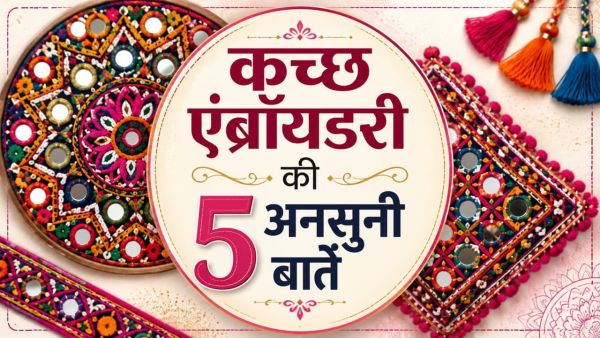
Kutch Embroidery Identification: Why is Kutch Embroidery famous? History, 16 famous styles, mirror embroidery and how to spot a real fake? Know complete information in detail before purchasing.
When it comes to the traditional handicrafts of India, the name of Kutch Embroidery which came from Kutch in Gujarat is taken. Made with colorful threads, glitter of mirrors and fine hand embroidery, this art not only decorates the clothes but also reflects the centuries-old culture. This is the reason that today this handcraft has created its own identity not only in India but all over the world.
Scroll to load tweet…
History of Kutch Embroidery
Kutch embroidery is believed to have arrived around the 14th century, when the Rabari community from Sindh settled in the Kutch region of Gujarat. With time, the art of Central Asia, Persia and other regions also came to be associated with this handicraft kada. Not only this, with time this embroidery became more famous and kept moving forward with new styles.
How many types of Kutch embroidery are there?
Most embroideries have 1 or 5 types of styles, but the specialty of Kutch embroidery is that it is woven in 16 different types, which offers a combination of ancient, traditional and modern embroidery. Among these, styles like Rabari, Ahir, Suf, Pakko, Kharek, Mutwa, Aari, Mukko, Jaat, Katri are most liked. The stitching, color selection and design of every style is always different from each other.
Read this also- Make your balcony a paradise of flowers, Rs 100. Best Flower Plant Seed Deals Inside
Why is glass embroidery done?
Apart from the colorful threads, the biggest specialty of Kutch embroidery is the small designs. It is not used only to enhance beauty. According to traditional beliefs, mirror work is considered a symbol of protection from negative energy and evil eye. This is the reason why even today Gujarati brides prefer to wear Kutch embroidery based outfits during their wedding.
Read this also- Iranian women look fair with these face packs, you should also try them
GI tag provided recognition
Kutch Embroidery was awarded the GI tag in 2013. This not only gave legal recognition to traditional art, but also provided protection to the art of local artisans. Not only this, even today thousands of women of Kutch do this traditional embroidery work from home.
How to identify Kutch embroidery?
Nowadays, machine made Kutch embroidery is sold in the market as genuine. If you are going to buy it then keep these things in mind-
- Stitches vary in hand embroidery
- The knots made in the threads are clearly visible
- Mirrors are not glued but stitched
- Kutch embroidery is not done on cotton but on silk, handloom or cotton.
-
Seven MS Education Academy students excel in CMA Foundation exam

-
PM Modi launches major railway projects in Punjab.

-
SpiceJet fined for using dark patterns on booking platform

-
RCB Head Coach Andy Flower Turns Down England Test Coach Role

-
Top 10 | ABP LIVE Evening Bulletin: Top News Headlines from 17 July 2026 - Evening