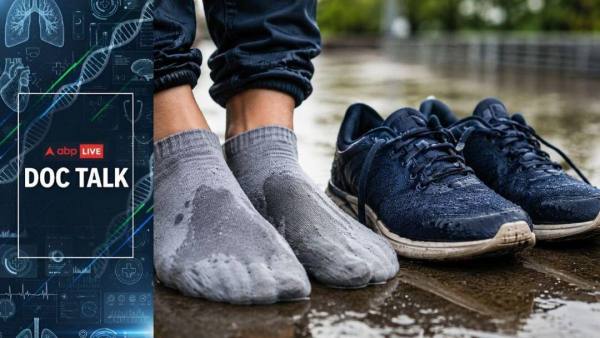
The monsoon season brings welcome relief from the heat, but it also creates the perfect environment for fungal and bacterial infections. One of the most common yet overlooked health risks during the rainy season is wearing wet shoes and damp socks for prolonged periods. While wet footwear does not directly cause illnesses like the common cold, it can significantly increase the risk of foot infections, especially athlete's foot, nail fungus, and serious diabetic foot infections.
Health experts say that prolonged exposure to moisture weakens the skin's natural protective barrier, allowing fungi and bacteria to thrive. This makes proper foot hygiene and appropriate footwear essential during the monsoon.
Why Wet Shoes Are A Problem
Feet trapped inside wet shoes remain warm and moist for hours, creating ideal conditions for fungal growth. If shoes are not dried properly before being worn again, microorganisms continue to multiply, increasing the chances of infection. Small cuts, blisters, or cracked skin can further allow bacteria to enter, leading to more serious complications.
Athlete's Foot: The Most Common Monsoon Infection
Athlete's foot is one of the most common fungal infections seen during the rainy season. It usually begins between the toes and may cause itching, burning, redness, peeling skin, and an unpleasant odor. If left untreated, the infection can spread to other parts of the foot and even to the nails. The condition is highly contagious and can spread through contaminated floors in gyms, swimming pools, and public changing rooms.
Nail Fungus Can Be Difficult To Treat
Constant exposure to damp footwear also increases the risk of fungal nail infections. Infected nails may become thick, brittle, yellow, or brown and may gradually separate from the nail bed. Nail fungus often requires prolonged treatment, making early diagnosis and intervention important.
People With Diabetes Face Greater Risks
Individuals living with diabetes need to be particularly cautious during the monsoon. Diabetes can reduce blood circulation and nerve sensation in the feet, making it difficult to notice minor injuries or infections. Even a small fungal infection or blister can develop into a serious foot ulcer if not treated promptly. Doctors advise diabetic patients to inspect their feet daily and seek medical attention immediately if they notice redness, swelling, wounds, or signs of infection.
Dr Niraj says, "Wet shoes and damp socks create an ideal environment for fungal infections during the monsoon. Persistent itching, peeling skin, redness, or changes in the nails should never be ignored. Early diagnosis and treatment can prevent complications. People with diabetes should be extra careful, as even minor foot infections can become serious if left untreated."
- Dry your feet thoroughly after getting caught in the rain.
- Change wet socks immediately and wear clean, dry socks every day.
- Allow shoes to dry completely before wearing them again.
- Choose breathable, well-fitting footwear whenever possible.
- Wear slippers or waterproof sandals in public showers, gyms, and swimming pool areas.
- Keep toenails clean and trimmed.
- Avoid sharing shoes, socks, or towels.
- People with diabetes should examine their feet daily and consult a doctor promptly if they notice any cuts, blisters, or infections.
When Should You See A Doctor?
Seek medical advice if you experience persistent itching, burning, redness, swelling, pain, foul-smelling discharge, cracked skin, thickened or discolored nails, or wounds that do not heal. Individuals with diabetes should not delay treatment, as early intervention can help prevent serious complications.
Wet shoes alone do not make you "sick" in the traditional sense, but they can create the perfect conditions for fungal and bacterial foot infections. With proper foot hygiene, dry footwear, and timely medical attention, most monsoon-related foot problems can be prevented, allowing you to enjoy the rainy season safely.
Disclaimer: The information provided in the article is shared by experts and is intended for general informational purposes only. It is not a substitute for professional medical advice, diagnosis, or treatment. Always seek the advice of your physician or other qualified healthcare provider with any questions you may have regarding a medical condition.
-
''Gautam Gambhir has certain favourite players' - Hanuma Vihari alleges cronyism in Indian team post 4-0 loss to England

-
Rahul Dravid To Replace Brendon McCullum As England Test Coach? Here's What We Know

-
Peddi Box Office Closing Collection: Ram Charan's Film Sets Record, Becomes Tollywood's 10th Highest-Grosser

-
Pet First | 5 Healthy Homemade Treats For Cats To Enjoy During Monsoon

-
Say Goodbye To Sticky Floors With This Easy Mopping Hack