From melted wax to gladiator sweat: The fascinating 4,000-year history of perfume
ETimes | July 12, 2026 5:39 AM CST
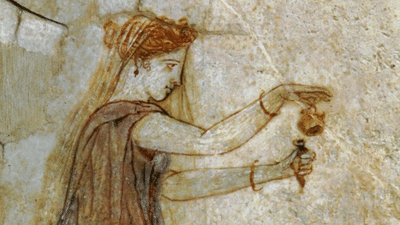
Have you ever stopped mid-spritz and wondered who actually came up with the idea of bottled fragrance? Today, we treat perfume as the ultimate luxury beauty staple. A quick dash on the pulse points, and you are ready to head out. But thousands of years ago, fragrance wasn't about landing on a best-dressed list. It was a matter of survival, spirituality, and sometimes, sheer necessity. The word itself gives us a massive clue. "Perfume" comes from the Latin phrase per fumum, which literally translates to "through smoke." And looking back at its 4,000-year history, the story of how humans started wearing scents is nothing short of fascinating.
The first chemists weren't men in lab coats
Let's rewind to ancient Mesopotamia. If you think the first fragrances were delicate little floral blends, think again. Early aromatics were heavy hitters. We're talking robust herbs and sharp spices like coriander and myrtle, which were mostly burned as incense. But here is where it gets really interesting. The very first recorded chemist in history wasn't a man in a modern lab. It was a Mesopotamian perfume-maker named Tappūti-Bēlet-ekallim. Working around 1200 BCE, she was already pulling off highly advanced extraction methods. She drew scents from botanicals, resins, and spices, whipping up aromatic oils that locals used to groom their hair and bodies.
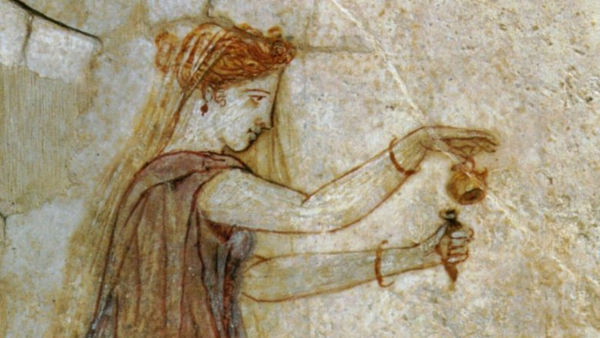
Egyptians, wax cones, and a literal 'God of Scent'
Eventually, the perfume craze made its way to ancient Egypt. For a long time, everyday folks weren't even allowed to touch the stuff. Fragrances were VIP exclusives—strictly reserved for pharaohs, the gods, and elaborate burial rites. They took it so seriously that they worshipped Nefertem, the God of Perfume, who was closely linked to the highly aromatic blue water-lily flower.
So, how did they actually wear it on a daily basis? In what might be the wildest beauty hack of the ancient world, Egyptians would walk around with solid wax cones sitting on top of their heads. These cones were packed with herbs, spices, and crushed flowers. As the intense Egyptian sun beat down, the wax slowly melted. The scented oils would quite literally cascade down their hair and skin, keeping them naturally perfumed all day long.
Roman gladiators and 'magic' potions
As trade routes opened up across the Mediterranean, Greece and Rome got in on the action. Scents became a massive part of their famous bathing rituals. At the time, people genuinely believed different fragrances held specific "magic powers." You didn't just wear a scent to smell good; you wore it to cure a medical issue, purify your soul, or win favour with the gods.
The Romans, in particular, were utterly obsessed. For them, scent was the ultimate social and sexual signal. Even gladiators had a dedicated grooming routine! Before stepping into the bloody arena for combat, these massive fighters were known to meticulously rub different scented lotions onto specific parts of their bodies.
Masking the great European stench
Things took a bit of a dip during the rise of early Christianity, when flashy personal adornments were heavily frowned upon. But as European cities rapidly expanded during the Middle Ages and the Renaissance, they started to smell absolutely awful. The practical need for fragrance came roaring back. People simply needed something to mask the heavy stench of urban squalor and poorly ventilated, heavily varnished interiors. This desperation sparked a massive technological leap. In 1307, the very first modern, alcohol-based perfume was created at the behest of Queen Elizabeth of Hungary. Dubbed "Hungary Water," it blended scented oils into a volatile alcohol solution, setting the standard for how perfumes are formulated today.
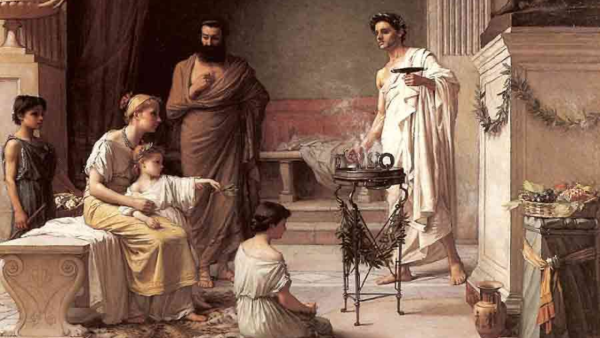
By the 18th century, Europe was experiencing a full-blown olfactory revolution. Predictably, it became a massive status symbol. In 1709, one snobby French perfumer explicitly declared that social classes should be strictly defined by their smell. He crafted bespoke royal scents for the aristocracy, a basic bourgeois scent for the middle class, and brutally suggested that the poor only deserved disinfectant.
Things peaked with the court of Louis XV, famously dubbed La Cour Parfumée (The Perfumed Court). Here, the nobility was strictly expected to wear a completely different fragrance every single day of the week. So, the next time you browse a fragrance counter, remember the bizarre history behind the bottle. From melting head-wax to sweaty gladiators, the journey of perfume is just as intoxicating as the scent itself.
Archaeologist Maria Rosaria Belgiorno and the Italian National Research Council have unearthed one of the most popular archaeological pieces of evidence to confirm the theory of perfume's creation almost 4,000 years ago.
https://www.pyrgos-mavroraki.eu/perfumes
The first chemists weren't men in lab coats
Let's rewind to ancient Mesopotamia. If you think the first fragrances were delicate little floral blends, think again. Early aromatics were heavy hitters. We're talking robust herbs and sharp spices like coriander and myrtle, which were mostly burned as incense. But here is where it gets really interesting. The very first recorded chemist in history wasn't a man in a modern lab. It was a Mesopotamian perfume-maker named Tappūti-Bēlet-ekallim. Working around 1200 BCE, she was already pulling off highly advanced extraction methods. She drew scents from botanicals, resins, and spices, whipping up aromatic oils that locals used to groom their hair and bodies.
Egyptians, wax cones, and a literal 'God of Scent'
Eventually, the perfume craze made its way to ancient Egypt. For a long time, everyday folks weren't even allowed to touch the stuff. Fragrances were VIP exclusives—strictly reserved for pharaohs, the gods, and elaborate burial rites. They took it so seriously that they worshipped Nefertem, the God of Perfume, who was closely linked to the highly aromatic blue water-lily flower.
So, how did they actually wear it on a daily basis? In what might be the wildest beauty hack of the ancient world, Egyptians would walk around with solid wax cones sitting on top of their heads. These cones were packed with herbs, spices, and crushed flowers. As the intense Egyptian sun beat down, the wax slowly melted. The scented oils would quite literally cascade down their hair and skin, keeping them naturally perfumed all day long.
Roman gladiators and 'magic' potions
As trade routes opened up across the Mediterranean, Greece and Rome got in on the action. Scents became a massive part of their famous bathing rituals. At the time, people genuinely believed different fragrances held specific "magic powers." You didn't just wear a scent to smell good; you wore it to cure a medical issue, purify your soul, or win favour with the gods.
The Romans, in particular, were utterly obsessed. For them, scent was the ultimate social and sexual signal. Even gladiators had a dedicated grooming routine! Before stepping into the bloody arena for combat, these massive fighters were known to meticulously rub different scented lotions onto specific parts of their bodies.
Masking the great European stench
Things took a bit of a dip during the rise of early Christianity, when flashy personal adornments were heavily frowned upon. But as European cities rapidly expanded during the Middle Ages and the Renaissance, they started to smell absolutely awful. The practical need for fragrance came roaring back. People simply needed something to mask the heavy stench of urban squalor and poorly ventilated, heavily varnished interiors. This desperation sparked a massive technological leap. In 1307, the very first modern, alcohol-based perfume was created at the behest of Queen Elizabeth of Hungary. Dubbed "Hungary Water," it blended scented oils into a volatile alcohol solution, setting the standard for how perfumes are formulated today.
By the 18th century, Europe was experiencing a full-blown olfactory revolution. Predictably, it became a massive status symbol. In 1709, one snobby French perfumer explicitly declared that social classes should be strictly defined by their smell. He crafted bespoke royal scents for the aristocracy, a basic bourgeois scent for the middle class, and brutally suggested that the poor only deserved disinfectant.
Things peaked with the court of Louis XV, famously dubbed La Cour Parfumée (The Perfumed Court). Here, the nobility was strictly expected to wear a completely different fragrance every single day of the week. So, the next time you browse a fragrance counter, remember the bizarre history behind the bottle. From melting head-wax to sweaty gladiators, the journey of perfume is just as intoxicating as the scent itself.
Archaeologist Maria Rosaria Belgiorno and the Italian National Research Council have unearthed one of the most popular archaeological pieces of evidence to confirm the theory of perfume's creation almost 4,000 years ago.
https://www.pyrgos-mavroraki.eu/perfumes
READ NEXT
-
Thomas Tuchel's bold England lineup vs Norway sparks debate ahead of World Cup quarter-final

-
Shooting Incident Reported at Annapolis Naval Academy

-
Ryanair passenger who was 'sucked through' broken window pictured for the first time

-
Surprisingly small parenting habits that shape a child's confidence, according to psychology

-
Sam Curran floors India with three-fer in 5th T20I: Stats