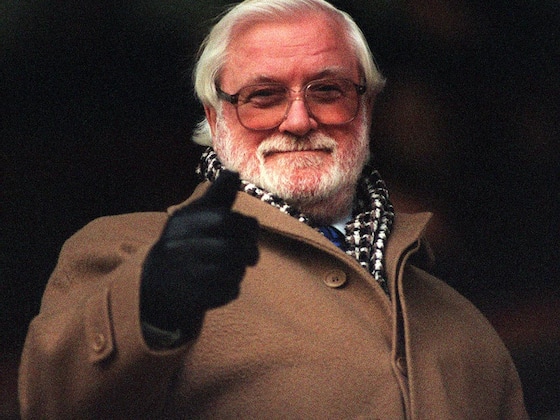
Ken Bates was a figure who left an indelible mark on English football, transforming Chelsea from a struggling second-division side playing in a dilapidated stadium into a major top-flight force, while gaining both admirers and detractors along the way.
The former owner of Chelsea and Leeds United, businessman, and football administrator, rarely stayed out of the headlines during his 48-year association with the sport. Bates, who passed away at the age of 94, was both revered and reviled in equal measure.
Outspoken, anti-establishment, often abrasive, and occasionally outrageous, Bates constantly pushed boundaries and sought the limelight. For better or worse, his presence was impossible to ignore.
During his 21 years as Chelsea chairman, he oversaw the club’s transformation from a struggling second-tier team into a Premier League contender, redeveloped Stamford Bridge, and established the Chelsea Village complex before selling the club to Roman Abramovich in 2003.
His tenure at Leeds United, which lasted eight years, proved far less fruitful. Bates was unable to recreate his earlier success, and by the time he left in 2013, he had made more enemies than allies.
Throughout his professional life, Bates faced numerous accusations of questionable business practices and became embroiled in a series of long-running disputes, many of which ended in court or were settled privately. He was often labelled divisive, arrogant, ruthless, and self-serving — yet he remained a man who got things done.
In his early Chelsea years, Bates resisted efforts by property developers to take over Stamford Bridge and set up the Chelsea Pitch Owners initiative to ensure the ground’s future was protected. His efforts also extended beyond Chelsea — lower-league clubs still benefit from a fairer share of Premier League television revenue due to his campaigning. Additionally, he was a vocal opponent of racism and worked to eradicate Chelsea’s hooligan culture in the 1980s.
One of his more infamous ventures involved constructing an electric perimeter fence around Stamford Bridge — though local authorities refused to allow it to be powered. Bates served on the Football League Management Committee for five years from 1986 and was an influential figure within the Football Association during the 1990s.
In 1997, the FA appointed him chairman of Wembley National Stadium Ltd to break the deadlock over plans to rebuild Wembley. However, he later resigned, citing slow progress and a lack of board support. Around the same period, he stepped down from his Football League position after Chelsea were fined £105,000 for alleged illegal player payments. Bates once remarked that the best way to move the Wembley project forward would have been to “shoot the Minister for Sport,” referring to Kate Hoey.
Born on December 4, 1931, in London, Kenneth William Bates grew up with his grandparents on a council estate in Ealing following his mother’s death and his father’s disappearance. Born with a club foot that required several operations, he was a Queens Park Rangers supporter in his youth. After moving north, he found early success in Manchester running a quarry business and later built a vast business portfolio spanning ready-mixed cement, dairy farming, and property development.
His ventures extended internationally, including investments in Australia’s sugarcane industry and South African real estate. Reports suggest that he purchased his first Bentley at the age of 23. He made millions from a failed building project in the British Virgin Islands during the early 1970s and founded the Irish Trust Bank, which later lost its licence following investigations by Irish financial regulators.
Before his Chelsea days, Bates chaired Oldham Athletic for five years in the 1960s and co-owned Wigan Athletic. In 1982, he famously bought Chelsea for £1. Fewer than 9,000 fans attended his first match as chairman at Stamford Bridge, but by his last in 2003, the stadium was sold out as Chelsea secured a Champions League spot.
His time at Chelsea was not without controversy. Bates clashed bitterly with major investor Matthew Harding, a feud that intensified after Harding’s tragic death in a helicopter crash in 1996. Despite criticism over his remarks about Harding, many Chelsea supporters still regarded Bates as a hero when he sold the club.
In contrast, his reign at Leeds was tumultuous. Purchased in 2005, the club became synonymous with secretive offshore dealings and recurring legal battles. Bates lost a harassment case brought against him by former director Melvyn Levi and his wife, placed the club into administration before buying it back, and presided over Leeds’ first-ever relegation to the third tier. His confrontations with protesting fans became a hallmark of his time there.
In 2013, Bates sold Leeds United to Gulf Finance House, a Middle East-based investment bank, for £22 million and retired to Monaco, where he lived quietly in a tax haven. In his later years, he largely withdrew from public view. Reports suggest he had been working on his autobiography for nearly two decades with his third wife, Susannah, and several journalists. Whether or not it is ever published, Ken Bates’ legacy — for better and worse — remains unforgettable in English football history.
-
Manipur CM condemns arson in Kanto Sabal village

-
Kevin De Bruyne and Thibaut Courtois reflect on Belgium futures after World Cup exit, hint at possible retirement
-
Manchester City complete signing of 17-year-old Leicester winger after beating Arsenal to the deal

-
‘I was unknown’ – How 37-year-old Miami FC goalkeeper Eloy Room rose from free agent to Curacao’s record-breaking World Cup icon

-
Telangana officials asked to resolve ‘Saada Bainama’ land issues