Every country has a national pastime. The Americans love to sue, the Indians engage in unsolicited advice, the Japanese love to drink, and the Filipinos enter beauty pageants. Not a few beauty pageants. Thousands of them. Village beauty pageants. School beauty pageants. Shopping mall beauty pageants. Provincial beauty pageants. National beauty pageants. International beauty pageants.
Beauty contests in the Philippines are not events. They are a way of life. Children know contestants the way cricket fans know batting averages. Entire families debate outcomes with the intensity usually reserved for elections and inheritances. Winning Miss Universe is treated with the sort of national pride most countries reserve for Olympic gold medals.
Which brings us, strangely enough,
to lipstick.
For years, the world bowed to Korea. K-beauty ruled shelves, routines, and bathroom cabinets with military precision.
If someone suggested applying snail slime to your face, you nodded thoughtfully rather than calling security. Glass skin became a global aspiration. Multi-step routines multiplied faster than rabbits at a fertility convention.
Then came China. Chinese giant Proya crossed the billion-dollar mark, and C-beauty turned into boardroom obsessions. Investors, consultants and trend forecasters descended upon the sector like seagulls spotting unattended chips.
Now these same people may have to book flights to Manila. Because the next beauty wave appears to be arriving from the Philippines. It’s known as P-Beauty , and is in fact becoming a global statement. Brands with names like Sunnies Face, Happy Skin and BLK are no longer niche local players. They are becoming serious businesses with devoted customers and growing influence.
The reason is surprisingly simple. The average Filipino beauty consumer is not easily impressed. When beauty occupies such a prominent place in a culture,
consumers become experts. They know shades. They know textures. They
know finishes.
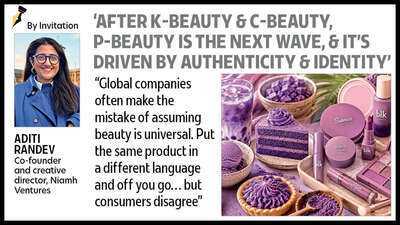
Global companies often make the mistake of assuming beauty is universal. Put the same product in a different language and off you go… but consumers disagree.
A woman in Manila faces different weather, different skin concerns, and
different beauty standards from someone in Paris or New York. She doesn’t
necessarily want imported solutions
to local problems.
Which is what Filipino brands understood. Instead of pretending to be international, they doubled down on being Filipino. Made by Filipinos. For Filipinos.
A surprisingly effective strategy in a world where everyone is busy pretending to be everyone else.
And it doesn’t just stop at beauty. The culture is exporting its own flavour too. Food analysts say 2026 has found its colour, its taste, its identity – not matcha or some overworked espresso variant, but Ube . A purple yam that quietly existed in Filipino kitchens minding its own business before it was promoted to
global trend.
Today it appears in cafés from London to Los Angeles looking like a celebrity on a world tour. Ube latte. Ube ice cream. Ube jam. Ube bubble tea. Ube cocktails. Ube what not. Even coffee is now apologising for not being purple. The influence is so high that Instagram feeds suddenly look like they’ve been colour-graded by a very enthusiastic artist.
One minute it was dessert. The next minute it had a social media manager. Culture travels. Food travels. Creators travel. And so eventually brands travel with them.
Businesses spend fortunes trying to appear global. They polish logos, hire consultants, invent mission statements and produce advertisements featuring suspiciously happy people staring at sunsets. Meanwhile, the strongest brands often do something much simpler. They become more themselves. Authenticity is one of those overused words that should probably be fined for excessive public appearances. Yet it remains true.
People don’t buy products. They buy belonging. And right now, the Philippines is exporting far more than beauty products. It is exporting identity.
And, if you take a trip to Manila, don’t forget to try out their ketchup. It’s made of not tomatoes, but bananas. Who knows, it could become the next global food trend.
-
FBI Director Kash Patel's Chicago Trip Canceled Amid Controversy

-
Harry Kane Reflects on Unique Golf Experience with Donald Trump

-
Massive Flooding in Missouri Leads to Dramatic Rescues of Campers and Staff

-
Anjum Chopra Inducted into ICC Cricket Hall of Fame: A Tribute to Her Legacy

-
Why is butter yellow while milk is white? The science behind the colour difference